
Last updated October 16, 2026
 Water damage drying
 Fire & smoke cleanup
 Mold remediation
 Storm response
 Sewage cleanup
 Reconstruction
Free visual inspection and a written scope of work before any mitigation begins - photos, moisture readings, and drying logs go in your claim file
The scope we write is the scope we bill. Anything new gets shown to you, in writing, before we touch it.
Get your free estimateDamage Restoration Permits, Codes & Inspections in TX: What You Need to Know
Three years after a Houston homeowner finished rebuilding a flooded living room, the sale of the house collapsed at closing. The buyer’s inspector pulled the City of Houston permit history and found exactly nothing: no electrical permit, no drywall inspection, no final sign-off. The unpermitted work cost $14,000 to tear out and redo before the house could sell. The contractor who skipped the permits never answered the phone again. That story is not rare in Houston, and it’s the reason this How to Hire a Damage Restoration Contractor in Houston: A Step-by-Step Guide exists. We’ll explain exactly which restoration jobs require a permit in Houston and Harris County, what triggers the scary-sounding “50% rule” for flood-damaged homes, how to verify a permit was actually pulled, and what happens when someone skips the process. Permits are not bureaucracy for its own sake. They are the paper trail that protects you when things go wrong.
Quick Answer
Most structural, electrical, plumbing, and mechanical restoration work in Houston requires a permit from the City of Houston or Harris County, depending on where the property sits. Cosmetic repairs like paint, flooring, and non-structural drywall patches generally do not. If your home is in a mapped floodplain and storm damage exceeded 50% of its market value, federal rules may require you to elevate the structure before rebuilding, and skipping permits on any covered repair can void your insurance claim and blow up a future sale.
Restoration work we handle
Table of Contents
- Who Requires a Permit in Houston: City vs. Harris County Jurisdiction
- What Restoration Work Triggers a Permit (and What Doesn’t)
- Floodplain Rules: The 50% Rule and NFIP Requirements in Houston
- Certificate of Occupancy After Major Storm Damage: When It’s Triggered
- How to Verify a Permit Was Actually Pulled (Step by Step)
- Permit Costs and Timelines in Houston: Real Numbers
- What Happens When Restoration Work Is Unpermitted
- Common Mistakes to Avoid
- When to Call a Professional
- Frequently Asked Questions
Who Requires a Permit in Houston: City vs. Harris County Jurisdiction
The first thing to understand is that “Houston” does not have one single permit office. If your address ends in “Houston, TX 770__” inside city limits, the City of Houston’s Permit Center at 1002 Washington Avenue is your authority. If you live in unincorporated Harris County, like parts of Cypress, Spring, Atascocita, or the areas around Katy that sit outside city boundaries, Harris County’s Permit Office handles your permits. The rules are similar in substance, but the fee schedules, inspection timelines, and online portals are completely different. This matters because a contractor who works mostly in one jurisdiction may not know the quirks of the other.
City of Houston uses its ProjectDox and iPermits digital systems. You can search permits by address online, which we’ll cover in detail later. Harris County uses a separate MyGovernmentOnline portal. In our experience working in Houston’s older neighborhoods like the Heights, Timbergrove, and Meyerland, the biggest surprise for homeowners is that the city’s code inspectors have authority to flag unpermitted work even when they come for an unrelated inspection. If a plumbing inspector visits for a water heater and sees fresh electrical work with no permit history, that electrical work gets flagged. The paper trail matters sooner or later.
Key Difference Between the Two Jurisdictions
- City of Houston: Strict enforcement, online permit lookup is public and easy to use, inspection requests typically scheduled within 1 to 3 business days.
- Unincorporated Harris County: Enforcement leans more on complaints, the online lookup is less intuitive, inspection timing varies by inspector load and weather events.
- Fee schedules differ: A plumbing permit in the city often runs $60 to $150 depending on fixture count, while Harris County uses its own valuation table. Do not assume one jurisdiction’s number applies to the other.
If you’re not sure which jurisdiction you fall under, enter your address on the City of Houston’s “My City Services” web portal. If the address is not recognized as inside city limits, you’re in Harris County territory.
What Restoration Work Triggers a Permit (and What Doesn’t)
The short answer: structural changes, electrical work, plumbing changes beyond fixtures, HVAC work, and anything that alters the building envelope requires a permit. Cosmetic restoration like paint, baseboards, carpet, laminate, and drywall patches under 32 square feet generally does not. But the line between “cosmetic” and “structural” is where unpermitted work hides, especially after water damage. A contractor can remove wet drywall and insulation without a permit. The moment they cut into a wall stud, sister a floor joist, replace a sill plate, or rewire an outlet that got soaked, a permit is required.
Let’s be specific about Houston’s thresholds, because this is where the real risk lives:
- Drywall replacement under 32 sq ft: No permit. Repairs above that threshold or any drywall replacement on a fire-rated wall between a garage and living space: permit required.
- Replacing damaged outlets, switches, or light fixtures: No permit if you’re swapping like-for-like. Running new Romex, adding circuits, or replacing a water-damaged electrical panel: permit and inspection required.
- Replacing a water heater: In Houston, a plumbing permit is required for water heater replacement, period. Many homeowners don’t know this, and many contractors skip it. Skipped water heater permits are one of the most common unpermitted items we see in Houston homes.
- Replacing a toilet or sink faucet: No permit. Moving plumbing lines, adding a bathroom, or replacing waste lines: permit required.
- Replacing an HVAC condenser or furnace: A mechanical permit is required in both Houston and Harris County. This is not optional, and the inspection is linked to the address permanently.
- Roof replacement: In Houston, full reroof requires a permit. Patching a small section under 100 square feet typically does not.
- Structural framing repair after a fire or tree impact: Always requires a permit, plus structural engineering approval in some cases.
One recurring scenario we see after Houston storms: a contractor does a “quick drywall and electrical fix” after a pipe burst, tells the homeowner no permit is needed because it’s “just putting it back the way it was,” and six months later the insurance company asks for the permit history. The correct answer to “are you pulling permits?” is always documented in writing with the permit number before work starts. If a contractor cannot produce a permit number within the first week of work, stop and ask why.
Floodplain Rules: The 50% Rule and NFIP Requirements in Houston
Houston sits on flat, flood-prone coastal plain, and large chunks of the city sit inside FEMA-mapped Special Flood Hazard Areas, also called AE zones or the 100-year floodplain. Neighborhoods like Meyerland, Bellaire, parts of Kingwood, and sections along Brays Bayou and White Oak Bayou know this intimately. If your home is in an AE zone and flood damage meets a specific threshold, the National Flood Insurance Program (NFIP) rules override everything else. This is the rule that surprises homeowners and costs the most money.
The 50% Substantial Damage Rule works like this: if the cost to repair flood damage equals or exceeds 50% of the pre-damage market value of the structure (not the land), the home is declared “substantially damaged.” At that point, city or county floodplain administrators must require you to bring the entire structure into current floodplain compliance, which usually means elevating the home above the Base Flood Elevation. That is not a $30,000 rebuild. It can run $80,000 to $250,000 depending on foundation type, house size, and elevation requirements. And it is not optional if you want to rebuild on that site and maintain NFIP flood insurance.
Here’s the part many Houston homeowners miss: the 50% rule applies to the cumulative cost of work over time, not just a single event. If a home was flooded in Hurricane Harvey in 2017 and repairs were done for $180,000 on a home worth $350,000, and then another pipe bursts causing $20,000 in damage, and then a tree falls causing $15,000 in structural repair, all of those repair costs over a rolling period can count toward the threshold. This is why the City of Houston requires a permit history for any substantial repair in the floodplain. If the previous work was unpermitted, you might not know you’re over the 50% line until the city’s floodplain administrator runs the numbers at the permit counter.
If your home is in an AE zone, look at the structure’s market value on your Harris County Appraisal District (HCAD) record. That’s the figure floodplain administrators use. Then keep a running total of every covered repair cost. The threshold creeps up faster than most people expect.
The City of Houston’s Floodplain Management Office requires a FEMA Elevation Certificate for any substantial improvement or substantial damage determination in the floodplain. That certificate is produced by a licensed surveyor and costs roughly $400 to $800 in Houston. It is money well spent before you start any major flood repair.
Certificate of Occupancy After Major Storm Damage: When It’s Triggered
A Certificate of Occupancy (CO) is a city-issued document that says a structure is safe and legal to occupy for its intended use. Most single-family homes in Houston received a CO when first built, and you rarely think about it again. But after major storm damage, fire damage, or a rebuild that changes the building’s footprint or occupancy classification, the city can require a new or updated CO before you can move back in.
When is it triggered? Generally, a new CO is required when a structure has been red-tagged or yellow-tagged by city inspectors after a disaster. A red tag means the structure is unsafe to enter. A yellow tag means limited entry is permitted. To get the tag lifted, the city requires permitted repairs, inspections, and a final CO issuance. If your roof was torn off by a tornado or hurricane, if the structure shifted off its foundation, or if fire damaged load-bearing walls, expect a CO requirement. If the damage was limited to sheetrock, flooring, and fixtures, a CO is usually not required.
In Houston, the CO process lives with the Code Enforcement Division, not the Planning Department. That distinction matters because homeowners sometimes call the wrong office and sit on hold for an hour before being transferred. You apply for the CO through the city’s iPermits portal after all required inspections are passed. The final CO inspection is typically scheduled within 5 to 10 business days in non-disaster conditions. After a major storm event, that timeline stretches. We saw it after the 2024 derecho and the Memorial Day floods: Houston’s inspection backlog hit three weeks or more for CO inspections.
How to Verify a Permit Was Actually Pulled (Step by Step)
Contractors say they pulled a permit. Some do not. In Houston, you can verify in about five minutes using the city’s public permit portal. Here is the exact process, written for a homeowner who has never done this before:
- Go to the City of Houston’s iPermits portal or search “City of Houston permit search by address.” Use the official coh.gov domain, not a third-party site.
- Click “Search Permits” and enter your street number and street name only. Do not include “Street,” “Lane,” or “Drive.” The system wants the numeric prefix and the street name.
- Select your address from the results list. The system will show every permit associated with that parcel, including the year, type, status, and permit number.
- Look for the specific permit type. If work was supposed to include electrical, there should be an electrical permit. Plumbing work means a plumbing permit. If you see nothing matching the work described, no permit was pulled.
- Check the status. A permit that says “issued” is not the same as “finaled.” Finaled means the inspection passed and the city closed the permit. Issued but never inspected is unpermitted work in the eyes of the city.
- For unincorporated Harris County, use the MyGovernmentOnline portal on the Harris County Engineering Department website. The process is similar but the search interface is clunkier. You’ll need your property’s full legal description from HCAD if the address search fails.
If a permit was pulled, keep a printed or digital copy of the final inspection record. That document is your proof at resale. If a contractor claims the permit portal simply isn’t updated, that’s not a thing. Houston’s system updates within a day of permit issuance and within a day of inspection results. A missing permit record means exactly what it looks like.
Permit Costs and Timelines in Houston: Real Numbers
Permits are the cheapest insurance you will ever buy in this business. The most expensive permit on a typical single-family restoration job in Houston runs a few hundred dollars. The cost of unpermitted work, when discovered, runs tens of thousands. Here are real ranges for Houston city permits on common restoration scope, based on jobs we’ve worked on or consulted on since 2005:
- Electrical permit for a panel replacement or rewire of a flooded area: $80 to $180, depending on the valuation of the electrical work.
- Plumbing permit for water heater replacement or drain line repair: $60 to $150.
- Mechanical permit for HVAC condenser or furnace replacement: $50 to $130.
- Residential repair permit for structural framing, roof, or substantial drywall: Typically calculated on a valuation table. A $25,000 structural repair might attract a permit fee of $250 to $450.
- Floodplain development permit (for AE zones): $100 to $250, plus the cost of the elevation certificate if required.
- Certificate of Occupancy inspection after red-tag lift: $100 to $300 in most single-family cases.
Timelines vary wildly. In normal conditions, a simple electrical or plumbing permit is issued over the counter or online within 1 to 3 business days. Inspections are scheduled 1 to 3 days after request in the city. After a major storm event like the 2024 derecho or Hurricane Beryl, those timelines stretch: permit issuance can take a week, and inspection backlogs reach two to four weeks. That’s why starting the permit conversation on day one matters. A contractor who says “we’ll pull permits after we start” is already behind schedule, and you will be the one waiting on the city, not them.
What Happens When Restoration Work Is Unpermitted
The consequences of unpermitted restoration work fall into four buckets in Houston: insurance, code enforcement, resale, and lender issues. Let’s walk through each, because homeowners routinely tell us they had no idea until it was too late.
Insurance. Your homeowner’s policy has a clause, sometimes buried in the conditions section, requiring you to comply with all local building codes and permit requirements when performing repairs. If a claim is filed for work that later proves to be unpermitted, the insurer can deny coverage for that portion of the damage. If the unpermitted work caused additional damage, like an electrical fire from improperly wired circuits, the entire claim can be denied. We have seen this happen in Houston. It is not a hypothetical.
Code enforcement. The City of Houston’s Code Enforcement Division can issue citations for unpermitted work if it’s discovered. Fines start around $500 and escalate for repeat or egregious violations. More practically, the city can issue a stop-work order, which freezes your project until permits are obtained and work is inspected. The delay alone can cost you thousands in temporary housing.
Resale. This is the most common discovery point. The buyer’s inspector checks the permit history against the visible scope of work. Unpermitted work gets flagged. The seller either pays to remediate it, which means tearing out and redoing the work with permits, or the deal dies. In Houston’s 2024-2025 real estate market, buyers have more leverage to walk, and unpermitted water or fire restoration work is one of the fastest deal-killers we know.
Lenders. If you need a home equity loan, a refinance, or an FHA/VA loan to buy or sell the property, unpermitted work can be a financing condition. FHA appraisers are trained to flag large unpermitted additions or repairs. The loan will not close until the permit situation is resolved. That’s a hard stop.
Common Mistakes to Avoid
- Taking a contractor’s word for “no permit needed.” Always verify the specific scope against Houston’s permit requirements yourself, or with the city’s permit office. A five-minute phone call confirms it one way or the other.
- Thinking flood insurance covers code upgrades automatically. Standard NFIP policies pay to restore to pre-damage condition, not to bring the home into current code. Code upgrade coverage is a separate rider, and without it, you pay out of pocket for any elevation or compliance work triggered by the 50% rule.
- Confusing city of Houston jurisdiction with Harris County jurisdiction. If you live in the Energy Corridor or Westchase, you’re in the city. If you’re out near Tomball or Crosby, you’re in unincorporated Harris County. The rules, fees, and portals differ. Confirm before work starts.
- Watching the permit sit in “issued” status and never getting the final inspection scheduled. An issued permit without a final inspection is unpermitted work for all practical purposes. The final inspection is the proof.
- Repairing flood damage in a Houston floodplain without checking the 50% rule. The cumulative cost threshold applies across multiple events. Running the math early saves you from a catastrophic surprise later.
- Keeping no records of prior restoration work. When you sell, the buyer’s inspector will ask for them. If you don’t have them, the sale may stall regardless of who did the work. Scan and save every permit, inspection report, and contractor invoice.
When to Call a Professional
If any of these apply to you, call a professional restoration company that knows Houston’s permit system before work begins, or read our DIY vs Professional Damage Restoration: The Houston Homeowner’s Decision Guide for context: water damage that reached any wiring, outlets, or the electrical panel; structural framing that shows rot, char, or splitting; mold growth behind walls that requires drywall removal in a fire-rated wall; any flood repair to a home in a mapped AE zone; or work a contractor started without a permit and now wants to “go back and pull one.” That last situation is fixable, but it gets messier the longer it sits. Dryden Restoration Houston offers free estimates in Houston, and we walk every job through its permit requirements in writing before any tool is touched. Call (254) 277-4577 to talk to a person who knows the system. We also handle water damage restoration in Houston, mold remediation in Houston, and fire damage restoration in Houston, all with the same no-hassle, written-price approach.
Frequently Asked Questions
Most drywall replacement under 32 square feet does not require a permit in Houston. If the drywall is on a fire-rated wall, like the wall between your garage and living space, or if any framing, insulation changes, or electrical wiring is involved, you need a permit. When in doubt, call the City of Houston Permit Office or your restoration contractor and ask for a written confirmation of the permit requirement before work starts. If you’re in unincorporated Harris County, the same fire-rated wall rule applies.
The 50% rule says that if the cumulative cost of repairing flood damage to your home equals or exceeds 50% of the structure’s pre-damage market value, the home is considered substantially damaged and must be brought into full compliance with current floodplain regulations, which typically means elevating the structure. This rule applies in FEMA-mapped AE zones across Houston and unincorporated Harris County, and it’s triggered by cumulative repair costs over time, not just one event. If you think you’re close to that threshold, get an elevation certificate and run the math before committing to a repair plan.
Go to the City of Houston’s iPermits portal, search by your street address and number, and look for the specific permit type that matches the work performed. The record should show the permit number, issue date, and status. If the status says “issued” but not “finaled,” the final inspection has not been completed, which means the permit is not closed. For unincorporated Harris County, use the MyGovernmentOnline portal through the Harris County Engineering Department. A missing record means no permit was pulled, regardless of what the contractor claims.
If the buyer’s inspector catches unpermitted restoration work, the deal can collapse or you’ll be forced to remediate at your own cost before closing. Remediation typically means tearing out the unpermitted work, pulling proper permits, redoing the work to code, and passing inspections. Costs for this process in Houston commonly run $10,000 to $25,000 for typical electrical and drywall rebuilds, and more for structural work. Some buyers will negotiate a price reduction instead, but you’ll still take the financial hit.
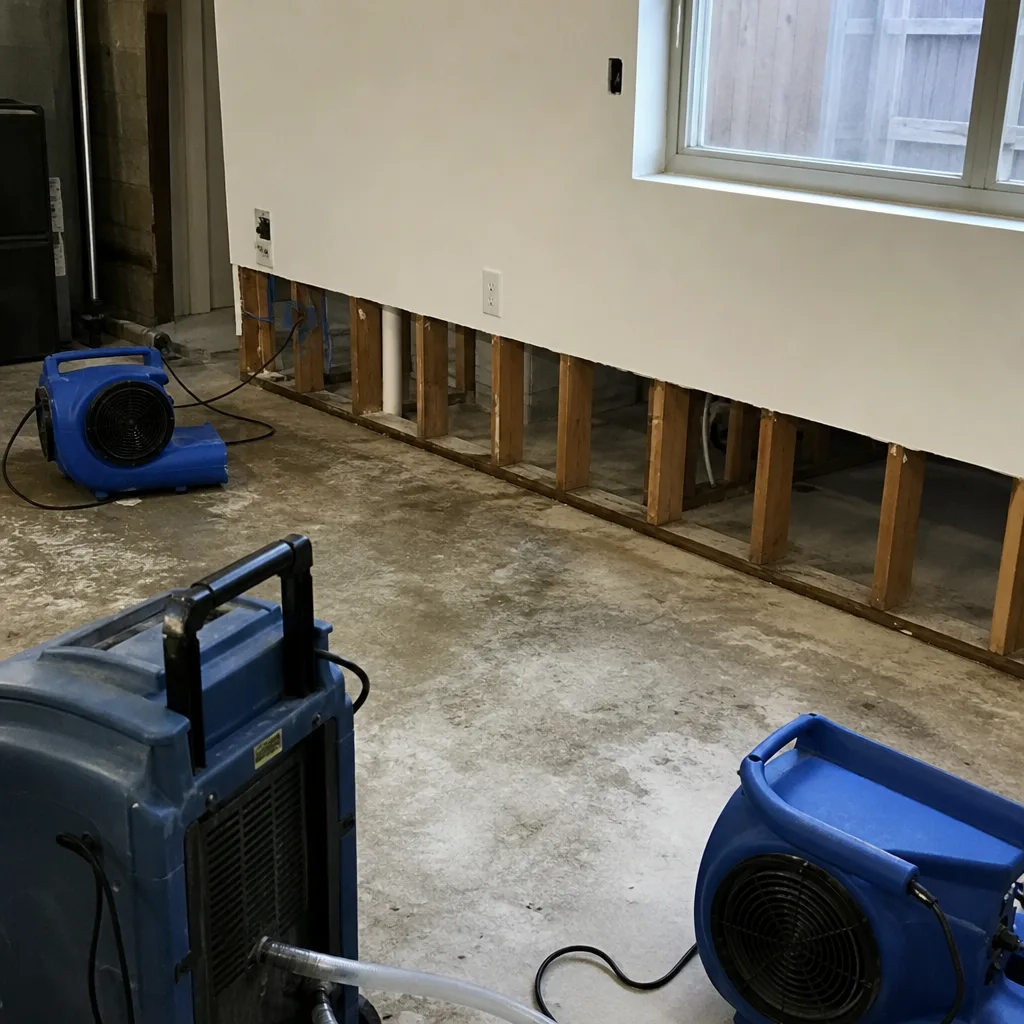
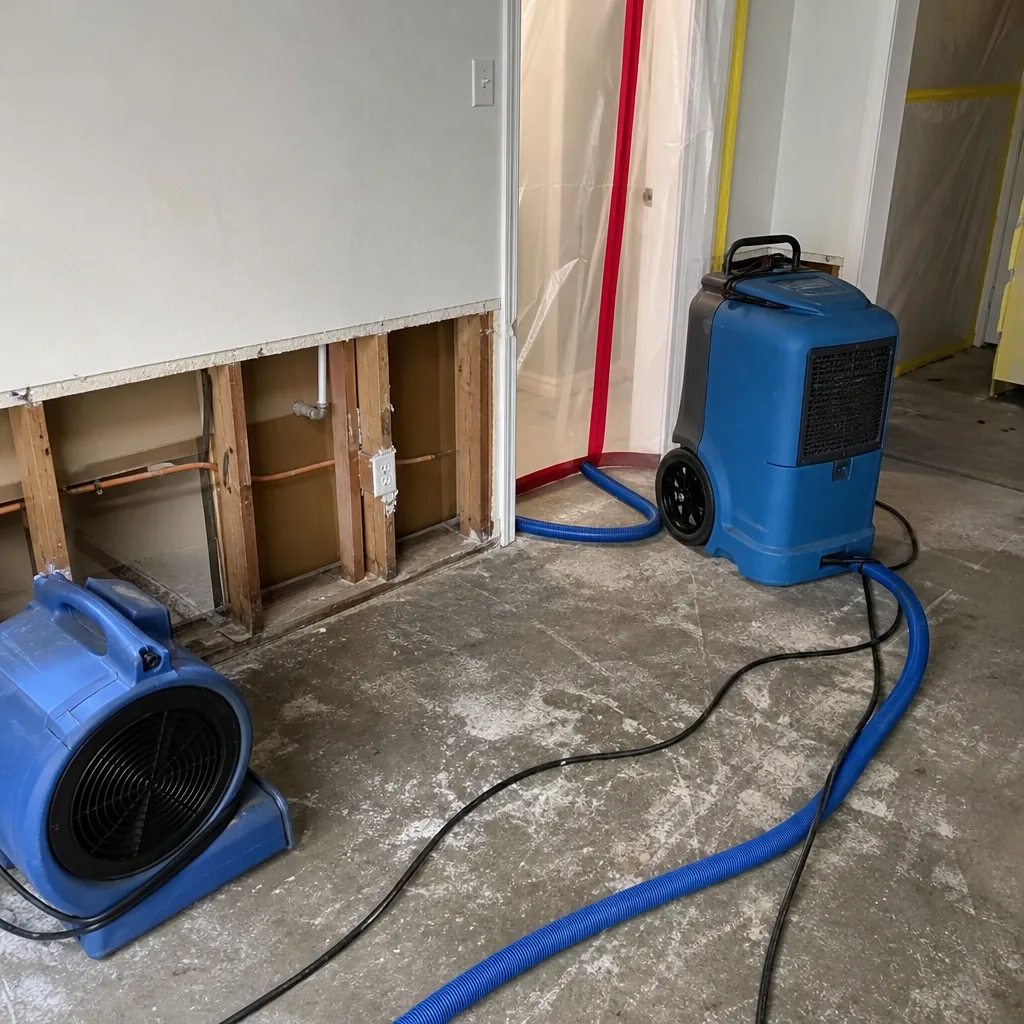
The emergency water extraction and drying process does not require a permit. Removing wet carpet, running air movers and dehumidifiers, and setting up containment barriers is non-regulated work. The permit question arises when restoration becomes reconstruction: replacing drywall beyond a small patch, touching electrical, modifying plumbing, or any structural repair. Companies like ours use professional-grade equipment from Phoenix and Injectidry during the drying phase, which is unpermitted but measured and documented, and then handle the permit-required rebuild phase with full paper trail.
No. A Certificate of Occupancy is not required after routine water damage restoration. It only becomes relevant when a home was red-tagged or yellow-tagged by the city after major storm damage, fire, or structural failure, and the city requires a new CO before you can legally reoccupy the property. If your home was not tagged, and you’re not changing the building’s footprint or occupancy classification, you do not need a new CO. Routine water restoration work completed with standard permits does not trigger this separate process.
The Bottom Line
Permits are the one restoration expense that pays you back. In Houston, a few hundred dollars spent on permits and inspections protects your insurance coverage, keeps your home legal for resale, and preserves your ability to refinance. The 50% rule in floodplain areas is the most expensive surprise most homeowners face, and it’s completely avoidable with early math and honest record-keeping. Before any restoration work starts, confirm your jurisdiction, verify the permit requirements in writing, and demand a permit number before the first tool is touched. After the work is done, save every final inspection record forever. Unpermitted work from years ago is still unpermitted work at closing. For more guides & resources, explore our blog, or call (254) 277-4577 to talk through your situation with a restoration professional who explains permits in plain English.
Written by Carl Brandt, Owner at Dryden Restoration Houston, serving Houston since 2005.
See the difference
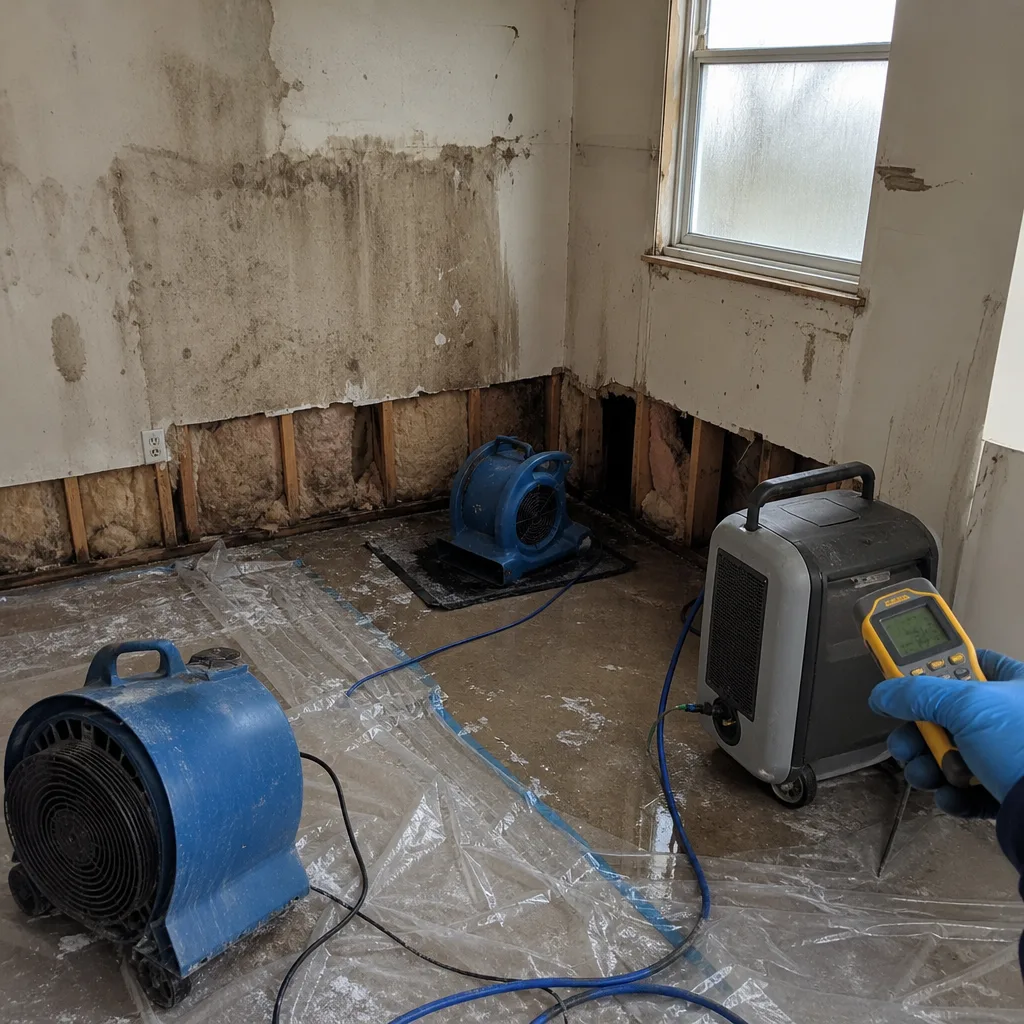 Before
 After
After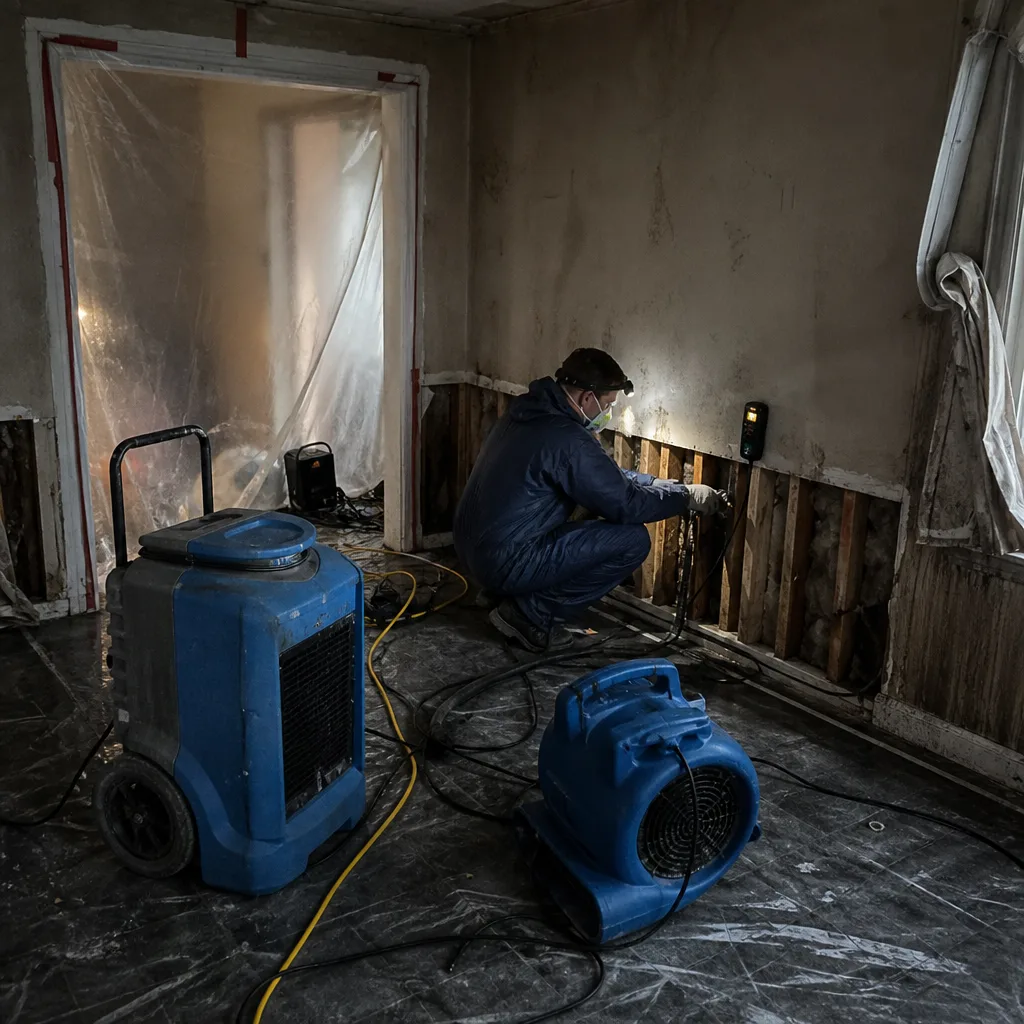 Before
 After
After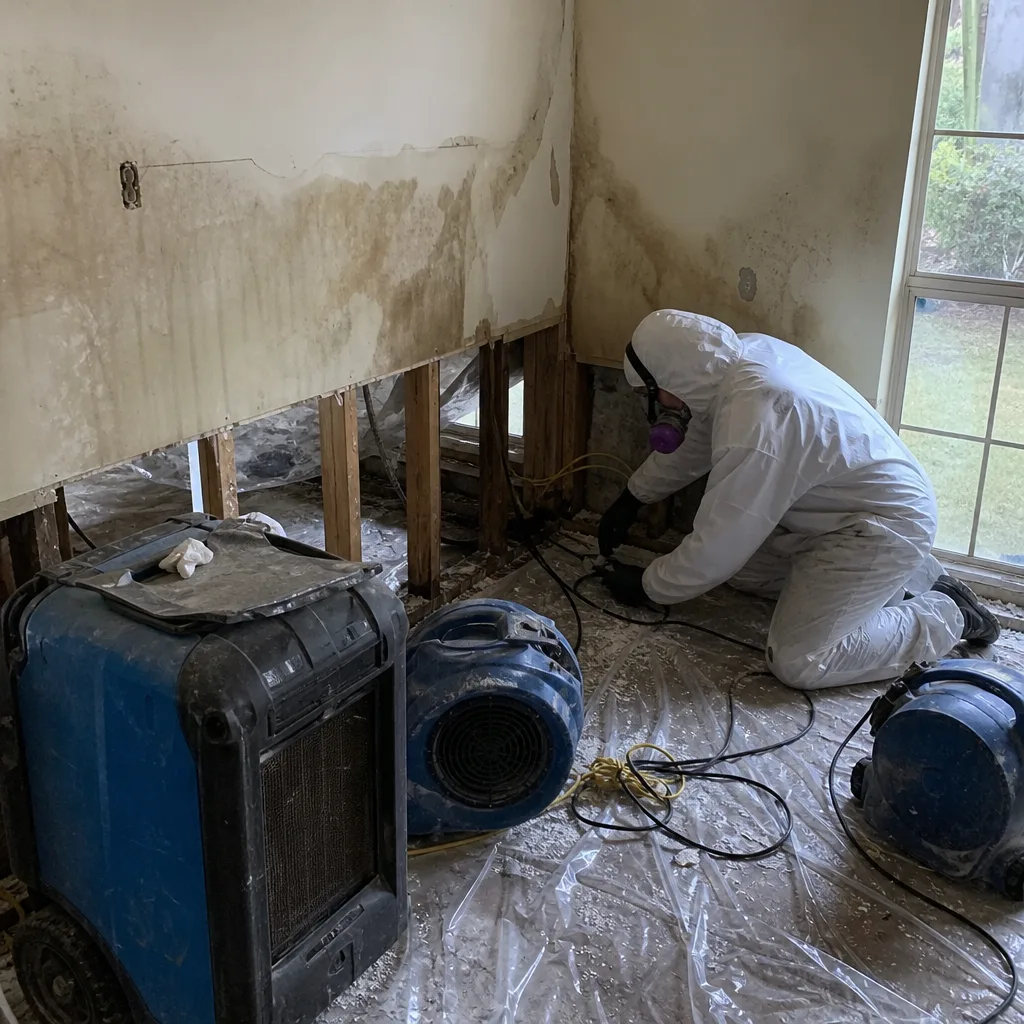 Before
 After
After