
Last updated October 16, 2026
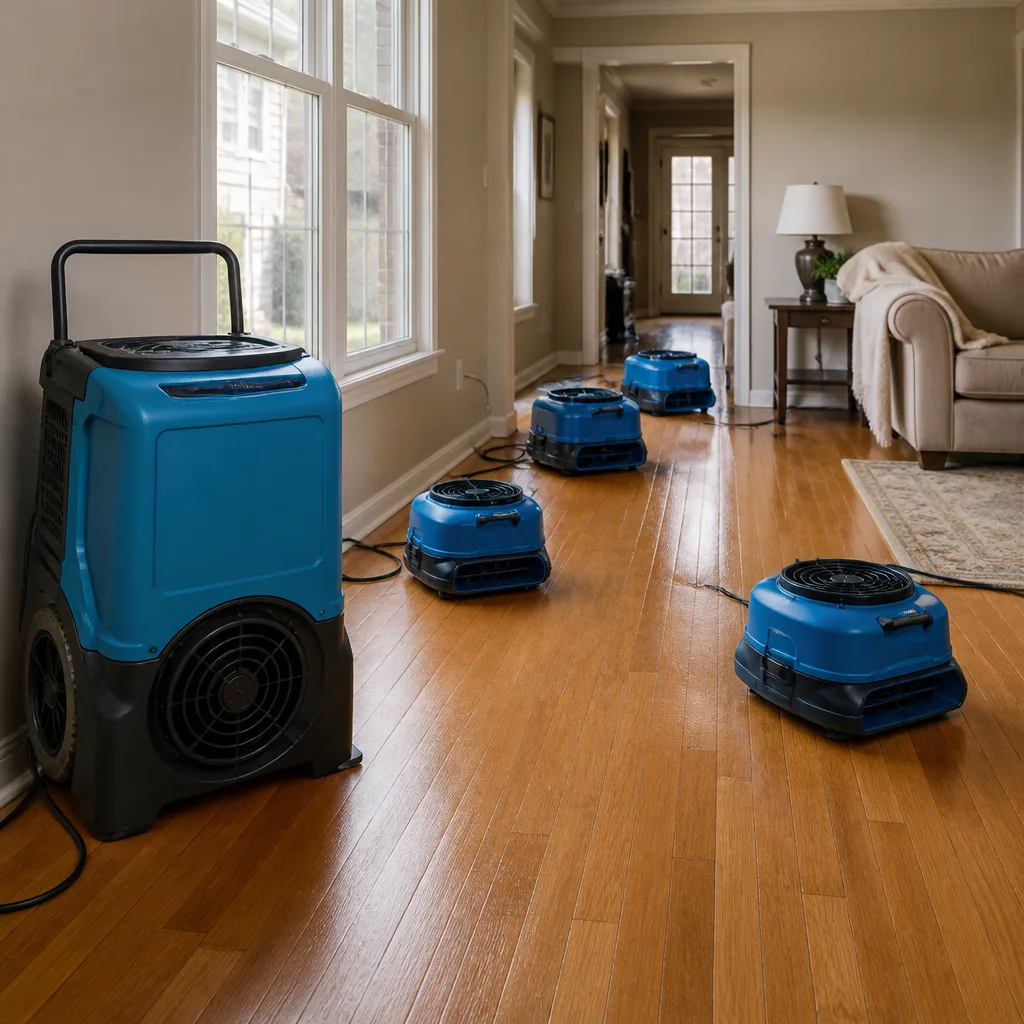 Water damage drying
 Fire & smoke cleanup
 Mold remediation
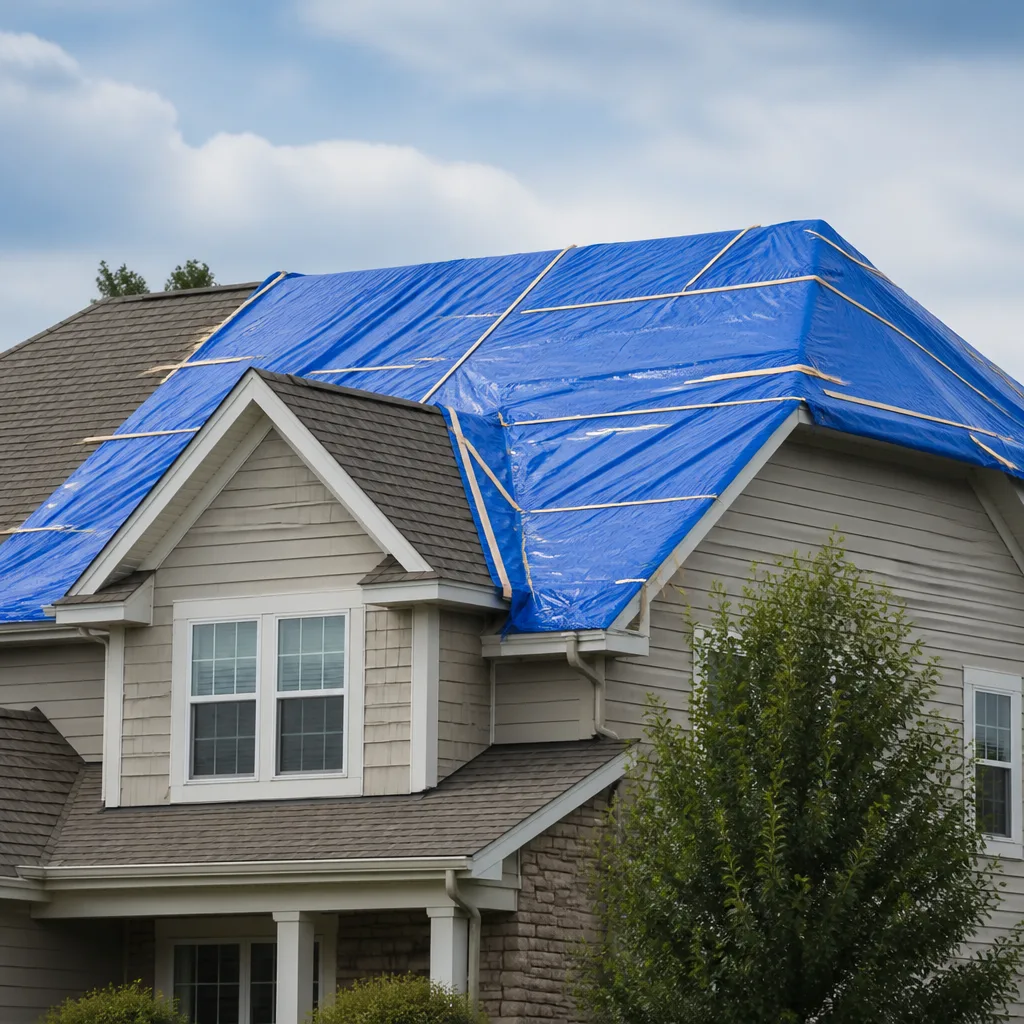 Storm response
 Sewage cleanup
 Reconstruction
Free visual inspection and a written scope of work before any mitigation begins - photos, moisture readings, and drying logs go in your claim file
The scope we write is the scope we bill. Anything new gets shown to you, in writing, before we touch it.
Get your free estimateDIY vs Professional Damage Restoration: The Houston Homeowner’s Decision Guide
Here’s a number most Houston homeowners never hear: after a water event, the wooden subfloor beneath your tile or vinyl can hold 30% moisture content while the surface feels bone dry to the touch. Rent a wet-vac, run four box fans for three days, and that number might drop to 22%. In Houston’s humidity, 22% is still a mold incubator. By the time you smell it, the colony has been feeding for two weeks. This guide gives you a clear decision framework, not a blanket warning, because some damage events are genuinely manageable on your own. Most are not, and the difference has less to do with skill than with physics, drying science, and what Houston air does to a damp wall cavity.
Restoration work we handle
Quick Answer
DIY damage restoration makes sense for small, clean-water spills under roughly 10 square feet with no wall or cabinet involvement, addressed within a few hours. Professional restoration is the right call for anything larger, any gray or black water, any event involving drywall, insulation, or wall cavities, and anything that sat longer than 24 hours in Houston’s climate. The deciding factor is not your work ethic. It is whether consumer equipment can extract moisture and hit drying targets that prevent mold in a city where mold establishes in 48 hours.
Table of Contents
- The Moisture Threshold: What ‘Dry’ Actually Means in Houston
- When DIY Is Genuinely Reasonable
- When DIY Creates a Bigger Problem Than the Original Damage
- The Drying Equipment Gap: Consumer Fans vs. Professional Dehumidifiers
- The Real Cost Comparison: DIY Equipment Rental vs. Professional Restoration
- Water Categories: Category 1, 2, and 3 Explained for the Houston Homeowner
- How to Document a Damage Event for Insurance, Whether You DIY or Not
- Common Mistakes to Avoid
- When to Call a Professional
- Frequently Asked Questions
- The Bottom Line
The Moisture Threshold: What ‘Dry’ Actually Means in Houston
Every material in your home has a normal, equilibrium moisture content. For interior wood in a climate-controlled Houston house, that number typically sits between 8% and 12%. A wood subfloor reading 15% is elevated. At 20%, mold has what it needs. At 28%, you are looking at structural deterioration over time: warping, cupping, adhesive failure, and the first stages of rot in the sill plates.
What matters for this decision guide is a simple truth: your hand is not a moisture meter. A surface can feel dry to the touch at 20% moisture content. A professional-grade moisture meter, inserted into the material or pressed against it in scan mode, tells a different story. Technicians working to IICRC standards use two types of meters: pin-type meters that push probes into the material for a direct reading, and non-invasive meters that send radio waves through the material to find hidden moisture pockets. The goal on any water damage job is to dry the structure back to within 2 to 4 percentage points of its dry standard, which is the point where mold cannot establish and building materials retain their dimensional stability.
In Houston, this drying process fights a constant opponent: ambient relative humidity. Houston’s average outdoor relative humidity runs between 70% and 90% for much of the year. Indoor humidity in a house without active dehumidification typically sits at 60% to 70% during the warm months. When you open windows to “let things dry out,” you are, in many cases, actively feeding the moisture problem. That ambient humidity is exactly why the drying equipment conversation matters as much as the extraction conversation.
When DIY Is Genuinely Reasonable
We are not here to tell you that every spill requires a restoration crew. That would be dishonest and, frankly, insulting. There are specific, bounded scenarios where a careful homeowner with the right approach can handle a water event without professional help. Here is the framework we use when we talk to Houston homeowners about this.
A DIY job is reasonable when all of the following are true:
- The water source is clean, meaning it came from a supply line, faucet, or appliance supply hose, not from a drain, toilet, sewer, or outdoor source. This is what the industry calls Category 1 water.
- The affected area is under roughly 10 square feet of flooring with no penetration into walls, under cabinets, or beneath baseboards in a way that reaches the subfloor.
- The water was on the surface for less than a few hours before you began extraction.
- You can access the affected area fully, meaning no furniture or built-ins block the space.
- Your home’s indoor relative humidity is controlled with central air conditioning running continuously during the drying period.
For these bounded cases, here is the step-by-step process:
- Stop the source first. Shut off the supply valve or appliance. Remove everything from the affected area.
- Extract as much water as possible with a wet-dry vacuum. Pass over the area slowly. Repeat until the vacuum picks up minimal water.
- Remove any saturated throw rugs or small area rugs and get them outside or into a garage for separate drying.
- Set up air movement with box fans aimed at the wet area, but understand their limitations. Box fans move air across surfaces. They do not remove moisture from the air.
- Run your central air conditioning continuously for at least 72 hours. In Houston, without active dehumidification, this is your only real drying mechanism.
- Check the area daily. If you see discoloration, swelling, or detect a musty odor, the job has exceeded DIY scope. Stop and call a professional.
This is the full extent of what consumer equipment can accomplish in Houston’s climate. Beyond these boundaries, you are renting equipment that cannot finish the job and spending money on a delay that makes the eventual professional work more expensive.
When DIY Creates a Bigger Problem Than the Original Damage
There are water events that should never be handled as DIY projects, not because the homeowner lacks capability, but because the category of water and the physics of the situation make professional intervention the only responsible path. Here is where the line sits.
Gray water (Category 2) means water that contains significant contamination and can cause discomfort or sickness if ingested. This includes dishwasher overflow, washing machine discharge, toilet overflow with urine but no feces, and aquarium leaks. This water carries bacteria and organic material. It requires extraction, disinfection, and drying, but also proper disposal, personal protective equipment, and a cleaning protocol that prevents cross-contamination.
Black water (Category 3) is grossly contaminated and can contain pathogenic, toxigenic, or other harmful agents. This includes sewage, flooding from rivers or bayous, water from beyond the toilet trap, and standing water that has begun to grow bacteria. Black water requires full containment, removal of affected porous materials, and professional disposal. No homeowner should handle Category 3 water without training and protective equipment. The health risk is real, and improper handling spreads contamination through the home.
Beyond water categories, these specific conditions make DIY dangerous:
- Any water that has penetrated drywall. Drywall wicks water upward from the base, and the cavity behind it stays damp long after the surface dries. The paper backing of drywall is a mold food source.
- Any event where water sat longer than 24 hours. In Houston’s climate, 24 hours of saturation is the point where bacterial growth begins in porous materials and mold establishment becomes a race.
- Any event involving wall cavities, insulation, or subfloor under hard flooring. These are hidden spaces where moisture persists without visible signs.
- Any water that came from outside or from a drain line. This is never clean water, even if it looks clear.
- Any event where the water source was sewage or a flood. This is Category 3, full stop.
We have walked into Houston homes where a homeowner spent three weeks drying what looked like a minor appliance leak, only to find mold covering the back side of the drywall and the bottom plate of the wall framing. The cost to remediate that mold and rebuild the affected wall section ran higher than the original restoration would have, because the mold spread during the delay. That is not a judgment on the homeowner. It is a statement about what moisture does inside a Houston wall.
The Drying Equipment Gap: Consumer Fans vs. Professional Dehumidifiers
The most common DIY mistake we see in Houston is not a lack of effort. It is a fundamental misunderstanding of what drying equipment does. A box fan is an air mover. It pushes air across a wet surface, which accelerates evaporation. That is useful, and it is part of every professional restoration job. But evaporation is only half the equation. The evaporated moisture must go somewhere. In an enclosed Houston home, it goes into the air, and then it settles back into materials when the air cools or when humidity reaches saturation.
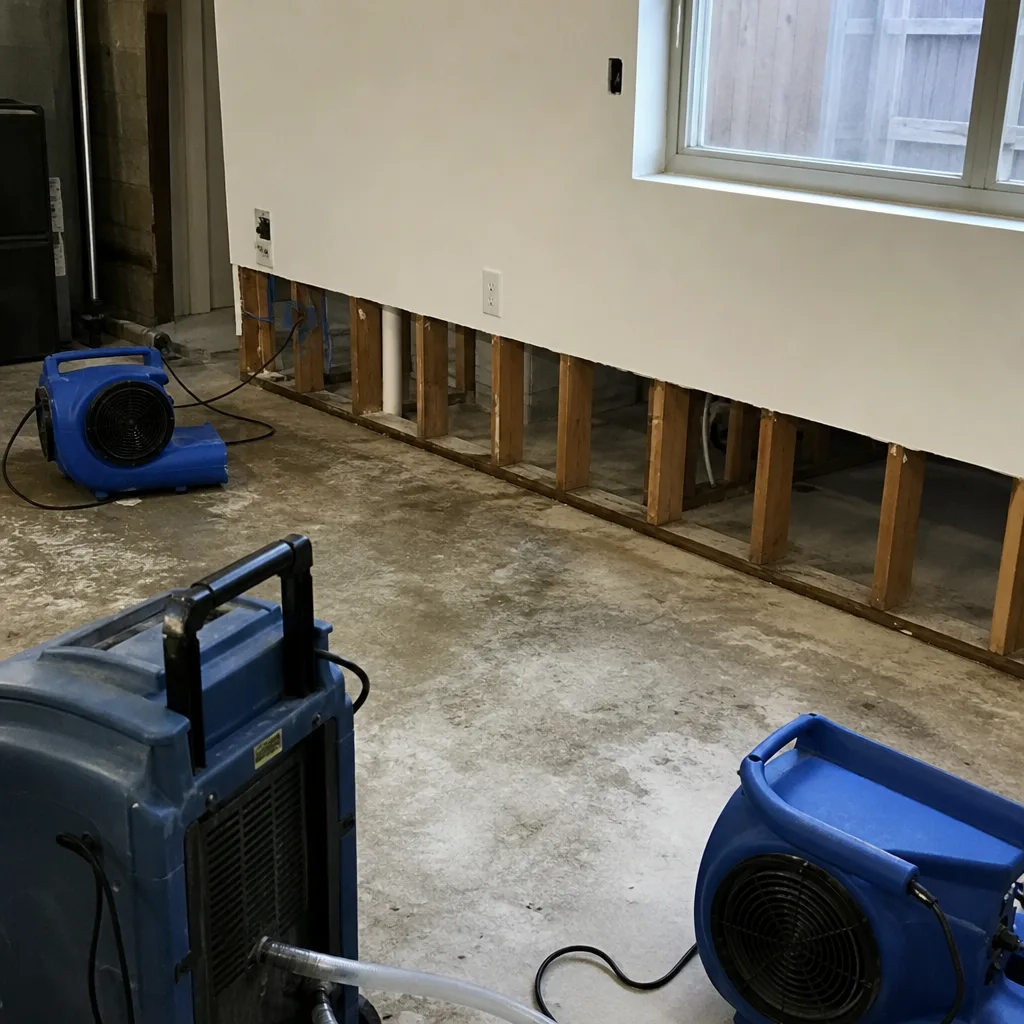
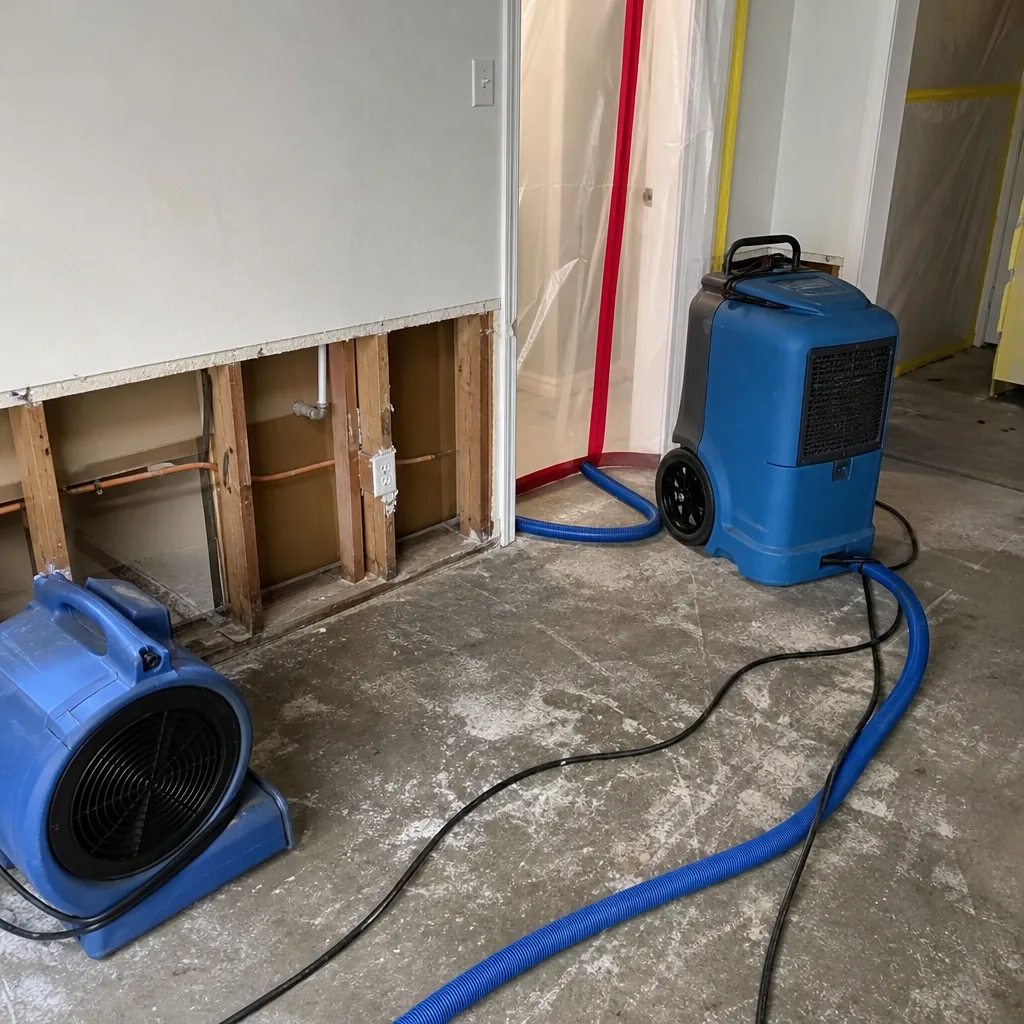
Professional restoration uses a combination of air movers and dehumidifiers, and the dehumidifier is the critical piece. On our Houston jobs, the dehumidifier fleet includes Dri-Eaz and Phoenix units, the same machines used in large commercial restoration projects. These are not the small consumer dehumidifiers you buy at a hardware store. A professional-grade low-grain refrigerant dehumidifier removes 25 to 40 pints of water per day at the start of a drying job, and it does so at the low humidity levels that consumer machines cannot maintain. A desiccant dehumidifier, like some Dri-Eaz models, removes water even in lower-temperature spaces and at lower vapor pressures.
Here is the practical difference for a Houston homeowner. A consumer dehumidifier rated for 30 pints per day at 80°F and 60% relative humidity produces almost nothing at 50°F and 40% relative humidity. The professional machine is engineered to keep pulling moisture at those lower levels, because that is exactly the range where drying stalls if you cannot maintain a low enough vapor pressure in the air. Without that, the moisture in the subfloor or wall cavity does not move into the air. It stays where it is. You can run fans for a week and the moisture content in the wood drops a few points, never reaching the dry standard.
This is what the trade calls psychrometric drying: the science of managing air temperature, humidity, and movement simultaneously to pull moisture out of materials and keep it out. It is not something a fan accomplishes, and it is something that matters more in Houston than in almost any other major U.S. city, because our ambient humidity is already close to the saturation point. The drying margin is thin from the start.
The Real Cost Comparison: DIY Equipment Rental vs. Professional Restoration
Homeowners often compare the cost of a professional restoration against the cost of renting equipment at a big-box hardware store. On the surface, the DIY route looks cheaper. Here is how the math actually plays out in Houston in 2026, based on typical local market pricing.
DIY equipment costs for a moderate water event:
- Wet-dry vacuum rental: $25 to $50 per day
- Box fan rental or purchase: $15 to $40 per unit, and you need at least three for any meaningful air movement
- Consumer-grade dehumidifier rental: $50 to $100 per day, and it is almost certainly undersized for the job
- Total DIY equipment for a three-day drying attempt: $180 to $400
Now, here is what often follows in Houston when the DIY drying job falls short:
- Mold inspection and testing if the homeowner detects a problem: $300 to $700
- Mold remediation for a wall cavity or subfloor area of moderate size: $2,000 to $8,000, depending on containment requirements and material removal
- Replacement of water-damaged drywall, baseboard, and flooring: $1,500 to $6,000, depending on the materials involved
- Total cost when DIY drying fails: $3,800 to $15,400, compared to the restoration that would have been performed originally
Professional water damage restoration in Houston for a moderate event, meaning a dishwasher leak or washing machine overflow affecting a kitchen or utility area, typically runs between $2,500 and $6,000. That number includes extraction, professional drying equipment, monitoring, and documentation. It comes with a written price before work starts, which is something we insist on for every job. The Kingswell Guarantee governs every Dryden job: a written price before any work begins, a committed arrival window, a clean job site, and a written 365-Day Done Right Promise. If a repair fails within a year, we come back and make it right at no charge. That guarantee is in writing on every job.
The honest comparison is not $200 of rental equipment versus $4,000 of professional work. It is $200 of rental equipment plus a 35% to 50% chance of a $3,000 to $8,000 mold and rebuild project, versus a guaranteed, documented, professionally dried restoration at a known price. When you understand the moisture threshold problem from earlier in this guide, that 35% to 50% failure rate is specific to Houston conditions, where the drying margin is thin and the mold clock is short.
Water Categories: Category 1, 2, and 3 Explained for the Houston Homeowner
The restoration industry classifies water damage into three categories, and the category determines everything about the right response. Understanding these categories helps you make the DIY-versus-professional decision accurately, not based on guesswork or instinct.
Category 1: Clean water. This is water from a broken supply line, a faucet, a tub or shower overflow that has not been used for anything else, or a burst pipe. It does not contain contaminants at the source. Category 1 water becomes Category 2 water over time, typically within 24 to 48 hours of standing, because microorganisms begin to grow in the standing water and on the surfaces it touches. For Category 1 water on non-porous flooring, addressed within the first few hours, DIY drying can work if the area is small and contained. For Category 1 water that has soaked into subfloor, drywall, or insulation, professional extraction and drying is the safer path in Houston’s climate.
Category 2: Gray water. This is water with significant contamination from biological or chemical sources. Dishwasher discharge, washing machine overflow, toilet overflow with urine but no feces, and aquarium water all fall here. Category 2 water can cause illness if ingested and requires disinfection after extraction. This is professional territory. The contamination is not visible, and the cleaning protocols matter for the health of everyone in the house.
Category 3: Black water. This is water containing sewage, pathogens, or standing water with active bacterial growth. It requires full containment, removal of porous materials, disposal according to local regulations, and professional-grade disinfection. In Houston, flooding from the bayous, street flooding during heavy rain, and sewer backups are all Category 3 events. No amount of consumer cleaning makes a Category 3 event safe to handle without training and equipment.
The 48-Hour Mold Clock in Houston
Mold needs four things to grow: mold spores, which are everywhere; a food source, which wood, paper, drywall, and even dust provide; the right temperature, which indoor Houston homes maintain year-round; and moisture. The moisture is the only variable you control. In ideal conditions, mold spores can germinate in 24 to 48 hours and produce visible colonies within a week. Houston’s warm, humid conditions push that timeline toward the fast end. A water event that is not dried to the dry standard within two days in Houston is a mold risk, not a hypothetical, and that timeline makes the professional-versus-DIY conversation time-sensitive. You cannot wait a week to decide. You cannot try it yourself for a few days and then call. By the time you realize the DIY attempt is not working, the mold clock has already expired.
How to Document a Damage Event for Insurance, Whether You DIY or Not
Documentation is the one part of water damage restoration that most Houston homeowners skip, and it is the one that costs them money in denied or reduced insurance claims. Whether you decide to handle a small event yourself or call the professionals from Dryden Restoration Houston on day one, good documentation protects your claim and your home’s value. Here is the process we recommend.
- Take photos immediately, before you move anything or extract any water. Document the source of the water, the extent of the visible water, and all affected materials. Include a wide shot of the room and close-ups of any wall penetration, cabinet footing, or appliance connection.
- Take photos during the process. If you are extracting water yourself, photograph the extraction. If a restoration company handles the work, ask for photo documentation of the wet materials, the drying equipment placement, and the final moisture readings.
- Record the timeline. Write down when you first noticed the water, when you shut off the source, and what steps you took. Include dates and times. This timeline appears in every insurance adjuster’s report, and an accurate one helps your claim.
- Keep receipts for every purchase and rental related to the damage, even small ones. Rented fans, purchased tarps, plumber bills, everything.
- If you hire a professional restoration company, request the written drying log. This is the document that shows moisture readings at the start of the job and at the end, confirming the structure was dried to the industry dry standard. It is the single best proof that the restoration was completed properly.
- Contact your insurance company early, but understand what your policy covers. Water damage from sudden or accidental discharge is commonly covered. Flood damage from rising groundwater or bayou overflow requires separate flood insurance and is excluded from most standard policies.
For Houston homeowners, the documentation question often comes up after a major storm event. Multiple homes in a neighborhood file claims simultaneously. Adjusters are overloaded. The homeowner with thorough photo documentation and a clear timeline gets processed faster and in our experience, gets more equitable settlements. That is simply a function of evidence quality, and it applies whether you DIY the restoration or hire water damage restoration in Houston professionals.
Common Mistakes to Avoid
- Opening windows to speed up drying. In Houston, outdoor humidity is usually higher than indoor humidity. Opening windows adds moisture to the air and feeds the drying problem instead of solving it.
- Using household bleach on mold. Bleach does not penetrate porous materials like drywall and wood where mold roots live. It kills surface mold but leaves the colony alive beneath the surface, and it adds a harsh chemical to the air in the process.
- Replacing the flooring before the subfloor is dry. Trapping moisture under new flooring is a guaranteed path to smell, cupping, and mold within months. The subfloor must read at the dry standard before new flooring goes down.
- Treating the visible area but ignoring the wall behind the baseboard. Water travels along the bottom plate of a wall and wicks upward into drywall. The affected area is almost always larger than the visible stain.
- Waiting to see if the smell goes away. By the time you smell mold, the colony is established. The longer you wait, the larger the remediation area becomes, and the cost climbs with square footage.
- Assuming a consumer fan will finish the job. A fan moves air. It does not remove moisture from the air. Without dehumidification scaled to the space, evaporation slows to a crawl as humidity rises, and the drying job stalls.
- Disposing of evidence before the adjuster arrives. Many policies require the damaged materials to be available for inspection. Bag them and set them aside, but keep them on the property until the adjuster has seen them.
When to Call a Professional
You should call a professional restoration company in Houston when the water event involves any of the following: gray or black water, drywall or baseboard involvement, wall cavities or insulation, subfloor under hard flooring, any event that sat more than 24 hours, any event where you cannot access the full affected area, any event where your own drying attempt has not produced visible improvement in 48 hours, or any event where you are unsure of the water category. These are the cases where Houston’s humidity and mold timeline work against you, and the cost of a delayed professional response exceeds the cost of a prompt one. Dryden Restoration Houston offers free estimates throughout the Houston metro area. Call (254) 277-4577, and a live person answers, 24 hours a day, 7 days a week. No voicemail tree, no call-back message. You will get a written price before any work starts, on every job, no exceptions.
Frequently Asked Questions
In Houston’s warm, humid climate, mold spores can germinate in 24 to 48 hours after a water event, and visible mold colonies can appear within a week. Houston’s ambient humidity is the variable that speeds this timeline compared to drier climates, which is why prompt extraction and professional drying matter here more than in most cities.
A regular box fan and a consumer dehumidifier can dry a small, contained clean-water spill on a non-porous surface. They cannot dry a subfloor, wall cavity, or drywall behind baseboards to the industry dry standard, because consumer dehumidifiers cannot maintain the low humidity levels required to pull moisture from these materials. In Houston, the humidity baseline makes this equipment gap more significant than in drier regions.
Water damage from sudden or accidental discharge of a supply line, appliance, or plumbing fixture is typically covered by standard homeowner’s insurance policies, subject to your deductible and policy limits. Flood damage from rising groundwater or bayou overflow is excluded from standard policies and requires separate flood insurance. Check your policy language or call your agent for specifics. Document everything with photos and receipts regardless of who performs the restoration.
Water damage restoration is the process of extracting water, drying the structure to the dry standard, and repairing or replacing water-damaged materials. Mold remediation is the process of containing, removing, and cleaning mold that has already grown, along with addressing the moisture source that allowed the mold to establish. They often overlap, because incomplete water damage restoration creates the conditions for mold, which then requires mold remediation in Houston to address.
Professional water damage restoration for a moderate event, such as a dishwasher leak or washing machine overflow, typically runs between $2,500 and $6,000 in the Houston market. Small, contained clean-water events cost less. Large events involving multiple rooms, Category 3 water, or structural drying cost more. Every Dryden job includes a written price before any work starts, so the number does not change at the door. Call (254) 277-4577 for a free estimate.
Fire damage involves smoke residue, soot, and often water from fire suppression, and the combination requires professional equipment and cleaning agents. Smoke particles penetrate porous materials and cannot be removed by household cleaners. Soot is acidic and damages surfaces over time. The water used to extinguish the fire creates a secondary water damage event. Professional fire damage restoration in Houston addresses all three: soot, smoke, and water, along with odor removal and structural repair. Call (254) 277-4577 for an estimate.
The Bottom Line
The DIY-versus-professional decision for Houston damage restoration comes down to three things: the water category, the square footage, and the moisture threshold you can realistically achieve with the equipment you have. Our Water Damage Restoration Maintenance Checklist for Houston Homeowners can help you stay ahead of problems before they start. For small, clean-water spills addressed immediately on non-porous surfaces, a careful DIY approach works. For everything else, the physics of Houston’s climate works against you: high ambient humidity slows evaporation, warm temperatures accelerate mold growth, and hidden cavities hold moisture long after surfaces feel dry. Dryden Restoration Houston provides a written price, a committed arrival window, and a 365-Day Done Right Promise in writing on every job. That guarantee is the difference between hoping the job is dry and knowing it is. Call (254) 277-4577 for a free estimate, answered by a live person, 24 hours a day, 7 days a week.
Written by Carl Brandt, Owner at Dryden Restoration Houston, serving Houston since 2005. Explore more guides & resources from our team.
See the difference
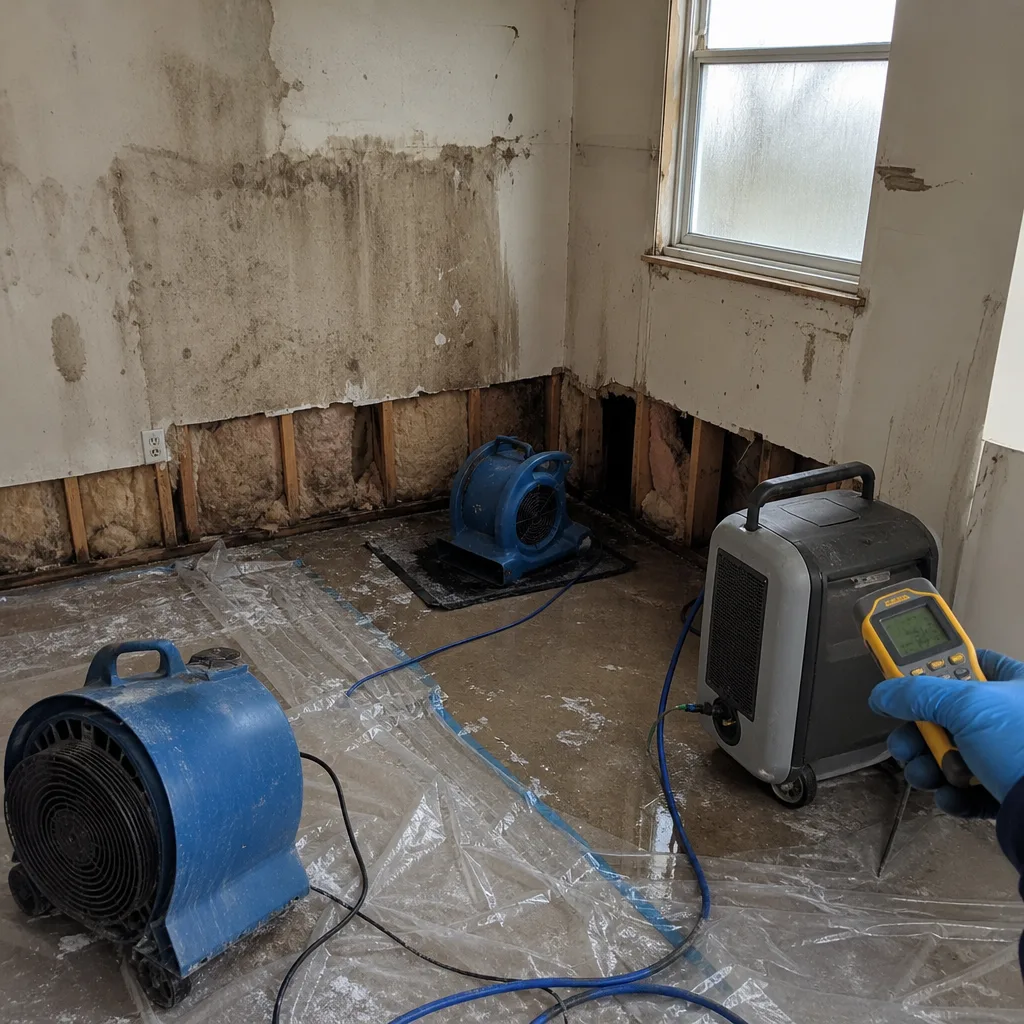 Before
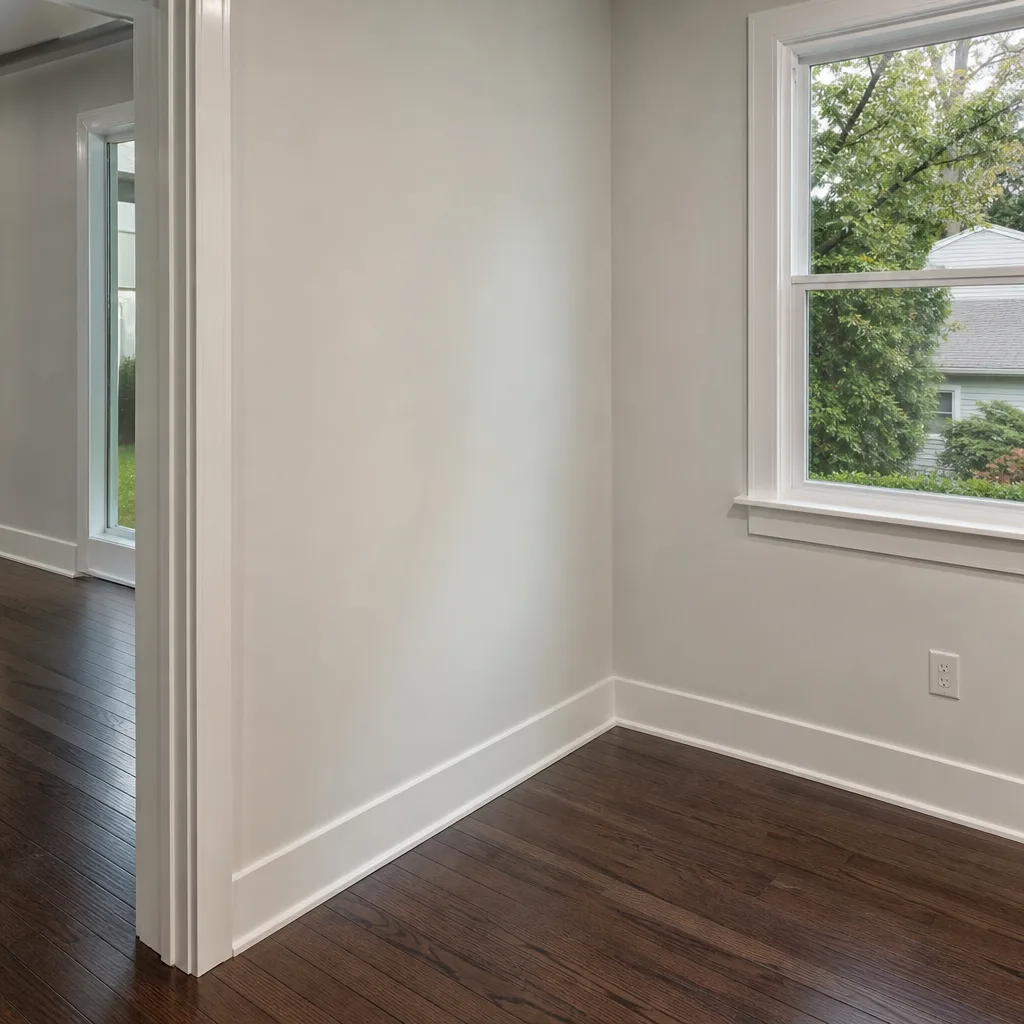 After
After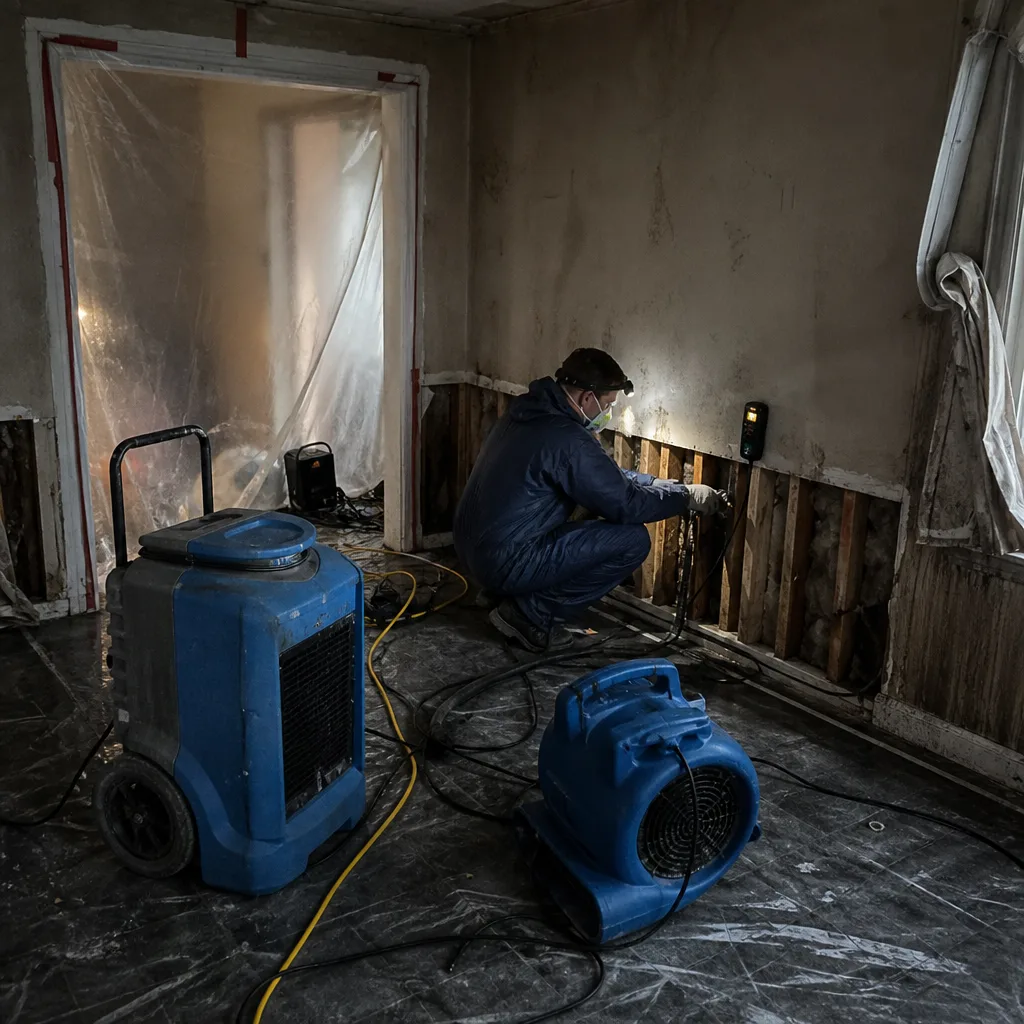 Before
 After
After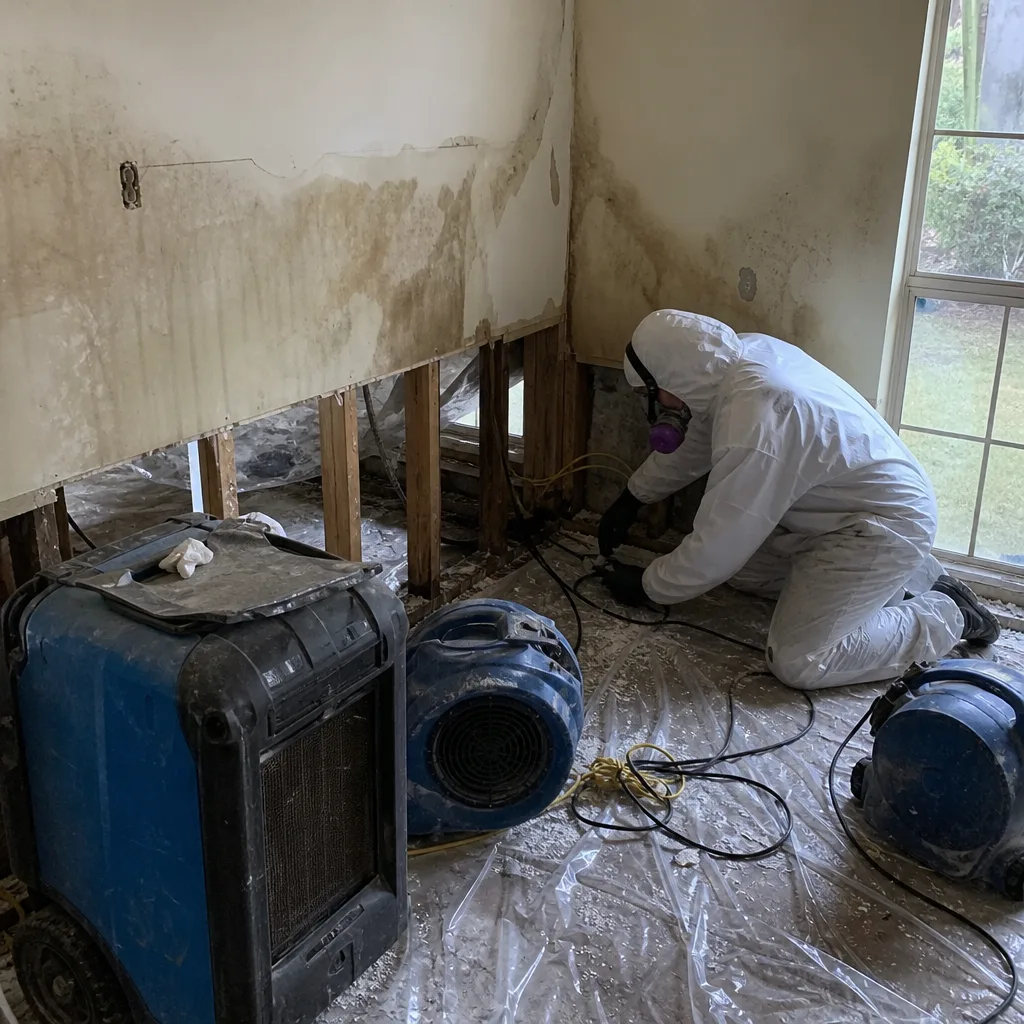 Before
 After
After