
Last updated October 16, 2026
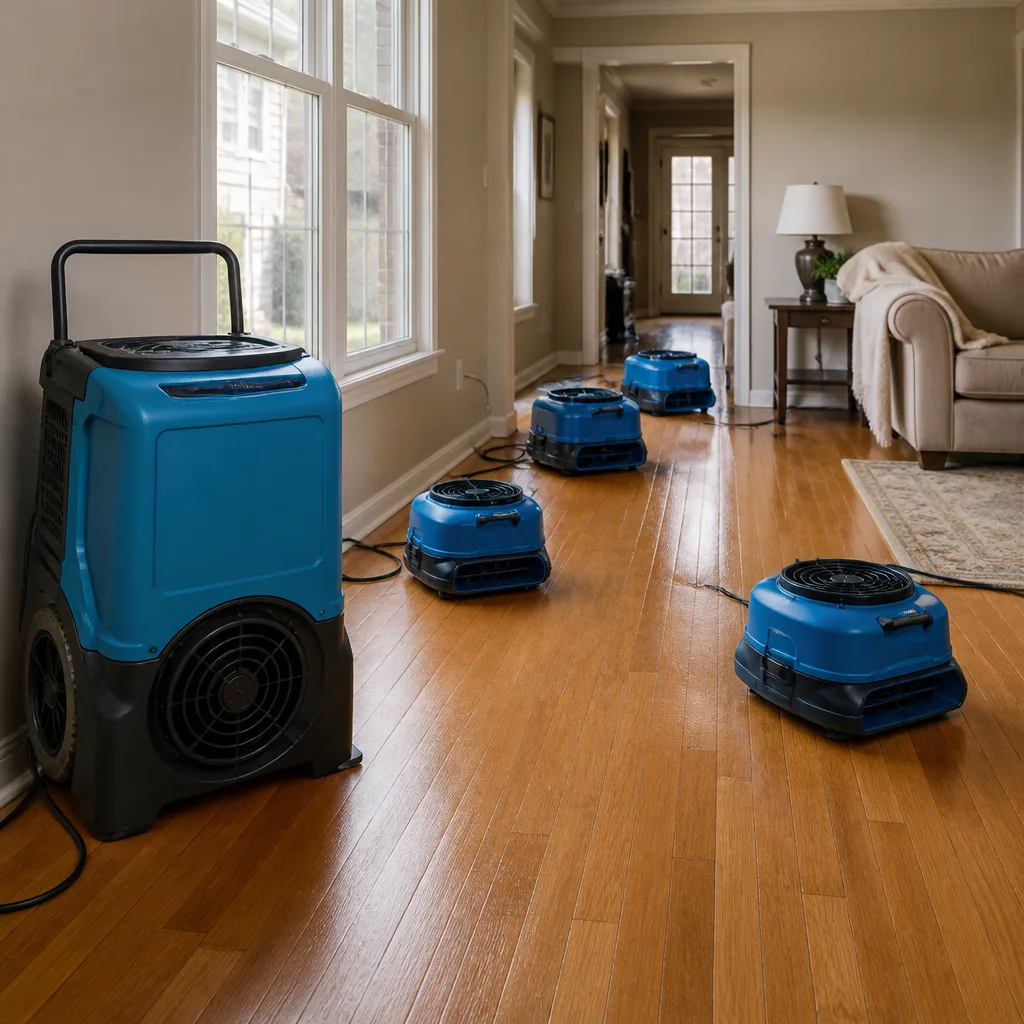 Water damage drying
 Fire & smoke cleanup
 Mold remediation
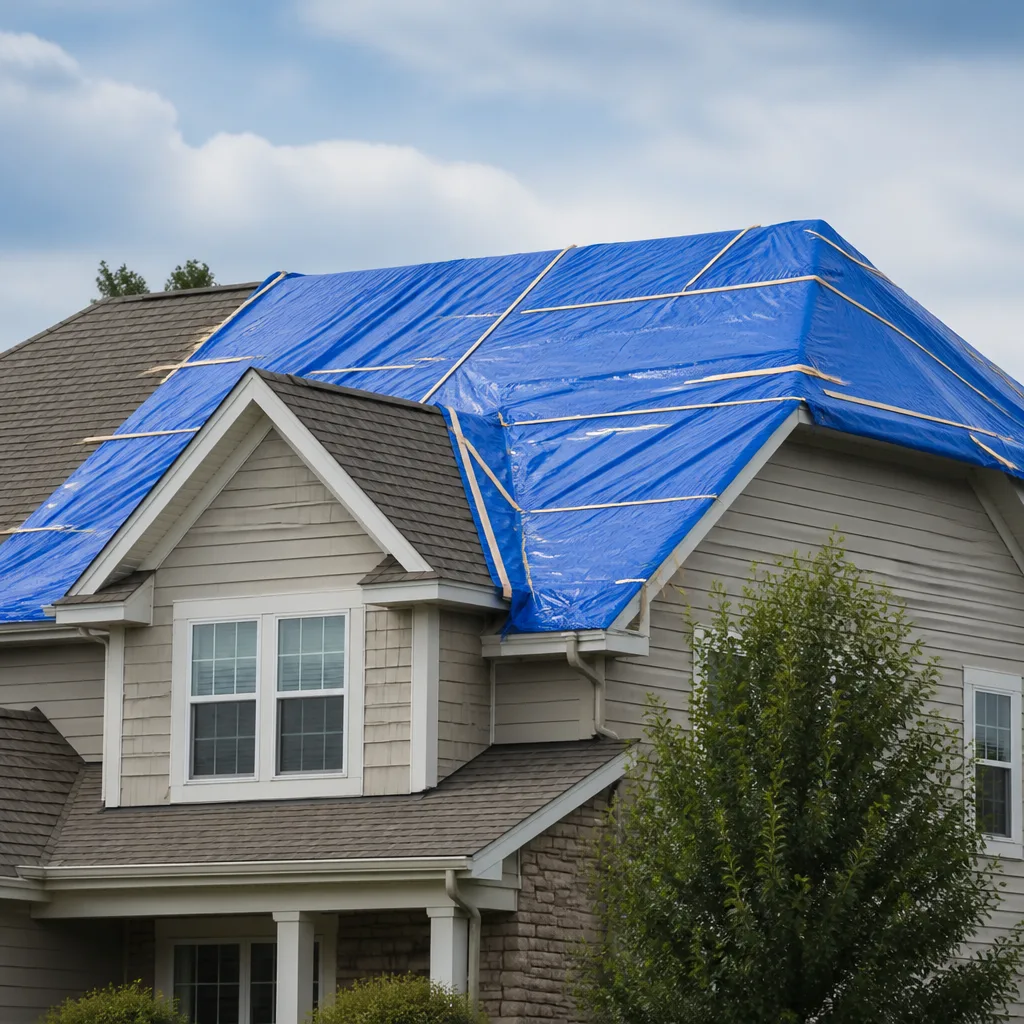 Storm response
 Sewage cleanup
 Reconstruction
Free visual inspection and a written scope of work before any mitigation begins - photos, moisture readings, and drying logs go in your claim file
The scope we write is the scope we bill. Anything new gets shown to you, in writing, before we touch it.
Get your free estimateSeasonal Damage Restoration Care for Houston: Year-Round Homeowner’s Guide
The worst time to find out your roof deck flashing failed is the first week of June. The worst time to find out your foundation has a new crack is after a summer of 100-degree days with no rain. In Houston, seasonal damage isn’t random. It follows a predictable calendar, and so should your prevention. This guide walks through what to inspect, when to inspect it, and what it costs to fix problems before they compound into restoration-scale damage. For a deeper look at the full process, see The Complete Guide to Damage Restoration in Houston. Houston has roughly 8.5 million people spread across Harris County and the surrounding suburbs, and nearly every one of them lives in a house that’s quietly reacting to the climate right now.
Restoration work we handle
Quick Answer
Houston homeowners should split the year into four damage-prevention windows: pre-hurricane hardening (March through May), storm response prep (June through October), post-dry-season foundation and plumbing checks (October through November), and cold-snap pipe protection (December through February). The two highest-ROI actions you can take this month are walking your roofline for lifted flashing and photographing every exterior wall, window, and door frame before storm season arrives. Most seasonal damage in Houston is preventable if caught during the right calendar window, and the repair costs are a fraction of what a full restoration runs once water gets inside the building envelope. For detailed pricing context, see our Damage Restoration Cost Breakdown: The Houston Homeowner’s Reference for 2026.
Table of Contents
- Pre-Hurricane Season (March – May): Wind-Driven Rain Hardening
- Peak Hurricane Season (June – October): The 48-Hour Protocol
- Dry-Heat Season (July – September): Clay Soil, Foundation Stress, and Pipe Movement
- Post-Season Inspection Window (October – November): Catch It Before It Compounds
- Winter Mild Season (December – February): Houston’s Counterintuitive Freeze Risk
- Photo Documentation and Insurance: What Adjusters Actually Need
- Common Mistakes to Avoid
- When to Call a Professional
- Frequently Asked Questions
- The Bottom Line
Pre-Hurricane Season (March – May): Wind-Driven Rain Hardening
Houston doesn’t get “spring” the way a Chicago or a Minneapolis does. What we get is a two-to-three-month runway before the Atlantic basin wakes up, and that runway is the single most valuable stretch on the calendar for preventing storm damage. The failure mode that matters most here isn’t standing water. It’s wind-driven rain: water pushed sideways at 70 to 100 miles per hour, forced under shingles, through weep holes, and past flashing that would hold up fine in a normal downpour.
Walk your exterior with this question in your head: could a garden hose pointed at this seam from a 45-degree angle get water behind it? That’s the standard hurricane rain will test. Here’s the ordered checklist we use when walking a Houston home in April:
- Roof-to-wall flashing. On every exterior wall where the roofline meets a vertical surface, look for lifted flashing, cracked caulk, or daylight between the metal and the wall sheathing. In neighborhoods like Meyerland, Bellaire, and Kingwood, we routinely see flashing that was installed correctly but has since been pulled loose by thermal expansion. A tube of polyurethane sealant is $10. A roof repair after June is $600 to $1,400, and that’s before any interior drywall or insulation work.
- Window and door perimeter seals. Press your thumbnail into the caulk bead around every window frame and exterior door. If it feels hard or pulls away, it’s no longer sealing. Remove and replace with a quality silicone or polyurethane sealant. This is the single most underrated pre-storm action in Houston. A window leak that starts during a June squall will wick into the wall cavity and you won’t see the damage until August.
- Soffit and ridge vents. If your attic has soffit vents, make sure they’re not painted over, blocked by insulation, or corroded. Ridge vents should be inspected from the attic side with a flashlight: you should see daylight through the vent slot. Clogged ventilation traps Houston’s humidity in your attic, which condenses on the underside of the roof deck and leads to mold that has nothing to do with a storm.
- Gutter brackets and downspout routing. Loose gutters don’t just sag; they pull the drip edge away from the fascia and create a channel for water to run behind the gutter. Check that every downspout discharges at least four feet from the foundation. In Houston’s clay soil, five feet is better.
- Yard grading. After the dry months, soil pulls away from foundation walls. Before hurricane season, fill any gaps and regrade so the yard slopes away from the slab at a minimum of half an inch per foot for the first six feet. We see too many homeowners discover a negative grade during a storm, when soil settlement has been building for months.
For homeowners who want to be thorough, we recommend a Water Damage Restoration in Houston professional walk a moisture meter along interior baseboards and around window jambs in May. A meter reading above 17% on drywall signals a developing leak before any staining appears. That reading costs nothing to check and thousands to ignore.
Peak Hurricane Season (June – October): The 48-Hour Protocol
Once the National Hurricane Center names a storm and puts the Texas coast in the cone of uncertainty, Houston homeowners have about 48 hours to make decisions that determine whether they’ll be filing an insurance claim or just sweeping the driveway. Most of that work is not “hurricane prep” in the sandbag-and-plywood sense. It’s documentation and scope reduction.
Here’s the 48-hour protocol we recommend to Houston customers every time a storm enters the Gulf:
- Photograph everything in daylight (T-minus 48 hours). Walk the entire exterior with a phone camera and shoot every wall, every roofline, every window, every door, every fence line. Then go inside and shoot the ceilings, the walls around windows, and the floors at every exterior door. Do this even if the forecast looks like it might miss you. This photo set is the baseline your adjuster will compare post-storm photos against. Without it, proving storm causation gets harder.
- Clear the roofline and yard (T-minus 36 hours). Move anything that can become windborne: patio furniture, potted plants, tools, firewood stacks, trampolines. A flying piece of patio furniture at 90 mph can go through a window, and once the envelope is breached, wind-driven rain is inside the structure. That’s a full restoration, not a patch job.
- Check the garage door (T-minus 24 hours). A reinforced garage door is one of the cheapest structural insurance policies you can buy. If the door fails, wind pressure enters the garage, and then it’s pushing up on the ceiling. We’ve responded to storms in Clear Lake and League City where the garage door was the only failure point, and it was enough to unzip the roof sheathing over the living room.
- Shut off outdoor water and test the sump pump (T-minus 12 hours). If you have a sump pump, pour a five-gallon bucket of water into the pit and confirm the pump cycles. A dead pump discovered during a deluge is a flooded crawlspace or garage.
- When the storm is over, photograph everything again before you move anything (T-plus 24 hours). Shoot the same angles you shot before. The before-and-after pair is the documentation that separates easy insurance settlements from contested ones.
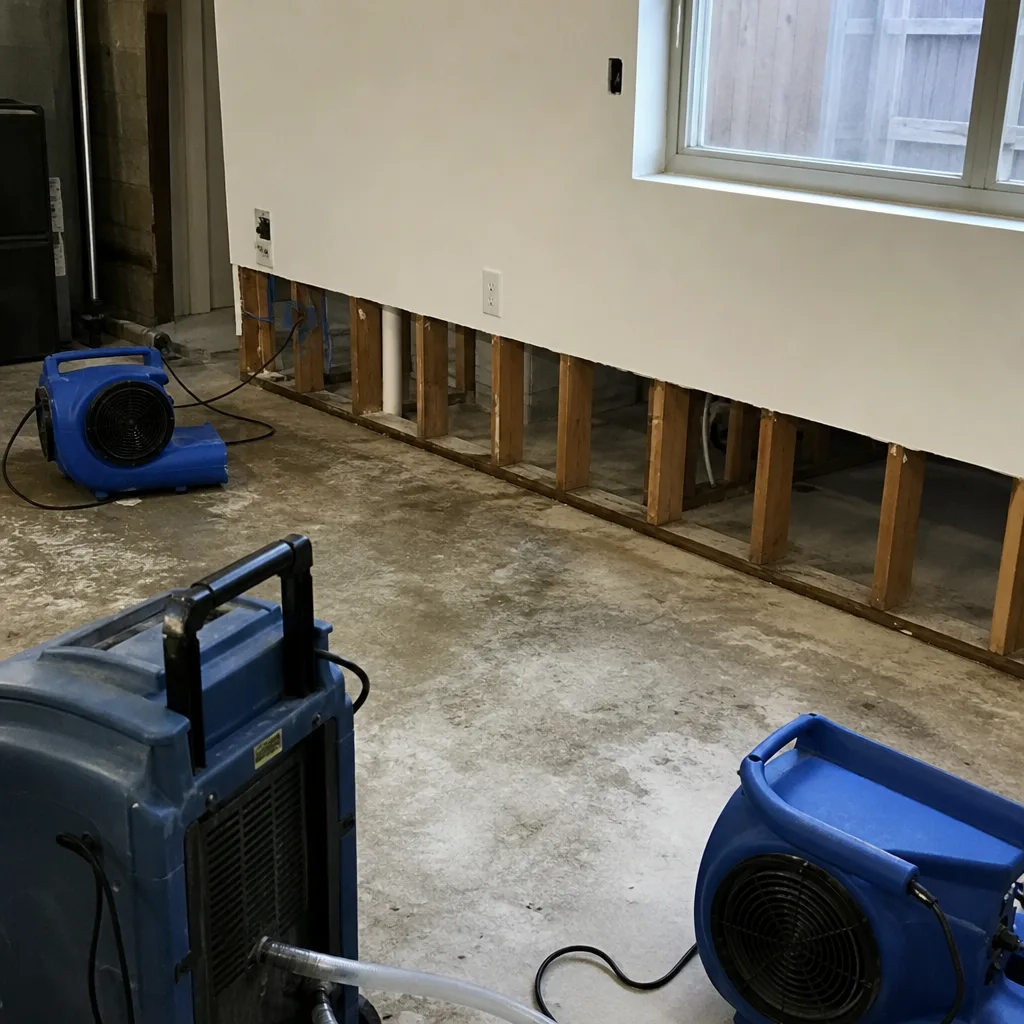
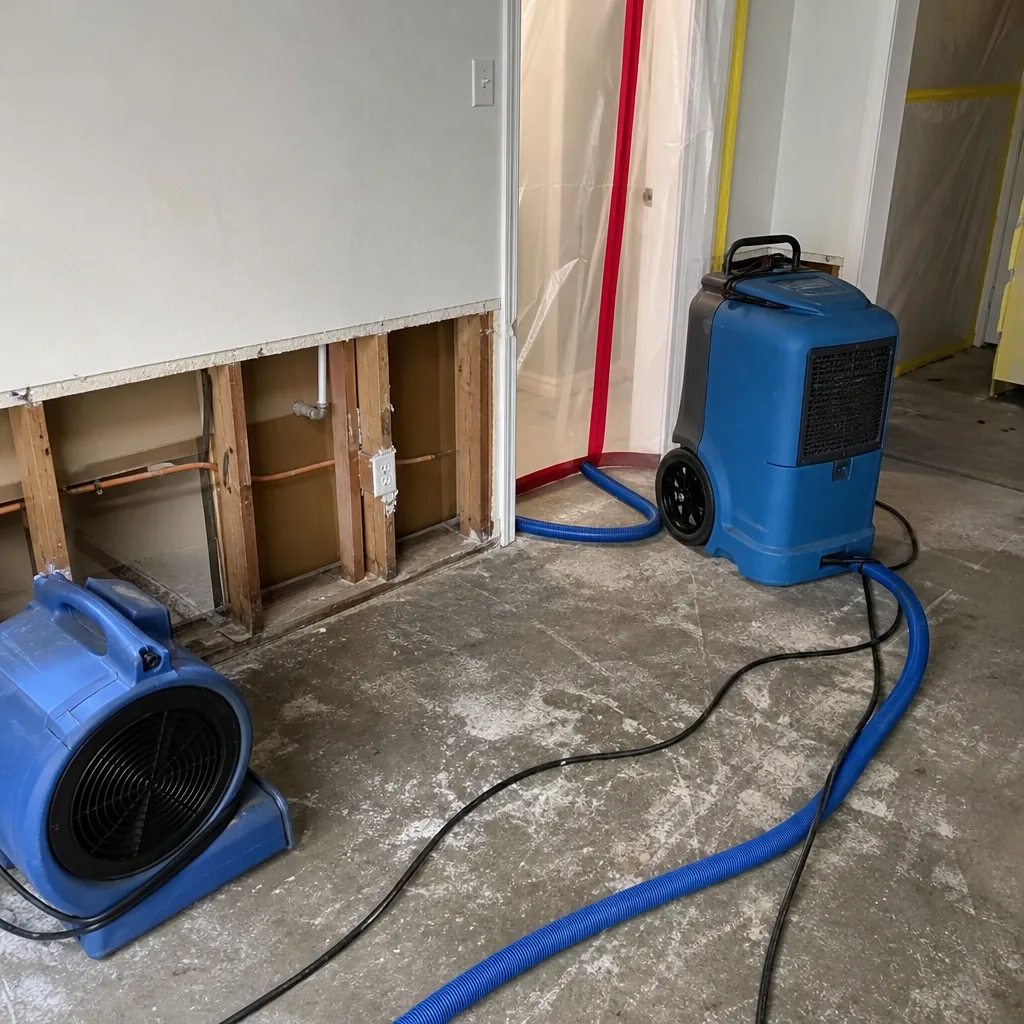
For water intrusion after a storm, the first 48 hours after the rain stops are the critical window for drying. This is where professional-grade equipment matters. We use Dri-Eaz and Phoenix dehumidifiers and air movers on every water loss, because the difference between a structure that dries in three days and one that dries in nine is often the difference between a water damage claim and a Mold Remediation in Houston project. We explain the drying plan in plain English before we start: what’s wet, what we’re putting in the room, what the target RH (relative humidity, the amount of moisture in the air compared to what the air can hold) is, and how we’ll know when we’re done. No mystery, no jargon.
Dry-Heat Season (July – September): Clay Soil, Foundation Stress, and Pipe Movement
Houston’s most damaging season doesn’t have a name. It’s the six-to-eight-week stretch between mid-July and mid-September when it doesn’t rain, the temperature sits above 95 degrees, and the clay soil underneath your foundation starts to shrink. Harris County sits on a patchwork of Beaumont and Lake Charles clay formations, and those clays can lose 10 to 15 percent of their volume between saturated and dry. When the soil shrinks, it pulls away from the foundation perimeter. When it pulls away, two things happen: the foundation loses support on its edges, and underground pipes get stressed at their transition points.
Here’s what to watch for during Houston’s dry-heat season:
- Gaps between soil and foundation. Get on your knees with a flashlight and look along the foundation edge where the slab meets the dirt. A gap wider than about half an inch means the soil has contracted significantly. That gap becomes a channel for water the next time it rains, and the water can go straight under the slab.
- Stair-step cracks in brick veneer. Houston homes are heavily brick veneer over wood or steel framing. When the foundation settles unevenly, the first visible sign is often a stair-step crack following the mortar joints. Not every crack means a structural problem, but a new crack that appears during a dry season and grows is worth a foundation inspection.
- Doors and windows that stick. In a humid climate like Houston’s, doors that stick in July are usually the frame absorbing moisture and swelling. But if doors are sticking during the dryest weeks of the year, that’s a sign the frame is moving because the foundation under it is moving.
- Interior wall cracks, especially above doorways. Cracks that appear at the corners of doorways or where walls meet ceilings during a dry spell are often drywall responses to structural movement, not cosmetic settling.
The pipe stress point matters because it’s the damage you don’t see. Houston’s underground water supply lines are mostly PVC or copper, and they run through the same shrinking soil as the foundation. When clay contracts, it moves the pipe, and the movement concentrates at fittings and joints. A pinhole leak in a supply line under the slab can release hundreds of gallons of water a week, and the first sign is often a water bill spike or a warm spot on the floor, not a visible flood. By the time you see water, you’re already in restoration territory.
During dry-heat season, Houston homeowners should run a simple weekly check: take a photo of your water meter reading, don’t run water for two hours, then check the meter again. If it moved, you have a leak somewhere. A $150 slab leak detection call catches what a $6,500 repair ignores.
Post-Season Inspection Window (October – November): Catch It Before It Compounds
The two weeks after Houston’s first real cool front in October are the most underused inspection window on the calendar. The storms have passed, the ground has started to rehydrate, and damage that accumulated over the past six months is visible but not yet compounding. This is the window where a homeowner with a flashlight and a camera can prevent a minor issue from becoming a major restoration.
Here’s why the October – November window matters so much in Houston:
Storm damage is fully visible but not yet compounded. A shingle lifted in a July squall hasn’t leaked through the deck yet. A window seal broken in a September storm hasn’t rotted the framing yet. A foundation crack that opened in August hasn’t let water into the slab during winter rains yet. Inspect now, and you catch these things at the repair stage.
The soil is transitioning. After six weeks of no rain, the first autumn rains cause Houston’s clay soil to swell, and that swelling pushes against the foundation from a different direction. This is when hairline cracks from the dry season either close up or widen. It’s also the moment when pipe stress points from the dry season get tested. Our technicians report more slab leak calls in the two weeks after the first real rain than any other time of year.
The humidity is dropping. Once Houston’s ambient humidity falls below 60%, which typically happens in October, any residual moisture from a past leak becomes easier to detect. A thermal imaging camera pointed at ceilings and walls will show cold spots where moisture is evaporating, and moisture will be wicking to the surface as the surrounding air dries out.
We recommend homeowners do this two-week inspection themselves, then call a professional for anything that seems suspicious. It takes about 45 minutes to walk the exterior and interior with a flashlight and a camera, and it costs nothing but time. The alternative is discovering a roof leak in December, when the rain has been running along a rafter tail for two months and the repair has tripled in scope.
Winter Mild Season (December – February): Houston’s Counterintuitive Freeze Risk
Houston’s winters are mild by any northern standard, but they’re more dangerous to plumbing than a Minneapolis winter ever could be. Here’s the reason: Minneapolis builds for minus 20. Houston builds for 45-degree winters with occasional dips below freezing, and the dips are now coming more often and deeper. The February 2021 freeze gave Houston a sustained hard freeze that burst pipes in tens of thousands of homes, and the restoration industry in Texas is still working through what that event taught us about local pipe standards.
A burst pipe in Houston typically costs between $1,800 and $6,500 to repair, depending on where the break is and how long water ran before the main was shut off. That range accounts for the pipe repair itself, drywall replacement, insulation removal, and drying. If the water ran while the homeowners were away or asleep, the range can go higher. In our experience in Houston, a burst pipe that’s caught within an hour is a $2,000 claim. A burst pipe that runs all night is a $8,000 claim and a Fire Damage Restoration in Houston project waiting to happen, because water follows wiring, and wiring follows water to places you don’t want them to meet.
Houston’s specific vulnerability is that the plumbing runs through uninsulated attics, exterior walls, and unheated garages. The PEX and copper lines that run through an attic don’t have the freeze protection that northern building codes require, because until recently, the risk was assumed to be rare. We know from the 2021 freeze that the assumption is obsolete.
Here’s what Houston homeowners should do before a forecast hard freeze:
- Locate your main shutoff valve and make sure it turns. The single most important action in a freeze is the ability to stop water flowing into a broken pipe. Find the valve now, not at 2 a.m. during a burst. If it’s stuck, have a plumber replace it. This is a $200 fix that saves thousands.
- Open cabinet doors under kitchen and bathroom sinks on exterior walls. This lets warm interior air reach the pipes. It costs nothing and works.
- Drip cold water from the faucet furthest from the main shutoff. A pencil-lead-thin stream keeps water moving, and moving water freezes at a lower temperature than standing water. This is the standard Houston freeze protocol.
- Disconnect and drain garden hoses. A frozen hose fitting cracks the spigot, and once the buried pipe thaws, the crack becomes a leak inside the wall.
- Cover exterior spigots with insulated covers. The $3 foam covers from the hardware store work fine for short freezes. For longer freezes, add a towel wrap underneath.
If a pipe does burst, the order of operations is simple: shut off the main, shut off the water heater, open all faucets to drain the lines, and call a restoration company that can start water extraction within hours. We answer the phone 24 hours a day, 7 days a week at (254) 277-4577, and we’ll walk you through the first steps before we arrive.
Photo Documentation and Insurance: What Adjusters Actually Need
Houston homeowners deal with insurance claims after storms, freezes, and plumbing failures every year, and the ones who get paid cleanly are the ones who documented the condition of their property before the event happened. This isn’t a minor point. It’s the difference between a claim that settles in three weeks and one that gets tied up for months while causation is litigated.
Here’s what adjusters actually look for, based on what we’ve observed in Houston after every major event from Harvey forward:
- Pre-event photos with dates. Digital photos have metadata embedded, but that metadata can be corrupted by file transfers. Take a photo of today’s newspaper and your house in the same frame, or email the photos to yourself so there’s a timestamped server record. The goal is to prove the damage didn’t exist before the storm or freeze.
- Post-event photos taken before any repair. The most common claim failure we see in Houston is homeowners who tear out wet carpet or cut out wet drywall before taking photos, then can’t prove how bad the damage was. Photograph everything from multiple angles before touching anything.
- A written scope with line-item pricing. If you’re working with a restoration company, get a written scope before work starts. This is not optional for us; every Dryden customer gets a written price before any tool is touched, and that document is exactly what an adjuster needs to process the claim. No verbal estimates, no “we’ll figure it out as we go.”
- Drying logs if water mitigation was performed. Professional drying records include daily temperature and RH readings, which prove the drying process was performed to standard. We use Dri-Eaz and Phoenix equipment and document every reading, because the log is the evidence the adjuster needs to approve the drying portion of the claim.
We handle direct adjuster coordination on restoration jobs. That means our team talks to your insurance company so you don’t have to be the one explaining technical drying terminology to an adjuster who’s never been in a wet Houston attic. You still get the full claim package, the documentation, and the receipts. We just handle the communication.
Common Mistakes to Avoid
- Waiting until June to look at the roof. By the time the first named storm is in the Gulf, every roofer and restoration company in Houston is booked out for weeks. The pre-hurricane inspection needs to happen in April or early May.
- Ignoring dry-season foundation gaps. A half-inch gap between soil and foundation in August looks harmless. It’s a water channel that will wash soil out from under the slab the next time it rains heavily, and it’s a pipe stress point that’s already forming. Fill the gaps and monitor the cracks.
- Not testing the main water shutoff before a freeze. Houston homeowners discover their shutoff valve is frozen open at exactly the wrong time: when a pipe has already burst and water is spraying inside the wall. Test the valve twice a year, once in October and once in January.
- Photographing storm damage before photographing the pre-storm condition. The adjuster’s first question is always “when did this happen?” and the answer needs photographic proof. The April photo walk is the cheapest insurance policy you’ll ever buy.
- Trusting a verbal price. Houston homeowners have been burned by “the price changed at the door” too many times. Any restoration company that won’t put a number in writing before starting work is not a company you want in your house. We put the price in writing on every job, and the number doesn’t change at the door.
- Dismissing small leaks as cosmetic. A ceiling stain the size of a dinner plate has a story behind it, and the story usually involves weeks of slow water intrusion before the stain appeared. In Houston’s humidity, that water has been feeding mold growth the entire time.
When to Call a Professional
Most of the seasonal inspection work in this guide is DIY-friendly. A flashlight walk in April, a meter check in August, a pipe-drip protocol in January. But there are moments when calling a professional is the right move, not a sales pitch. Water that has entered the building envelope is one of those moments. If you see water staining on a ceiling, bubbling drywall, or a wet carpet pad after a storm, the clock is running on mold growth, and the drying needs to start within 48 hours. A flood that touches electrical components, insulation, or HVAC ductwork is another. Sewage backups and gray water losses are always professional calls; the contamination risk is real, not hypothetical. And any fire damage, even a small kitchen fire, requires specialized cleaning that a homeowner’s mop and bucket cannot accomplish. Dryden Restoration Houston offers free estimates in Houston, and you can call (254) 277-4577 any time, 24 hours a day, 7 days a week. A live person answers. If the issue is outside our scope, we’ll tell you who to call and what to expect.
Frequently Asked Questions
Water damage restoration in Houston typically ranges from $1,800 to $8,500 depending on the water source, the affected square footage, and how long the water sat before extraction began. Category 1 clean water from a burst supply line in a single room often lands in the $1,800 to $4,000 range. Category 3 sewage or flood water that requires antimicrobial treatment and extensive content cleaning can run $5,000 to $8,500 or more. The biggest variable is time: water that gets extracted within the first few hours costs far less to dry than water that sits overnight. Call (254) 277-4577 for a written estimate specific to your situation.
Standard Texas homeowners insurance covers sudden and accidental water damage from storms, burst pipes, and wind-driven rain, but it does not cover gradual damage from neglect or poor maintenance. This is why the pre-season inspection matters: if your insurer determines that a roof leak caused damage because the flashing had been failing for six months, the claim can be denied on maintenance grounds. Document your seasonal inspections with photos, and keep records of any repairs you make. When we work with insurance on a restoration job, we provide the documentation adjusters need, including photo logs and drying records.
Dryden Restoration answers the phone 24/7 with a live person, and we dispatch emergency response crews to Houston homes within hours of the call, not days. We’ll talk you through shutting off the water and starting the absolute first steps while the crew is en route. The 48-hour window after a pipe burst is critical for preventing mold growth, so speed matters, and we treat every water emergency as a same-day response.
It depends on what got wet and for how long. A small leak on a tile floor that gets wiped up in minutes is a cleanup job, not a restoration. But a leak that soaked carpet, drywall, or a wood subfloor for more than 24 hours is a mold risk that household fans and a shop vac can’t address. The water wicks into the wall cavity and the floor assembly, where it stays wet for weeks without professional drying equipment. We use Dri-Eaz dehumidifiers that pull moisture down to the target RH level that prevents mold growth, and we document the whole drying process in writing.
Our written guarantee covers the workmanship and materials on every restoration job for 365 days after completion. If a repair fails during that period for reasons within our control, we return and correct it at no additional cost. The guarantee is part of The Kingswell Way, and it’s written on every job, not verbal. What triggers the free return visit is simple: the covered repair stops performing the way we said it would. You call, we come back, we make it right. No deductibles, no service fees, no negotiation.
We coordinate directly with your insurance adjuster on restoration jobs, including providing the documentation, photo logs, drying records, and written scope that adjusters need to process your claim. You still make the final decisions about what gets repaired and who does the work; we just handle the communication that tends to slow claims down. Houston homeowners who use our direct adjuster coordination typically get their claims processed faster than those who try to manage the back-and-forth themselves.
The Bottom Line
Houston’s climate creates a specific rhythm of damage risk, and the homeowners who stay ahead of it are the ones who put the right inspection on the right month. Walk the roofline in April, photograph everything before storm season, watch the foundation gaps during the dry months, inspect in the October window, and protect the pipes before every hard freeze. Most of this is low-cost or free. The alternative is a restoration bill that runs into the thousands and a repair that could have been a $10 tube of caulk six months earlier. Dryden Restoration Houston has served Houston since 2005 with a written price before work starts and a 365-day guarantee in writing. If you suspect seasonal damage, call (254) 277-4577. A live person answers, 24 hours a day, and estimates are free.
Written by Carl Brandt, Owner at Dryden Restoration Houston, serving Houston since 2005.
See the difference
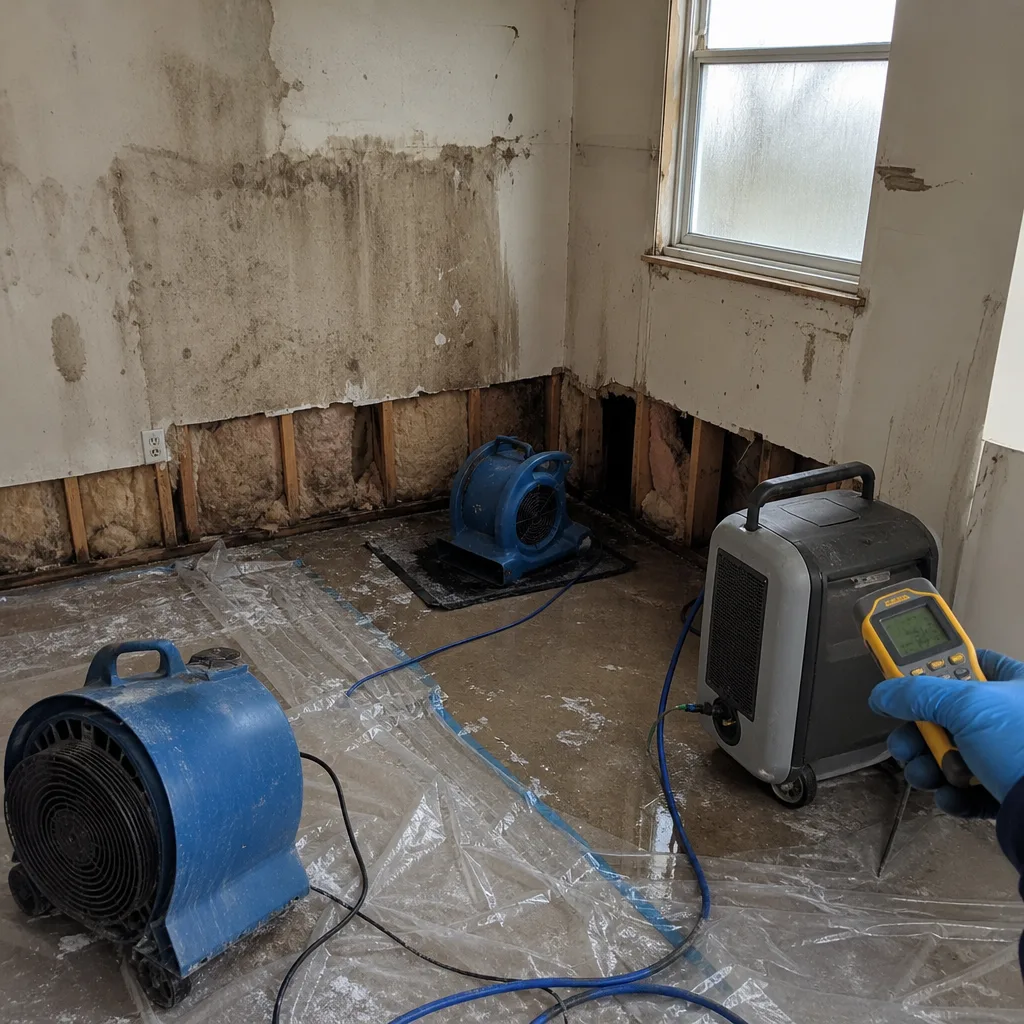 Before
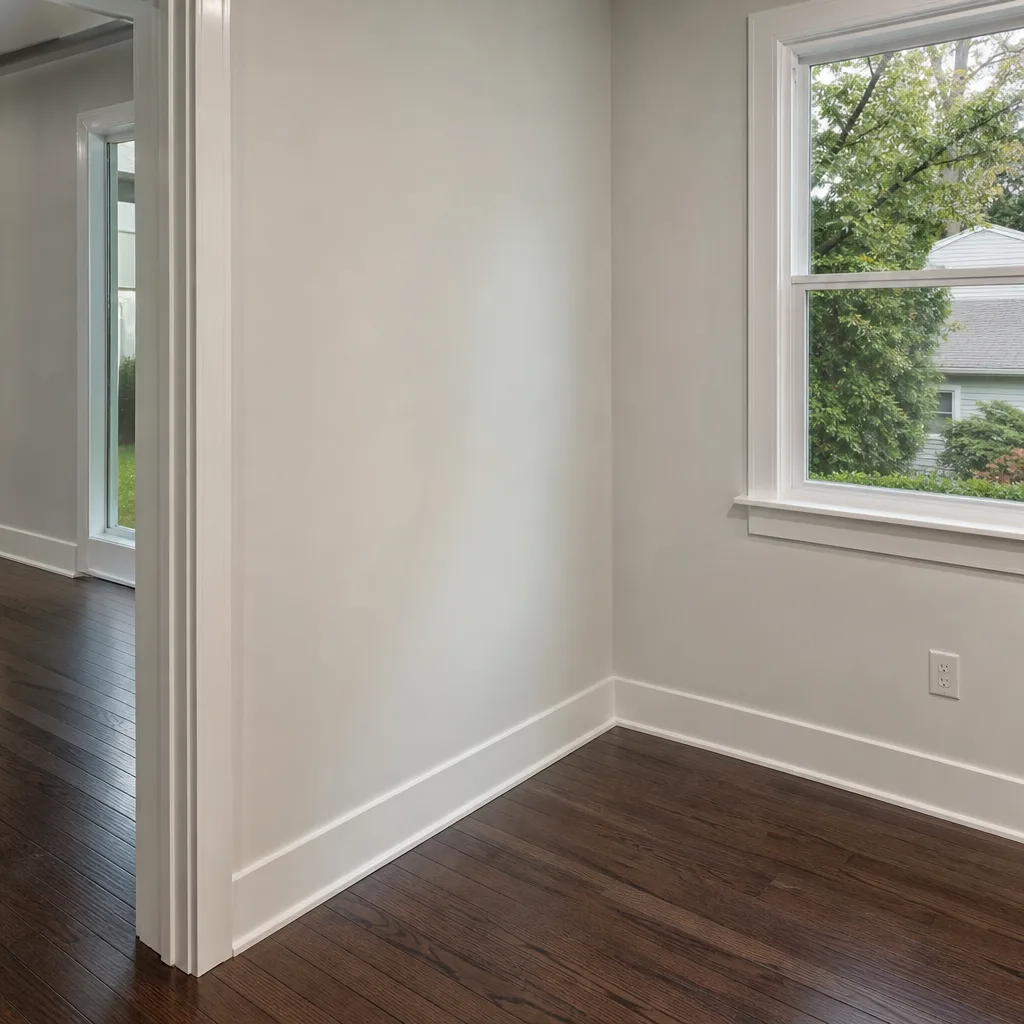 After
After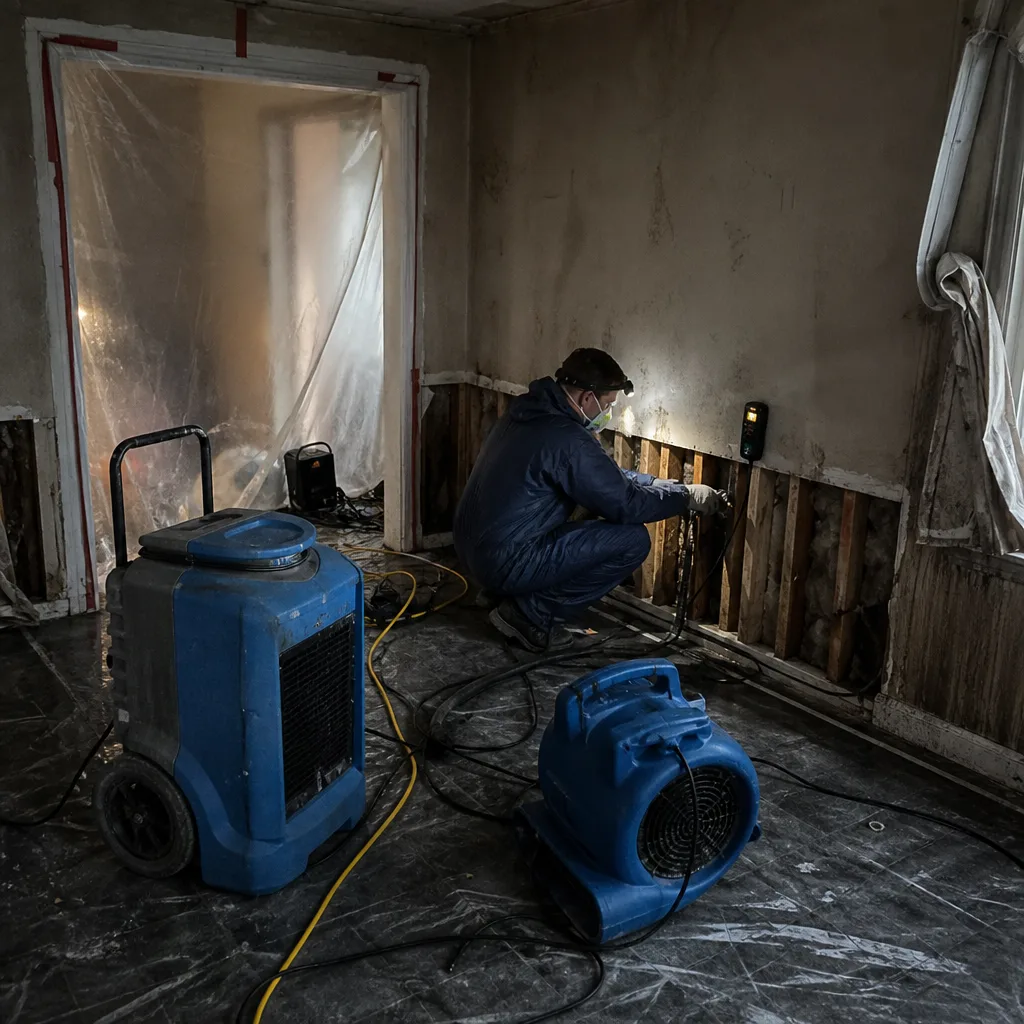 Before
 After
After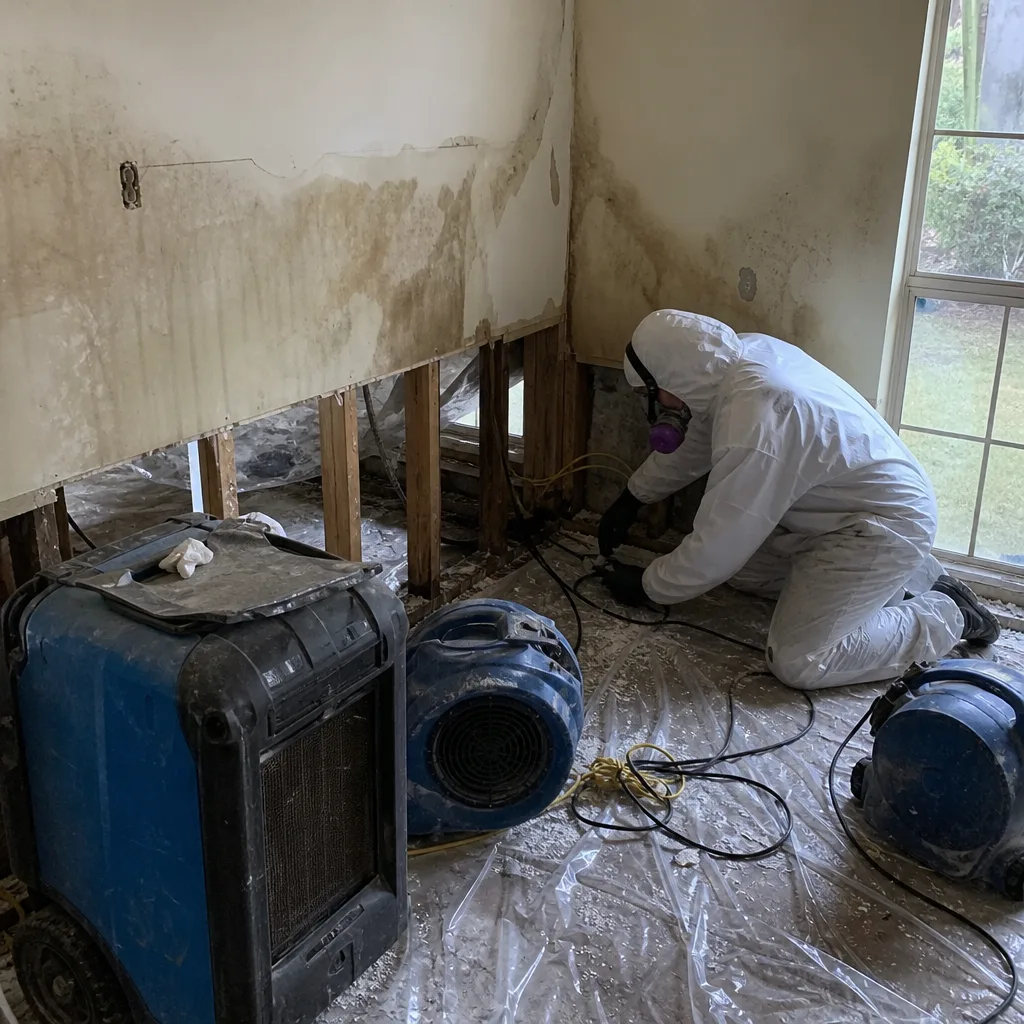 Before
 After
After