
Last updated October 16, 2026
 Water damage drying
 Fire & smoke cleanup
 Mold remediation
 Storm response
 Sewage cleanup
 Reconstruction
Free visual inspection and a written scope of work before any mitigation begins - photos, moisture readings, and drying logs go in your claim file
The scope we write is the scope we bill. Anything new gets shown to you, in writing, before we touch it.
Get your free estimateDamage Restoration Cost Breakdown: The Houston Homeowner’s Reference for 2026
Two Houston homeowners with identical 400-square-foot water-damaged rooms received estimates of $3,200 and $11,800 from different contractors in the same week. Both quotes said “water damage restoration.” Same square footage, same city, same week. The difference wasn’t the damage. It was what each contractor chose to see and bill for. This guide breaks down what restoration actually costs in Houston’s 2026 market, line by line, so you can read any estimate and know whether it’s fair, padded, or missing something that will cost you later. For Damage Restoration Warning Signs: A Houston Homeowner’s Reference Guide, see our companion post. We’ll cover real price ranges, which line items are legitimate, how materials and water type change the number, and what a written scope of work should contain before you sign anything.
Restoration work we handle
Quick Answer
Water damage restoration in Houston typically costs $1,800 to $7,500 for a single affected room in 2026, with most jobs landing between $3,000 and $5,500 when drying, repairs, and materials are included. Mold remediation runs $1,500 to $6,000 per room. Fire damage restoration is the widest range, from $4,000 for a small kitchen fire to $40,000-plus for structural rebuilds. The single biggest factor isn’t square footage. It’s the water category and how long the damage sat before drying started.
Table of Contents
- Why Houston Restoration Estimates Vary by 300%
- Water Extraction: What the First Hour Actually Costs
- Drying Equipment: The Daily Rate Most Homeowners Miss
- Mold Remediation: When $1,500 Becomes $6,000
- Fire Damage Restoration: The Line Items That Surprise People
- Material Type: What Hardwood, LVP, and Carpet Do to Your Total
- Water Categories: Clean, Gray, and Black Water Pricing
- Insurance vs. Out-of-Pocket: The Harris County Math
- Common Mistakes to Avoid
- When to Call a Professional
- Frequently Asked Questions
- The Bottom Line
Why Houston Restoration Estimates Vary by 300%
The spread between a $3,200 and an $11,800 estimate for the same room isn’t random. It comes down to five things: who’s doing the actual drying (a restoration company with commercial-grade equipment or a general contractor with a shop vac), whether the quote includes reconstruction or just mitigation, what water category is involved, how the drying is monitored, and whether the estimate is written before or after walls are opened. Houston’s climate makes the monitoring question critical. Our humidity averages above 70% for much of the year. A contractor who sets up fans and walks away without checking moisture levels with a meter isn’t drying anything. They’re just moving wet air around.
Here’s a breakdown of the five factors, and what each does to the price:
- Mitigation vs. repair: Mitigation means stopping the active damage: extracting water, setting up drying equipment, removing wet drywall. Repair means putting everything back: new drywall, paint, flooring. A mitigation-only quote might be $2,500. The same job with full repair and finishes can hit $9,000. When you’re comparing estimates, ask which one you’re looking at.
- Equipment type and monitoring: Professional-grade dehumidifiers like Dri-Eaz units run $100 to $150 per day per machine. Big-box fans cost $30 a day and do little in Houston’s humidity. A legitimate estimate will list equipment by brand and count, along with daily monitoring visits.
- Water category: Clean water from a supply line costs less to remediate than gray water from a washing machine, which costs less than black water from sewage backup. The category determines whether carpet and pad get cleaned or thrown out, and whether antimicrobial treatments are required. More on this in the water categories section below.
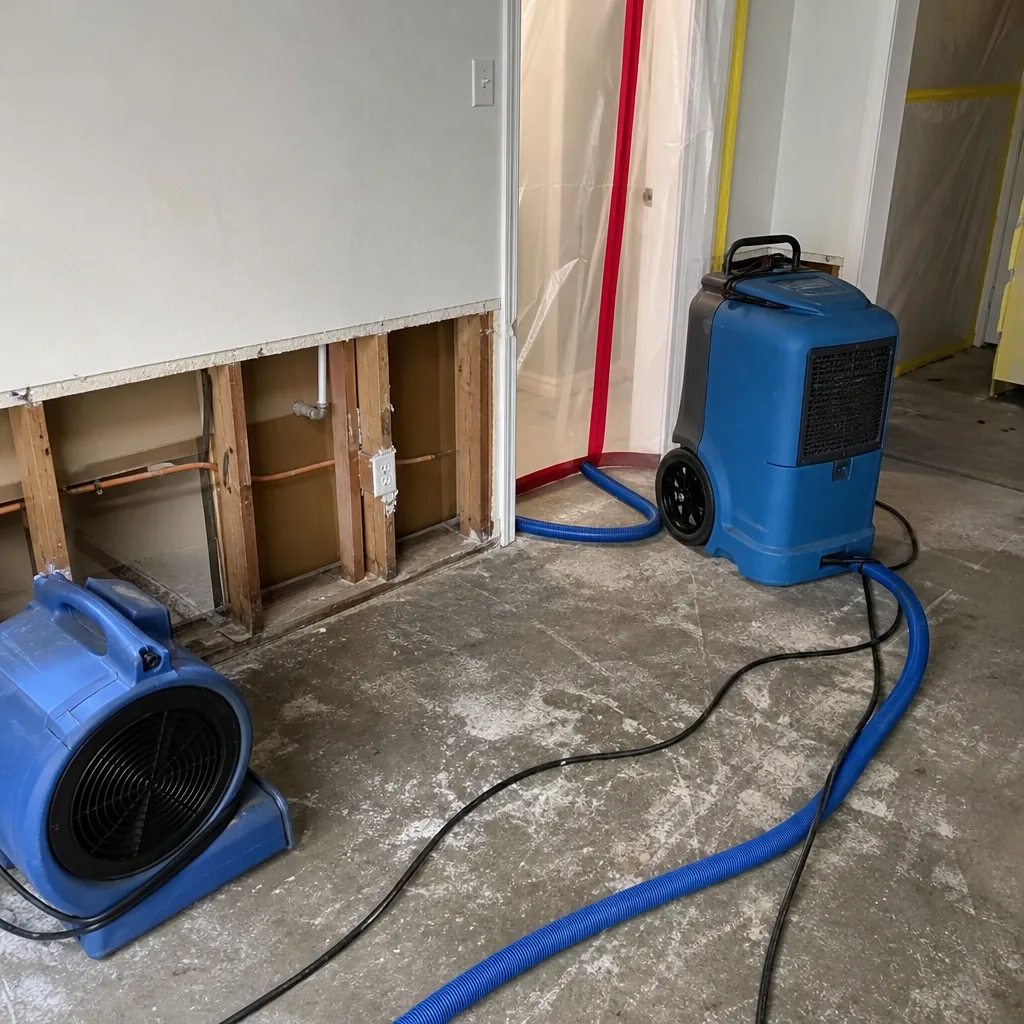
- Containment and air filtration: When walls are opened and mold is present, legitimate restoration requires containment barriers and negative air machines. This adds $500 to $1,500. Some contractors skip it to win the bid. That’s the kind of savings that costs you more later.
- Written scope vs. open-ended estimate: A contractor who says “we’ll know more when we open the walls” is asking you to sign a blank check. A written scope of work specifies what gets removed, what gets dried in place, what equipment is deployed, and the total price. At Dryden Restoration Houston home, we commit to a written price before any tool is touched. The number does not change at the door.
Water Extraction: What the First Hour Actually Costs
Water extraction in Houston runs $300 to $900 depending on water volume, access, and whether contaminated water is involved. This is the first step in any Water Damage Restoration in Houston job, and it happens fast. Within the first hour, a technician should be pulling standing water with a truck-mounted or portable extractor, moving furniture to dry areas, and identifying the water source.
Here’s what that $300 to $900 actually covers:
- Standing water removal: Truck-mounted extractors pull hundreds of gallons per hour. A room with an inch of standing water across 400 square feet is roughly 250 gallons. That’s the difference between a $350 extraction and a $700 one.
- Water source identification and shutoff: Before extraction makes sense, the technician has to stop the water. That means locating the supply valve, the appliance, or the pipe. Sometimes that’s a 5-minute job. Sometimes it means cutting into a wall. The estimate should state whether source repair is included or billed separately.
- Carpet and pad assessment: Clean water on carpet with no pad saturation might mean the pad can be dried in place with an Injectidry system. Saturated pad usually gets cut out and replaced. The extraction phase determines which path you’re on, and that decision affects everything downstream.
- Disposal fees: Wet materials are heavy. Houston-area waste transfer stations charge by weight, and a saturated carpet and pad from a 400-square-foot room can add $100 to $200 in disposal costs. Make sure the estimate includes haul-away rather than leaving you with a wet pile in the garage.
In our experience, the extraction line item is rarely where padding happens. It’s too visible, too early, and too easy for a homeowner to verify. The padding issues show up later, in drying and reconstruction. That’s where the $8,600 gap between those two Houston estimates comes from.
Drying Equipment: The Daily Rate Most Homeowners Miss
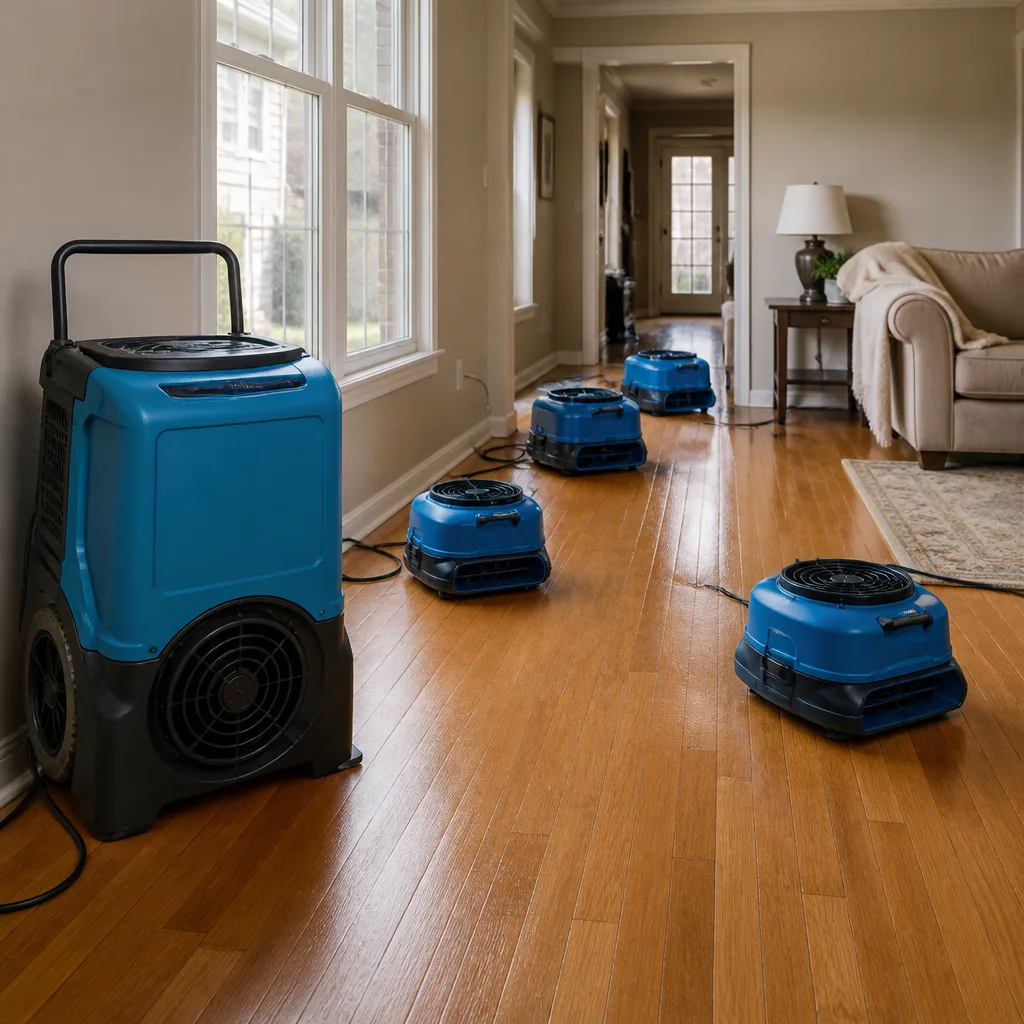
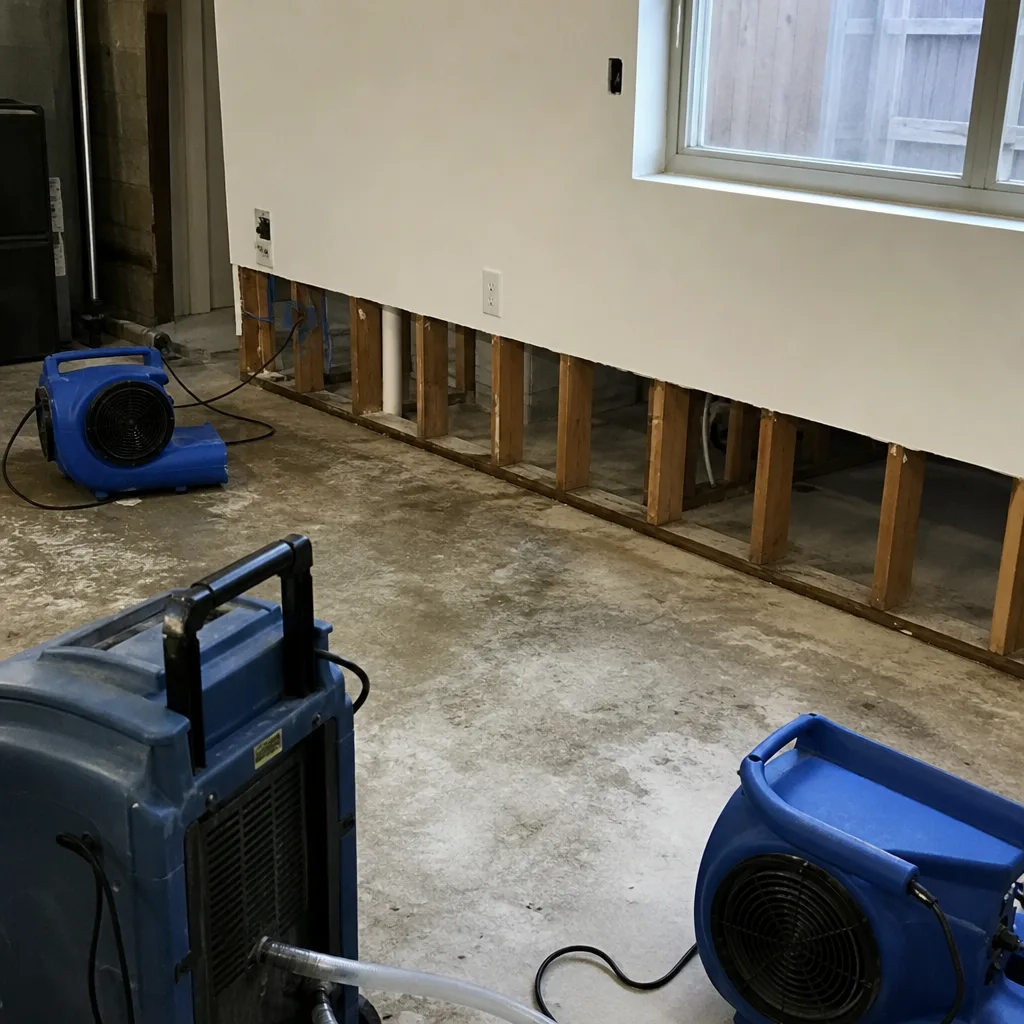
Drying equipment rental is where legitimate restoration bills get expensive and where cheap restoration cuts corners. A low-grain refrigerant (LGR) dehumidifier from Phoenix or Dri-Eaz runs $100 to $150 per day per unit. Most single-room jobs in Houston need 3 to 5 units, plus an equal number of high-velocity air movers at $25 to $40 per day each. A standard 400-square-foot room drying for 4 days with professional equipment will show $1,500 to $2,800 in equipment and monitoring line items. A contractor using box fans and a single residential dehumidifier from a hardware store bills $200 for equipment over the same period. The homeowner saves money. The room doesn’t dry. Six months later, the mold bill arrives.
The technical term you’ll hear is psychrometric drying, which is just the science of moving moisture out of materials and into the air, then out of the air and out of the house. It requires measuring RH (relative humidity) in the room and moisture content in the materials every day, and adjusting the equipment based on what those readings show. Houston’s ambient humidity in summer means the dehumidifiers do extra work. In July, the outside air is already saturated. Every door opening introduces more moisture. That’s why equipment counts in Houston often run higher than the national averages you’ll see on general cost websites.
Here’s a realistic drying scenario for a single Houston bedroom with a supply-line leak:
- Day 1: Extraction complete. Two LGR dehumidifiers and four air movers installed. Daily rate: $320 plus monitoring.
- Day 2: Technician returns, takes moisture readings with a penetrating meter. Drywall is drying. One air mover repositioned to target a stubborn corner behind a closet.
- Day 3: Readings show subfloor still elevated. One dehumidifier stays, the other moves to a hallway. Daily monitoring continues.
- Day 4: All readings within normal range for Houston’s climate. Equipment removed. Final documentation provided.
Four days, one room, professional equipment. You’re looking at $1,400 to $1,900 in equipment and monitoring, before any reconstruction. That’s the number that separates real restoration from a damp room with a fan in it.
Mold Remediation: When $1,500 Becomes $6,000
Mold remediation in Houston runs $1,500 to $6,000 for a single room, and the spread is determined almost entirely by containment requirements and how far the mold has traveled. A surface mold issue on drywall in one bathroom, caught early, sits at the low end. Mold that’s inside wall cavities, requiring containment barriers, negative air machines, and removal of studs and insulation, sits at the high end.
The single biggest cost driver in Mold Remediation in Houston is whether the affected area can be isolated. Houston homes built in the last 30 years often share HVAC returns between rooms, which means mold spores can travel through the air system. When that’s the case, the containment scope expands, and so does the price.
Here’s what a legitimate mold remediation estimate contains, line by line:
- Containment setup: 6-mil polyethylene barriers, negative air machine with HEPA filtration, and sealing of HVAC vents. $400 to $900. This is required whenever remediation disturbs more than 10 square feet of mold, per industry standards followed by RIA and IICRC-aligned firms.
- Removal of affected materials: Moldy drywall, insulation, and baseboards removed in sealed bags. $300 to $1,200 depending on volume.
- HEPA vacuuming and antimicrobial treatment: All exposed surfaces are cleaned, not just wiped. $200 to $500.
- Drying to normal moisture levels: Remediation is pointless on wet materials. Dry-out before and after removal is included. $300 to $800 depending on duration.
- Post-remediation clearance testing: A third-party or in-house air sample confirming spore counts are back to normal Houston outdoor levels. $200 to $400. Some contractors skip this. Don’t let them.
The line item to watch is containment. It’s necessary when mold removal disturbs contaminated materials. It’s padding when the mold is surface-level on a bathroom ceiling and the contractor bills $800 for a plastic sheet on a doorway. Ask why containment is being charged and what standard the technician is following. A legitimate answer references IICRC S520, the mold remediation standard. A vague answer tells you something.
Fire Damage Restoration: The Line Items That Surprise People
Fire damage restoration in Houston starts around $4,000 for a contained kitchen fire with no structural damage, and climbs to $40,000 or more when a room requires framing, electrical, and HVAC work. The surprise line items for most homeowners are smoke odor removal and soot cleaning, which often cost more than the actual burn damage.
Soot is acidic. It etches countertops, corrodes metal fixtures, and works into every porous surface. Within 48 to 72 hours, the damage from soot alone can exceed the original fire damage. That’s why the speed of response matters more on fire jobs than on water jobs. A Houston home with a small kitchen fire on a Monday needs soot cleanup started by Tuesday, not scheduled for Thursday.
Here’s what a typical Fire Damage Restoration in Houston estimate includes:
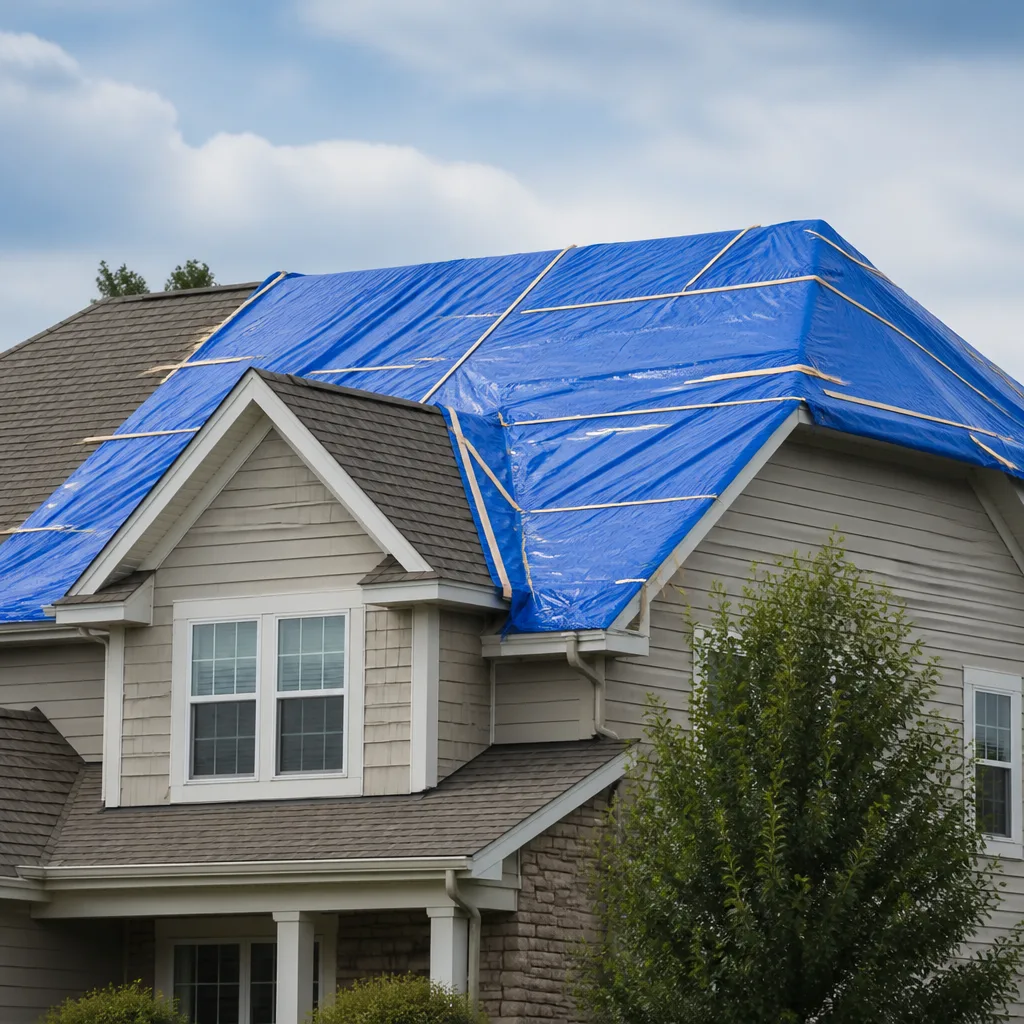
- Emergency board-up and tarping: $500 to $1,200. If a window blew out or firefighters opened the roof, the structure has to be secured immediately.
- Soot and smoke odor remediation: $1,500 to $4,000. This includes HEPA vacuuming of all surfaces, thermal fogging, and ozone or hydroxyl treatment for odor. It’s the biggest line item on most small fire jobs.
- Content cleaning: $500 to $2,000. Furniture, clothing, dishes. Everything the smoke touched. Some items get cleaned on site, some get packed out to a cleaning facility.
- Structural repair: $2,000 to $25,000 depending on what burned. Drywall and paint at the low end. Framing, subfloor, and roof repair at the high end.
- HVAC cleaning and filter replacement: $300 to $800. Smoke travels through ductwork. A house that smells clean with contaminated ducts will smell like smoke again the first time the AC runs in August.
In Houston, the HVAC line item is not optional. Our systems run constantly from April through October. Smoke residue in ductwork gets baked in, and then recirculated, every single cycle. A fire restoration estimate that skips HVAC cleaning is leaving a problem in place, not solving one.
Material Type: What Hardwood, LVP, and Carpet Do to Your Total
The material your floors and walls are made of changes your restoration bill more than almost anything else. Two identical water events, one over hardwood and one over luxury vinyl plank, produce very different estimates. In Houston’s hot-wet climate, these differences get amplified.
Carpet: The cheapest to remove, the fastest to ruin. Clean water on carpet that gets extracted within a few hours can often be dried in place, pad and all, using systems like Injectidry that force air beneath the carpet. The total drying cost might run $800 to $1,500 with a full save. Gray or black water on carpet? The carpet and pad both go. Replacement runs $3 to $7 per square foot installed in Houston, so a 400-square-foot room adds $1,200 to $2,800 in new flooring.
Hardwood: The great variable. Solid hardwood can sometimes be saved with professional drying if the water sat for less than 48 to 72 hours. What matters is the moisture reading in the wood itself. Houston’s humidity means hardwood that seems dry on the surface can be holding moisture that warps boards weeks later. A professional drying job on hardwood that gets saved runs $1,500 to $3,000 in equipment and monitoring. If it can’t be saved, replacement runs $8 to $15 per square foot. That’s the difference between a $4,000 restoration and a $10,000 one. Same room, same water, different floor.
Luxury vinyl plank (LVP): Waterproof on top, but water goes around and under the planks. Once water gets beneath LVP, the subfloor underneath is usually the problem. The LVP itself often gets removed, dried, and reinstalled if it’s floating. Glue-down LVP usually gets replaced. Houston homes built in the last decade have a lot of LVP, and we see this specific scenario constantly: the floor looks fine, the subfloor underneath is wet and growing mold.
Tile: The most water-resistant common flooring. Water on tile usually means water went through the grout to the subfloor or down the walls. Tile itself rarely gets replaced from a water event unless the damage is severe. The cost shifts to drying the substrate and checking for slab saturation, which is common in Houston’s slab-on-grade construction. Saturated slab under tile means longer drying times and higher equipment costs.
Water Categories: Clean, Gray, and Black Water Pricing
The restoration industry classifies water damage into three categories, and the category determines everything: what gets thrown away, what gets cleaned, what antimicrobial treatments are required, and what the job costs. This matters in Houston because our water sources and our climate combine to create category changes faster than in drier cities.
- Category 1, clean water: Supply lines, sink overflows with no contaminants, rainwater that came through a roof leak without touching insulation. This is the cheapest to remediate. Carpet and pad can be dried. Drywall can often be saved if it’s dried fast. A single-room Category 1 job with professional drying runs $1,800 to $3,500.
- Category 2, gray water: Washing machine discharge, dishwasher overflow, toilet overflow with urine but no feces. This water carries biological contaminants. Carpet pad gets replaced, not dried. Hard surfaces get antimicrobial treatment. A single-room Category 2 job runs $2,500 to $5,500.
- Category 3, black water: Sewage backup, flooding from outside, standing water that’s been sitting long enough to grow bacteria. This is a biohazard. Affected materials get removed and disposed of in sealed bags. Technicians wear PPE. The area gets disinfected, not just dried. A single-room Category 3 job runs $3,500 to $8,000-plus.
Here’s what most Houston homeowners don’t know: Category 1 water becomes Category 2 within 48 to 72 hours if it’s not dried, because bacteria start multiplying. In Houston’s summer heat, that timeline compresses. A clean-water leak that sat over a weekend in an air-conditioned house in January might still be Category 1 on Monday. The same leak in August with the AC off can be Category 2 by Saturday night. The category isn’t just what the water was. It’s what the water became while it sat.
This is also where the inspection matters. A legitimate estimate will state the water category and justify it. A vague estimate just says “water damage.” Those are the estimates that treat a sewage backup like a supply-line leak and then wonder why the homeowner is sick in three months.
Insurance vs. Out-of-Pocket: The Harris County Math
Most Houston homeowners with a standard HO-3 policy have coverage for sudden and accidental water damage, but not for maintenance failures or long-term leaks. The difference determines whether you’re filing a claim or paying out of pocket, and the math in Harris County is different from what the national advice suggests.
A standard HO-3 policy covers water damage from burst pipes, appliance failures, and accidental overflows. It does not cover damage from a slow leak that’s been going on for months, a roof that’s been failing over years, or damage from lack of maintenance. Insurance treats those as the homeowner’s responsibility. This is the most common denial we see in Houston: a slab leak that’s been leaking slowly for four months, discovered when mold appeared on the baseboards. The water damage is covered. The mold and the slow-build-up damage? Often not.
Here’s the deductible-to-claim calculation, using realistic Houston numbers:
- Most Harris County homeowners carry a 1% to 2% deductible. On a $400,000 home, that’s $4,000 to $8,000 out of pocket before insurance pays anything.
- A single-room water damage job that costs $5,500 with a $4,000 deductible leaves $1,500 that insurance covers, but the claim stays on your record for 3 to 5 years and can raise premiums.
- A $9,000 job with the same $4,000 deductible means insurance covers $5,000. That’s usually worth filing.
- For guidance in your specific situation, contact your agent. This is general information, not insurance advice, and Harris County policies vary by carrier.
The practical rule for Houston homeowners: if the restoration estimate is less than or close to your deductible, pay out of pocket. If it’s double your deductible or more, file the claim. The threshold depends on your policy and your premium. A restoration company should document everything photographically and provide a written scope of work that your adjuster can review directly, following the Damage Restoration Permits, Codes & Inspections in TX: What You Need to Know. We prepare that documentation on every job, and many of our Houston customers deal directly with us while we coordinate with their adjuster.
Common Mistakes to Avoid
- Accepting an estimate without a written scope of work. “Water damage restoration, one room, $4,500” is not a scope. It’s a number. A real scope lists what gets removed, what gets dried, what equipment is used, how many monitoring visits are included, and what reconstruction is covered. If a Houston contractor won’t put it in writing before work starts, keep looking.
- Choosing the cheapest quote without understanding the difference. A $3,200 estimate that skips mold prevention, doesn’t include HVAC cleaning on a fire job, or dries with box fans isn’t cheaper. It’s a bigger bill six months from now. The $11,800 estimate might also be inflated, but the cheap one is dangerous in a different way.
- Filing an insurance claim before knowing your deductible and the actual repair cost. Some Houston homeowners call their insurer before the restoration company has even assessed the damage. Then they discover the repair is $4,800, their deductible is $5,000, and they’ve filed a claim that covers nothing but raises premiums. Assessment first, claim decision second.
- Waiting to see if the area “dries on its own.” In Houston, the humidity is the problem. Materials that stay wet for 48 hours start growing mold. By 72 hours in summer, the microbial growth is well underway. Waiting is never the right move.
- Hiring a general contractor instead of a restoration company for the mitigation phase. General contractors are great at reconstruction. Most are not equipped for emergency extraction, professional drying, and moisture monitoring. The mitigation phase needs restoration-specific equipment and training. Reconstruction can follow.
- Not checking for hidden moisture after visible water is gone. The floor looks dry. The wall feels dry. But the subfloor, the lower drywall, and the wall cavities are still wet. A moisture meter is the only way to know, and a professional restoration company in Houston uses one on every visit.
- Accepting a verbal guarantee. If a repair fails and the guarantee was never written down, the guarantee never existed. The Kingswell Guarantee at Dryden includes a written 365-Day Done Right Promise, documented on every job. If a covered repair fails within a year, we come back and fix it at no charge. That’s the standard. Verbal assurances are not a standard.
When to Call a Professional
Any water event that involves more than a single towel’s worth of cleanup should trigger a professional assessment, and in Houston, the threshold for “call someone” is lower than in drier cities. Call a professional if water has been sitting for more than 24 hours. Call if water has touched drywall, because drywall wicks moisture upward and the damage extends far beyond the visible wet line. Call if the water source is anything other than clean supply water. Call if you smell must, see discoloration, or notice bubbling paint. Call immediately for sewage backup or fire damage, because every hour of delay adds real cost in soot damage or contaminated water spread. Dryden Restoration Houston offers free estimates in Houston, call (254) 277-4577, and a live person answers around the clock. We’ll show up, assess the damage, and give you a written price before any work starts.
Frequently Asked Questions
Most single-room water damage restoration jobs in Houston run $1,800 to $7,500 depending on water category, materials affected, and drying time. Clean water on tile with fast response sits at the low end. Black water or hardwood replacement pushes toward the high end. The national average is lower, but Houston’s humidity increases drying time and equipment requirements. Call (254) 277-4577 for a free, written estimate.
Sudden and accidental water damage, like a burst pipe or appliance failure, is generally covered by a standard HO-3 policy. Gradual leaks, maintenance issues, and slow deterioration are not. The first step is a professional assessment to determine what happened and how much the repair costs. Then you can compare that number against your deductible and decide whether filing a claim makes sense.
Dryden Restoration Houston dispatches technicians to Houston-area homes the same day for water and fire emergencies. A live person answers the phone 24 hours a day, 7 days a week. The faster the response, the less damage accumulates, and the lower the final bill. For water damage, the first 48 to 72 hours are the critical window before Category 1 water degrades to Category 2 or 3.
For anything beyond a small spill that gets dried immediately, professional extraction and drying matter. Hidden moisture in walls and subfloors will grow mold even when surfaces look dry. Houston’s humidity makes air drying ineffective. A professional assessment with moisture meters will tell you what’s actually necessary, and a written scope will show you exactly what you’re paying for before work starts.
The 365-Day Done Right Promise is a written guarantee from Kingswell companies, including Dryden Restoration Houston. It states that if any covered repair fails within 365 days, Dryden returns and corrects it at no additional charge. The promise is documented on every job. It’s not verbal. Carl Brandt, our owner, has been serving Houston since 2005 under that standard.
You can handle it yourself, but most Houston homeowners find it smoother when the restoration company coordinates with the adjuster. Dryden provides photo documentation of all damage, a written scope of work, and direct communication with your adjuster. You’re the policyholder. You make the final decisions. We make sure the adjuster sees the full picture with documentation that meets industry standards.
The Bottom Line
Houston restoration estimates vary by 300% because the work varies, the equipment varies, and the integrity of the contractor varies. The protection you have as a homeowner is knowing what’s actually necessary: written scopes before work starts, professional-grade equipment like Dri-Eaz and Phoenix dehumidifiers monitored daily, honest water category classifications, and a guarantee that’s documented, not verbal. The number on the estimate matters. What’s behind the number matters more. Get the estimate in writing. Ask what’s included. Ask what standard the technicians follow. Then decide. For more guides & resources on protecting your home, visit our blog. If you’ve got damage in Houston right now, call (254) 277-4577. A live person answers, and the estimate is free.
Written by Carl Brandt, Owner at Dryden Restoration Houston, serving Houston since 2005.
See the difference
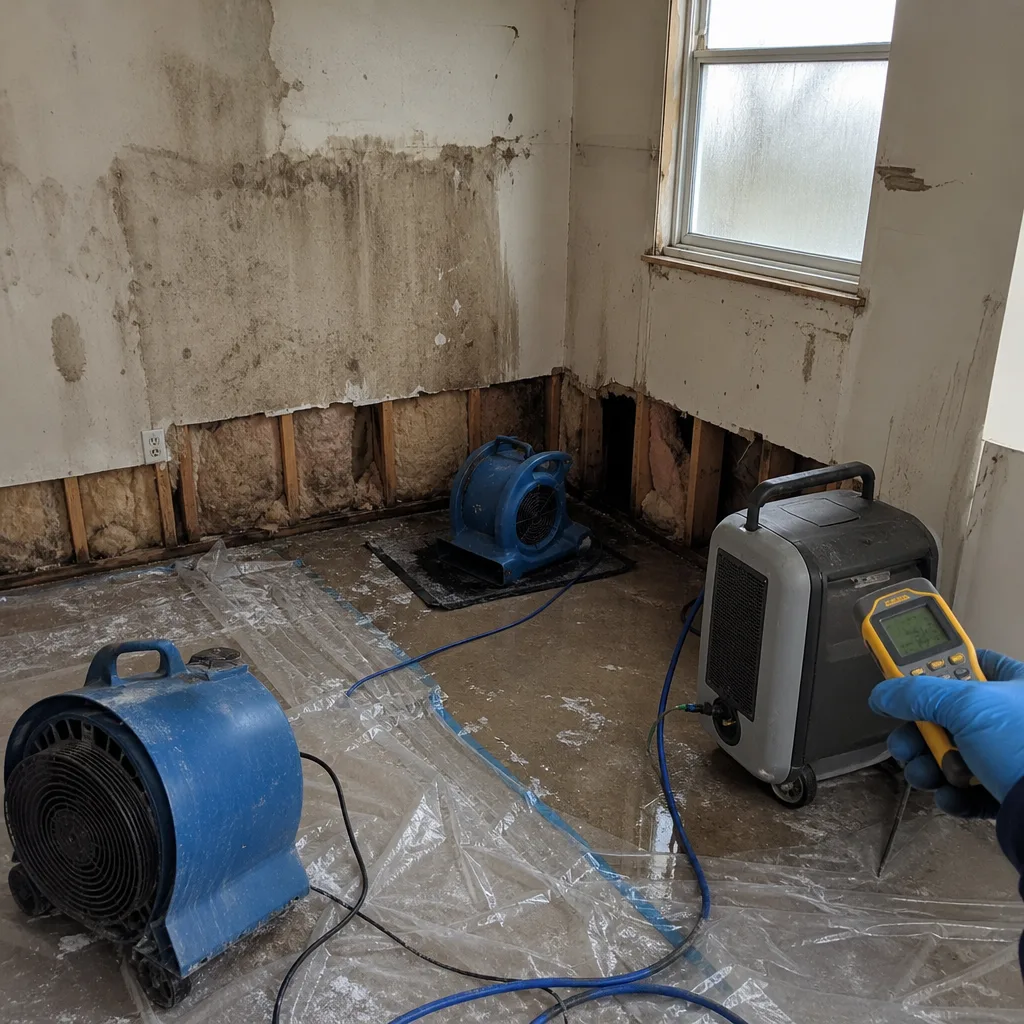 Before
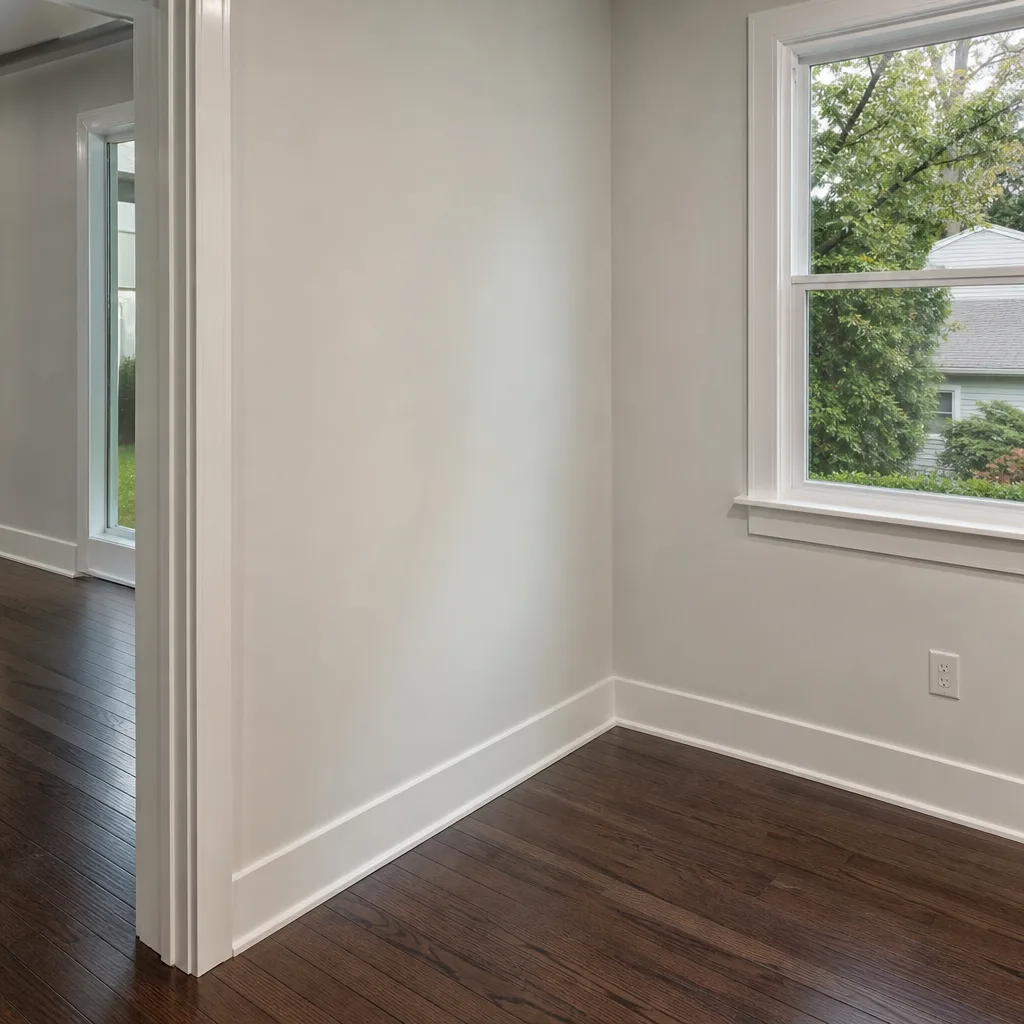 After
After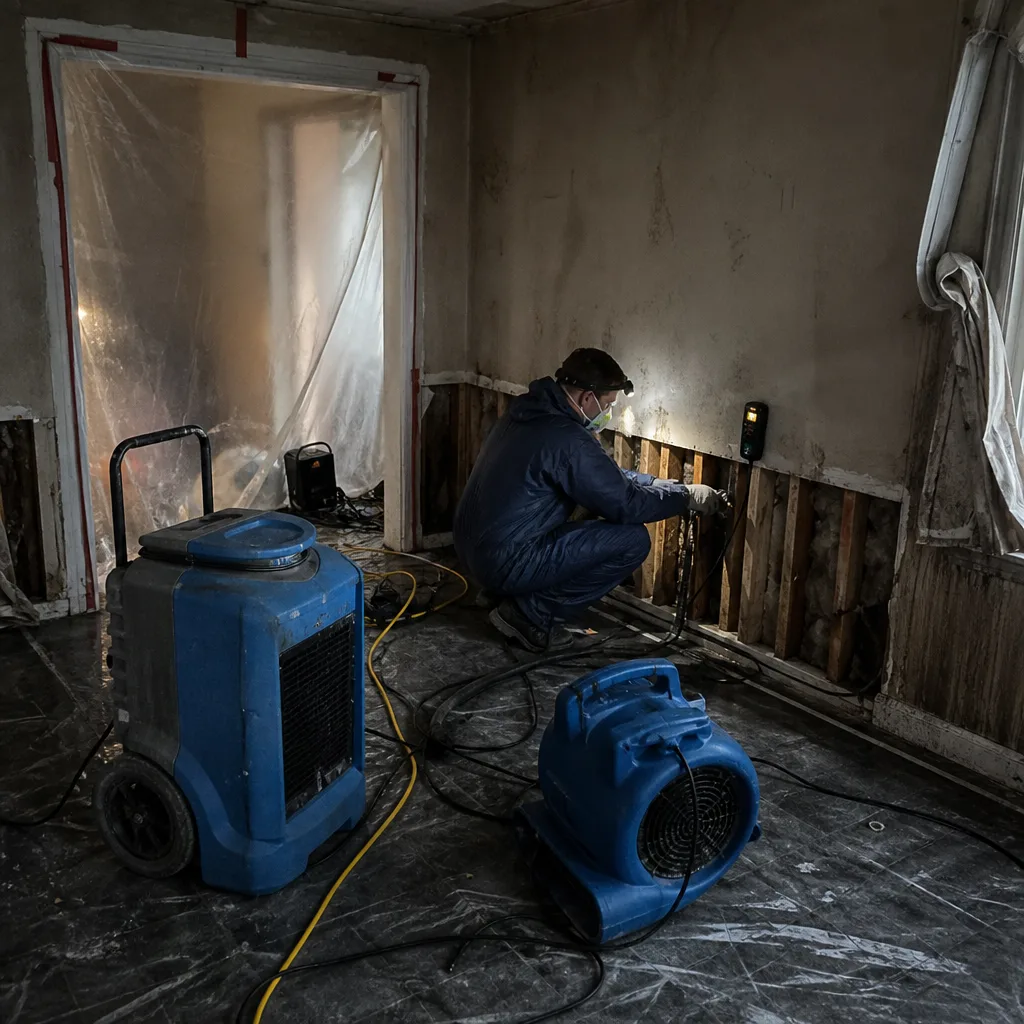 Before
 After
After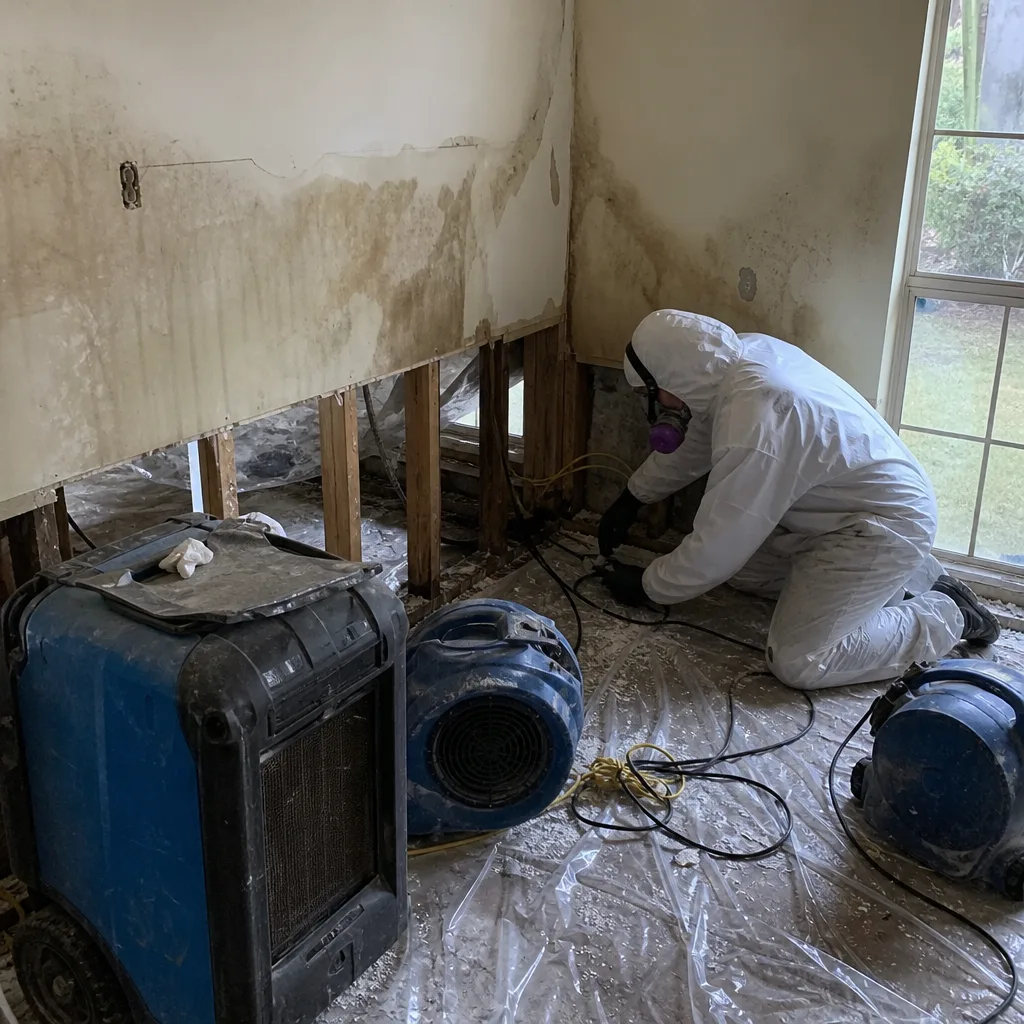 Before
 After
After