
Last updated October 16, 2026
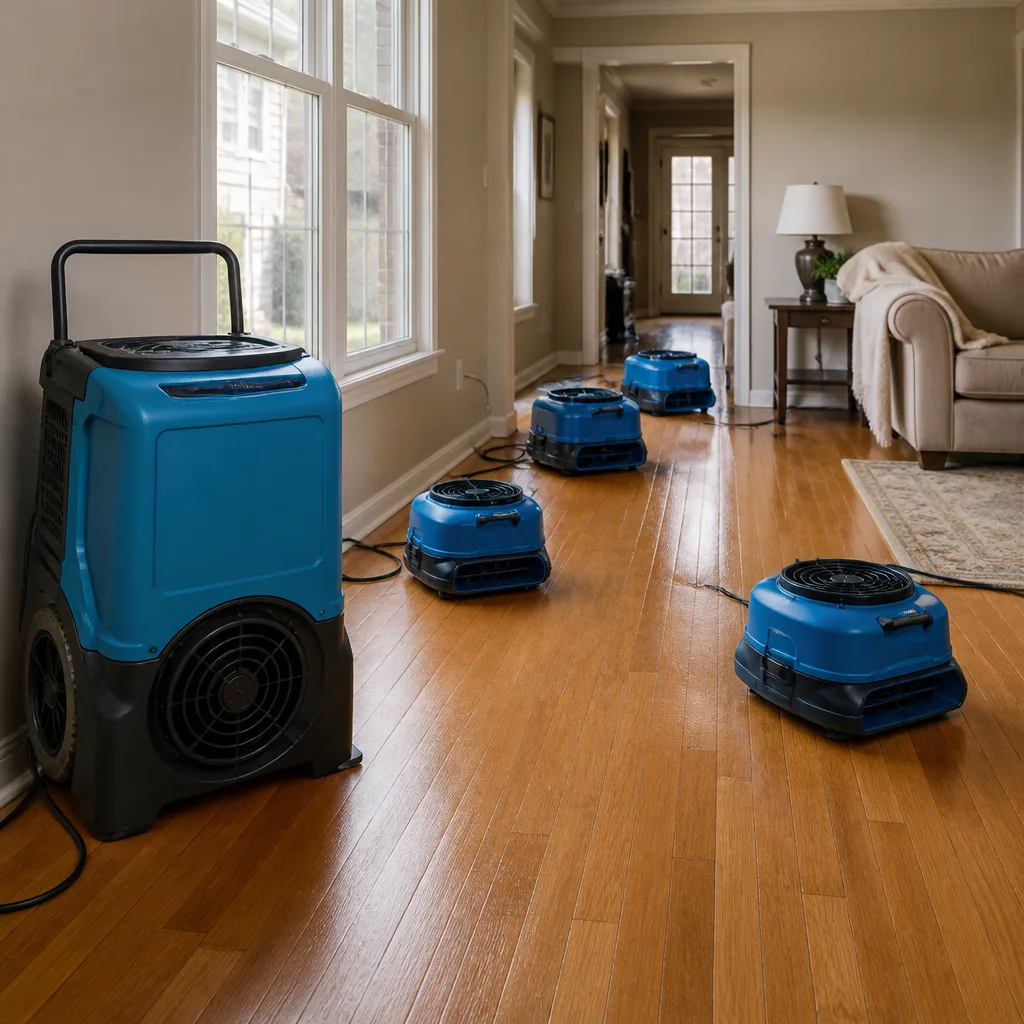 Water damage drying
 Fire & smoke cleanup
 Mold remediation
 Storm response
 Sewage cleanup
 Reconstruction
Free visual inspection and a written scope of work before any mitigation begins - photos, moisture readings, and drying logs go in your claim file
The scope we write is the scope we bill. Anything new gets shown to you, in writing, before we touch it.
Get your free estimateHow to Hire a Damage Restoration Contractor in Houston: A Step-by-Step Guide
After Hurricane Harvey, the Texas Attorney General’s office logged more than 700 contractor fraud complaints in six months, most of them from Houston homeowners who hired the first truck that pulled into their driveway. Water doesn’t wait, and neither do the people who prey on flooded houses. The difference between a sound hire and a two-year nightmare comes down to four questions most homeowners never think to ask until it’s too late. This guide gives you a concrete screening process you can run in under an hour, so you can make a confident hire within the 24-hour window that matters most in Houston. For the complete guide to damage restoration in Houston, see our full resource library.
Quick Answer
Hire a damage restoration contractor in Houston by verifying four documents before any work starts: a written scope of work, an itemized price estimate, proof of Texas-required liability insurance, and IICRC certification for the crew lead. Insist on a named arrival window in writing, not “sometime tomorrow,” and get a 365-day written guarantee that specifies what triggers a free return visit. Any contractor who balks at these four questions is telling you something important about how they operate.
Restoration work we handle
Table of Contents
- The Four Documents to Request Before Any Work Starts
- Why “We’ll Work Directly With Your Insurance” Can Be a Red Flag
- How to Read a Restoration Estimate Line by Line
- The Named Arrival Window Standard
- What a 365-Day Written Guarantee Should Actually Say
- The 60-Minute Screening Process
- Houston-Specific Factors That Change the Math
- Common Mistakes to Avoid
- When to Call a Professional
- Frequently Asked Questions
The Four Documents to Request Before Any Work Starts
Most Houston homeowners ask about price and availability. Almost none ask for documentation. That’s the gap that separates a professional operation from a pickup truck with a fan. When you’re standing in two inches of water at 9 p.m., paperwork feels like a luxury. It isn’t. It’s the only thing that protects you when the drying doesn’t work and the contractor stops answering the phone.
Here’s what to request, in order, and what each document actually tells you:
- Written scope of work. This is a line-by-line description of exactly what the crew will do: how many rooms they’ll dry, what equipment they’ll place, where they’ll cut drywall, what they’ll remove and what they’ll leave. A contractor who won’t put the scope in writing before starting is planning to expand it later. In Houston, where humidity makes incomplete drying expensive to fix, the scope is your only proof of what was promised.
- Itemized price estimate. Not a lump sum. Not “we’ll figure it out as we go.” A line item for every charge: equipment days, labor hours, materials, disposal, containment. We’ll walk through what those line items should cost in Houston’s 2025 – 2026 market in the section below.
- Proof of Texas-required liability insurance. Texas doesn’t require restoration contractors to carry a specific license, but any legitimate operator carries general liability insurance. Ask for a certificate of insurance with your name on it as the certificate holder. A contractor who can’t produce one within a few hours is operating uninsured, and that means your homeowner’s policy becomes the only coverage if something goes wrong.
- IICRC certification for the crew lead. The IICRC (Institute of Inspection, Cleaning and Restoration Certification) is the industry’s recognized training benchmark. The crew lead on your job should hold a current IICRC certification in water damage restoration, applied structural drying, or fire and smoke restoration, depending on your situation. Ask to see the card. A certified lead means the person making decisions on your property has been trained to the standard, not guessing at it.
These four documents take ten minutes to request and thirty minutes to review. They eliminate most of the bad actors in the Houston market before a single tool comes off the truck. The water damage restoration process in Houston moves fast once mitigation starts, so getting these documents first is the only way to protect yourself before the walls come open.
Why “We’ll Work Directly With Your Insurance” Can Be a Red Flag
On the surface, it sounds like a convenience. A contractor who offers to handle your insurance claim, deal with the adjuster, and bill the carrier directly means you don’t have to fight that battle yourself. But Houston has a specific problem with this arrangement, and it’s called an assignment of benefits, or AOB.
An AOB is a legal document that transfers your rights under your insurance policy to the contractor. Once signed, the contractor can bill your insurance carrier directly, negotiate the claim, and even sue the carrier in your name if they don’t like the payout. What it means in practice is that the contractor, not you, controls the claim.
Here’s why that’s dangerous for a Houston homeowner:
- The contractor’s incentive flips. When a contractor bills your insurance directly, their incentive is to maximize the claim, not to minimize your out-of-pocket cost. Inflated line items, unnecessary equipment days, and extended drying times become profitable. You may not pay cash up front, but your claim history follows you for years, and inflated claims can raise your premiums or trigger non-renewal.
- You lose standing in the claim. If the contractor and your insurer disagree about the scope or price, the dispute is between them. You’re a bystander. If the contractor sues your carrier, your name is on the lawsuit, and you may be required to cooperate with litigation against your own insurance company.
- You may be on the hook for the difference. If the contractor’s inflated bill exceeds what your carrier approves, the AOB typically makes you personally liable for the remainder. That’s the part most people don’t read.
The alternative is simpler than it sounds. You can work with a contractor who documents everything, provides photo evidence to support every line item, and coordinates with your adjuster without taking control of your claim. In our experience at Dryden Restoration Houston, the best outcomes happen when the homeowner stays in the conversation. We provide photo-documented assessments and detailed line-item estimates that you share with your adjuster directly. We’ll talk to your adjuster, answer their questions, and justify every charge, but we never ask you to sign your claim rights away. If a contractor pushes an AOB in the first meeting, that’s a signal worth taking seriously.
For more on what full remediation actually involves, see our guide to mold remediation in Houston and how it differs from a simple cleaning.
How to Read a Restoration Estimate Line by Line
Most homeowners read the bottom line and nothing else. That’s a mistake, because the line items are where both padding and skimping hide. Here’s a plain-language walkthrough of the line items you’ll see on a Houston water damage estimate, and what each should realistically cost in the current market.
| Line Item | What It Means | Houston 2025 – 2026 Range |
|---|---|---|
| Emergency water extraction | Removing standing water with truck-mounted or portable extractors | $150 – $400 per room |
| Containment setup | Plastic barriers and negative air pressure to isolate the affected area | $200 – $600 per containment zone |
| Antimicrobial application | Treatment to prevent mold and bacterial growth on affected surfaces | $0.25 – $0.75 per square foot |
| LGR dehumidification | Low-grain refrigerant dehumidifiers that pull moisture from air and materials; charged per day | $75 – $150 per unit per day |
| Air mover placement | High-velocity fans that accelerate evaporation; charged per day | $30 – $60 per unit per day |
| Psychrometric monitoring | Daily readings of temperature, humidity, and moisture content to track drying progress | $50 – $100 per visit |
| Drywall removal and disposal | Cutting out and hauling away water-damaged drywall | $2 – $5 per square foot |
| Baseboard and trim removal | Removal and disposal of water-damaged trim | $1 – $3 per linear foot |
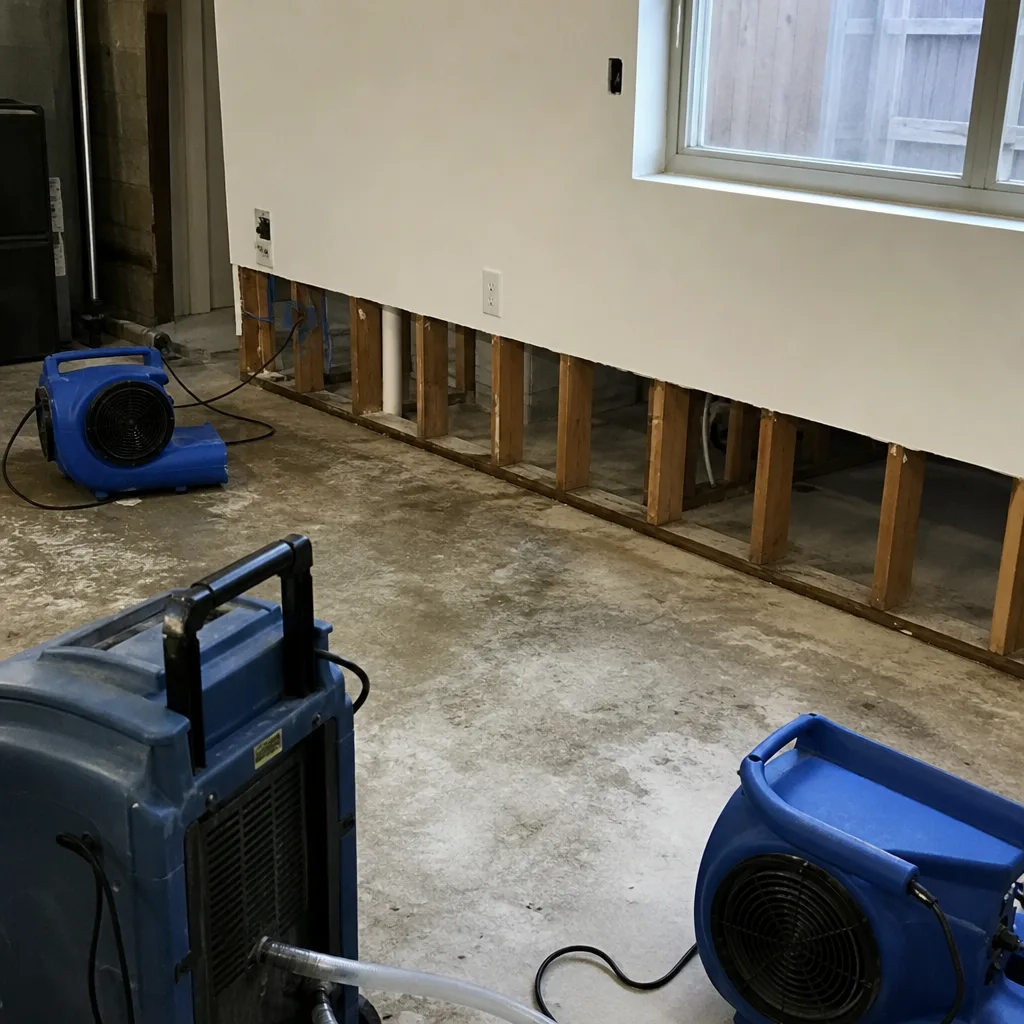
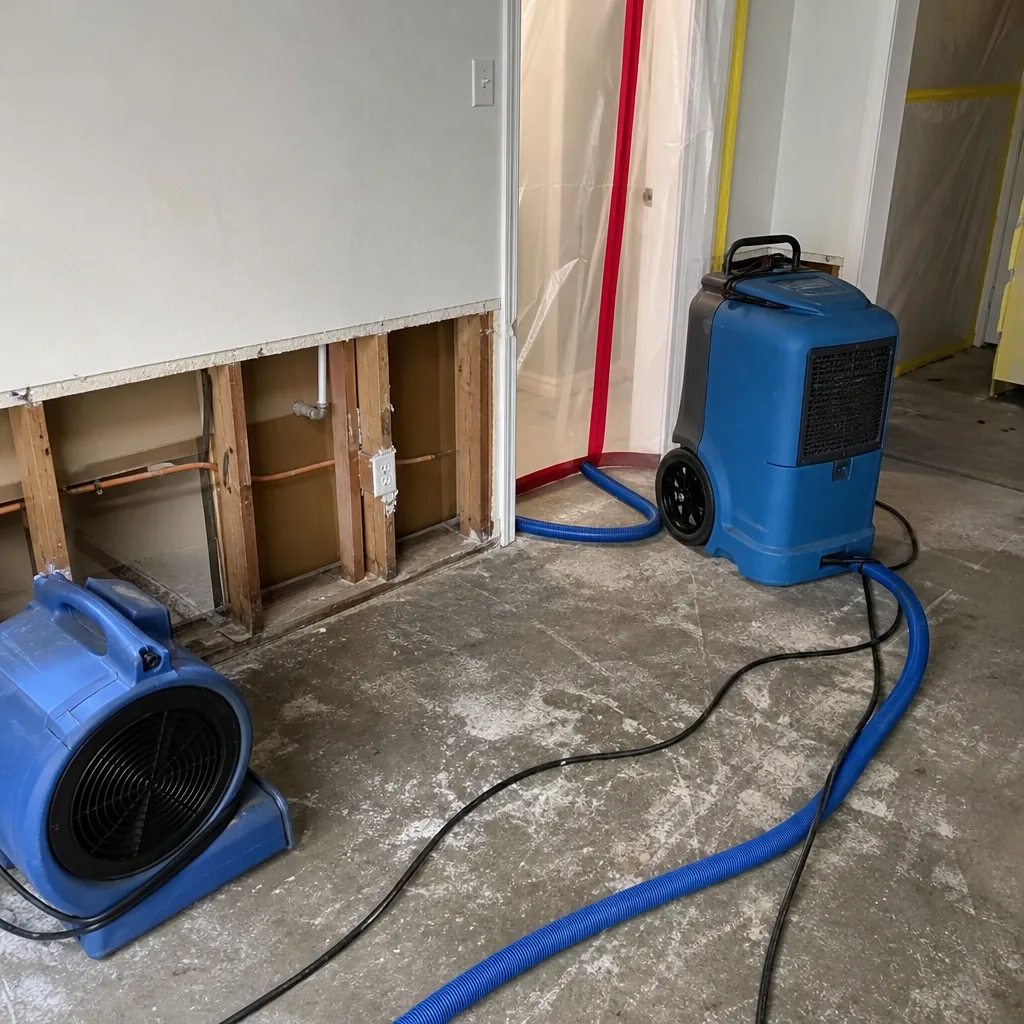
In psychrometric drying, the contractor measures RH (relative humidity) and moisture content in materials daily, charting the drying curve until the structure reaches its dry standard. A proper estimate includes monitoring, not just equipment. If a Houston estimate has extraction and equipment but no monitoring line item, ask how the contractor will know when the structure is actually dry. In Houston’s climate, where ambient humidity runs high year-round, seasonal damage restoration care for Houston matters even in winter-guessing is how you end up with mold behind walls six months later.
We use professional-grade equipment from Dri-Eaz, Phoenix, XPOWER, B-Air, and Injectidry on every job, and those brands appear on our line items by name. A contractor who lists “drying equipment” without specifying what they’re placing is often running consumer-grade fans from a hardware store. The brand name is a proxy for the drying capacity. If you see an estimate with vague equipment descriptions, ask for specifics.
The Named Arrival Window Standard
When a contractor says “we’ll be there sometime tomorrow,” they’ve just told you how they run their business. A named arrival window, a specific time range like “between 8 a.m. and 10 a.m.,” is a commitment. “Sometime tomorrow” is a hope.
This matters more in damage restoration than in almost any other trade, because every hour of delay extends the time water sits in your walls and flooring. In Houston’s warm, humid climate, mold can begin colonizing wet materials within 24 to 48 hours. A contractor who can’t commit to a window is telling you that your emergency is being fitted around their schedule, not prioritized.
The Kingswell Way, the operating standard we follow at Dryden Restoration Houston, includes a committed arrival window on every job. When you call, you get a live person, not a voicemail queue. That person gives you a window, and the technician who shows up is background-checked, uniformed, and carrying the equipment specific to your situation. If the window changes, you get a call. Not a text after the fact. A call before the window closes.
Here’s the practical test: ask any contractor you’re considering, “What time will your crew be here, and what happens if they’re late?” A professional has an immediate answer. An operator who hasn’t thought about it will fumble. Both answers are useful.
What a 365-Day Written Guarantee Should Actually Say
“We stand behind our work” is the most common sentence in the restoration industry, and it protects no one. It’s not a guarantee. It’s a sentiment.
A real guarantee has three components, and you should read the language before you sign anything:
- A specific duration. The guarantee window should be stated in days or years, not described as “reasonable” or “industry standard.” A 365-day guarantee means the contractor is accountable for a full year. If the repair fails in month eight, they come back. If the guarantee says “30 days” or “60 days,” that’s not enough time for a hidden moisture problem to reveal itself. Mold behind a wall can take months to show.
- A specific trigger. The guarantee should state exactly what qualifies for a return visit: visible mold growth in treated areas, recurring water stains, peeling paint at the repair site, or structural failure of a repair. If the trigger language is vague, the contractor can claim nothing is covered. If the language doesn’t name what happens when the repair fails, the guarantee is decorative.
- A named remedy. The guarantee should say what the contractor will do: return, re-assess, and correct the failure at no additional charge. Not “evaluate” or “consider.” Correct.
Our 365-Day Done Right Promise is written on every job we do. It says, in plain language, that if a covered repair fails within one year, Dryden returns and corrects it at zero additional cost. We put that in writing because a guarantee you can’t read isn’t a guarantee. It’s a marketing line.
Ask any Houston contractor you’re considering for a copy of their written guarantee before you sign. If they don’t have one, or if they describe it verbally but won’t produce a document, that’s your answer.
The 60-Minute Screening Process
You don’t need a week to vet a restoration contractor. You need about an hour, and you need to run the process in the right order. Our water damage restoration maintenance checklist for Houston homeowners covers what to do after the contractor leaves, too. Here’s the step-by-step, designed for Houston homeowners who are making this decision while standing in a wet living room.
- Call and time the answer. Call the main number. Does a live person answer, or does the call roll to voicemail? At 2 p.m. on a Tuesday, either answer is acceptable. At 2 a.m. on a Saturday night, when your water heater has flooded the garage, a live answer matters. Restoration emergencies don’t keep business hours, and the contractor you hire should answer the phone when your emergency happens. Our phone is answered live 24 hours a day, 7 days a week, every day of the year.
- Request the four documents. Use the list from above: written scope of work, itemized estimate, certificate of insurance, and IICRC certification for the crew lead. Ask for all four before any work starts. A contractor who provides them without hesitation has passed the first real test.
- Ask for the named arrival window. “When will your crew be here, and what’s the window?” Write down the answer. If the answer is a specific time range, good. If it’s “sometime this afternoon,” ask for a tighter commitment. If they can’t give one, move on.
- Ask about the guarantee in writing. “Do you provide a written guarantee, and can I see a copy before I sign?” Listen for specific language: duration, trigger, remedy. If the answer is “we stand behind our work,” ask for the document. No document, no deal.
- Ask about equipment by brand. “What kind of dehumidifiers and air movers will you place?” A professional names brands and models: Dri-Eaz, Phoenix, XPOWER, B-Air, Injectidry. An operator says “commercial-grade” or “the good ones.” The brand name matters because the drying capacity matters. In Houston’s humidity, underpowered equipment means the job takes longer and costs more, and the drying may not hold.
- Check their insurance certificate matches their company name. The certificate of insurance should list the same company name that appears on the estimate and the contract. If the names don’t match, or the certificate is expired, ask why. A mismatched name often means a subcontracting arrangement the homeowner never approved.
Run these six steps with two or three contractors, and the differences will show themselves quickly. One of them will have clear answers and documents. The others won’t. Hire the one who does.
Houston-Specific Factors That Change the Math
Houston isn’t like other markets, and restoration work here carries specific complications that don’t apply in drier cities. Knowing them helps you evaluate whether a contractor actually understands the local conditions or is running a generic playbook.
Humidity is the invisible problem. Houston’s relative humidity routinely sits above 70 percent, which means structural drying takes longer and requires more aggressive equipment than in, say, Dallas or Austin. A contractor who places one dehumidifier in a three-room flood cut is under-equipping the job. We run psychrometric monitoring daily and adjust equipment placement based on moisture readings, not a standard formula. If a contractor can’t explain how Houston’s climate changes their drying protocol, they don’t have one.
Slab foundations change the drying map. Most Houston homes are built on concrete slabs, which means water doesn’t drain downward the way it does in homes with basements or crawl spaces. Water wicks up through the slab and into flooring, baseboards, and lower drywall. Proper drying on a slab home requires pulling baseboards, drilling weep holes, and running air movement at floor level. A contractor who doesn’t mention slab-specific drying for a Houston home is missing the most common water path in this market.
Mold moves fast here. In Houston’s heat and humidity, mold colonization can begin within 24 to 48 hours of water exposure. This isn’t hyperbole; it’s the documented growth timeline for common indoor mold species in Gulf Coast conditions. It means the clock on mitigation is real, and it means the difference between a $2,000 drying job and a $15,000 remediation is often just a day or two of delay.
Hurricane and storm surge history matters. Houston has seen repeated flood events, and any contractor who has worked here for a decade has seen saltwater intrusion, sewage backup, and Category 4 wind damage. That experience changes how they approach a job. It’s why we’ve been serving Houston since 2005 as part of the Kingswell family of independently owned restoration businesses, and why our crews have seen the full range of what this climate can do to a house.
For the full picture on what restoration involves after a fire, see our guide to fire damage restoration in Houston.
Common Mistakes to Avoid
Most of the bad outcomes we see in Houston follow the same patterns. Here are the specific mistakes to avoid when you’re hiring a restoration contractor:
- Hiring the first truck that shows up. After a flood, door-knockers and driveway solicitors work the hardest-hit neighborhoods. Some are legitimate. Many aren’t. The Texas AG’s post-Harvey complaint data shows that the highest fraud rates came from unsolicited contractors. Never hire someone who showed up uninvited without running the full screening process.
- Accepting a verbal price. “We’ll take care of it, don’t worry about the cost” sounds reassuring when your house is wet. It’s how a $1,800 extraction becomes a $9,000 bill. A written price before any work starts is the only pricing commitment that means anything.
- Signing an assignment of benefits without reading it. As covered above, AOB agreements surrender control of your insurance claim. Read every document before signing, and if you don’t understand a clause, ask for an explanation in writing.
- Skipping the insurance check. Homeowners assume a contractor who shows up with equipment and a truck must be insured. That assumption is expensive when a technician drops a dehumidifier through your ceiling or injures themselves on your property. Check the certificate.
- Choosing based on price alone. The lowest bid in Houston often reflects under-equipping, skipped monitoring, or a scope that will expand once the walls are open. The highest bid doesn’t guarantee quality either. Compare scopes and line items, not just bottom lines.
- Not documenting the condition of the home before work starts. Take photos and video of the affected area before the crew arrives. If there’s a dispute about what was pre-existing damage, your photos are the record.
- Assuming your insurance adjuster and the contractor agree by default. Insurance adjusters have their job, and contractors have theirs. The homeowner who assumes everyone is on the same page is the homeowner who gets surprised by a denied claim or a shortfall. Stay in the conversation, in writing, for the whole job.
When to Call a Professional
Some water damage can wait until morning. Most can’t. Here are the situations where you should call a restoration professional immediately, not after you’ve had a chance to think about it: standing water covering more than one room, water that has been sitting for more than 24 hours, water from a sewage backup or exterior flood (which carries bacteria and pathogens), water that has reached electrical outlets or the breaker panel, any water event involving drywall that is saturated above the baseboard line, and any situation where you can already smell a musty odor. In Houston’s climate, delay is the most expensive variable in water damage. Dryden Restoration Houston offers free estimates in Houston – call (254) 277-4577 and a live person will answer, day or night.
Frequently Asked Questions
A professional restoration company in Houston should be able to dispatch a crew within hours of your call, not days. At Dryden Restoration Houston, a live person answers 24/7, and we commit to a named arrival window on every call. If a contractor tells you they can’t get to you for two or three days, call someone else. In Houston’s climate, every day of sitting water increases the cost and the damage. Call (254) 277-4577 for same-day dispatch availability.
It depends on the source of the water and the terms of your policy. Sudden and accidental events like a burst pipe, a failed water heater, or storm damage are typically covered. Gradual leaks, lack of maintenance, and some flood events may not be covered unless you carry separate flood insurance. A restoration contractor should document everything with photos and line-item estimates you can share with your adjuster. We coordinate with adjusters directly, but we never ask you to sign over control of your claim.
If water has saturated drywall, flooring, or insulation, cleaning alone won’t solve the problem. Water that wicks into drywall and framing doesn’t dry on its own in Houston humidity, and what looks like a stain on the surface is often a moisture reservoir behind the wall. The test is whether materials have absorbed water. If they have, they need to be dried or removed. A contractor who recommends full remediation should be able to show you moisture readings that justify the scope.
IICRC stands for the Institute of Inspection, Cleaning and Restoration Certification. It’s the recognized training and certification body for the restoration industry, and certified technicians have completed coursework and testing in the standards for water damage restoration, applied structural drying, and mold remediation. When a crew lead holds IICRC certification, it means the person directing your job has been trained to a national standard. Ask to see the certification card.
For a typical single-room water event in Houston, expect $1,500 to $4,000 for extraction, drying, and minor repairs. A multi-room flood cut with full drying and rebuild can run $8,000 to $20,000 or more, depending on the extent of structural damage and the finish level of the repairs. The biggest variables are the size of the affected area, the amount of equipment needed, and how long materials have been wet. Ask for an itemized estimate before any work starts, and compare line items, not just totals.
The best arrangement is one where you stay in control of your claim, and the contractor supports you with documentation. We provide photo evidence, moisture readings, and itemized estimates that you share with your adjuster. We’ll speak with your adjuster directly, answer their questions, and justify every line item. What we won’t do is ask you to sign an assignment of benefits that transfers your policy rights to us. That document benefits the contractor more than it ever benefits you. For a free consultation on your specific claim situation, call (254) 277-4577.
The Bottom Line
Hiring a Houston damage restoration contractor under pressure is hard, but the safeguards are simple: request four documents before work starts, insist on a named arrival window, read the guarantee language, and never sign an assignment of benefits without understanding what it does. Run the 60-minute screening process with two or three companies, and the professional will stand out clearly from the operators. Houston’s climate punishes delay more than most markets, but it also rewards the homeowner who asks the right questions up front. The four questions in this guide take an hour to ask and can save you years of trouble, and that’s a trade worth making every time. For more guides & resources, visit our blog. For a free estimate, call Dryden Restoration Houston at (254) 277-4577 – a live person will answer.
Written by Carl Brandt, Owner at Dryden Restoration Houston, serving Houston since 2005.
See the difference
 Before
 After
After Before
 After
After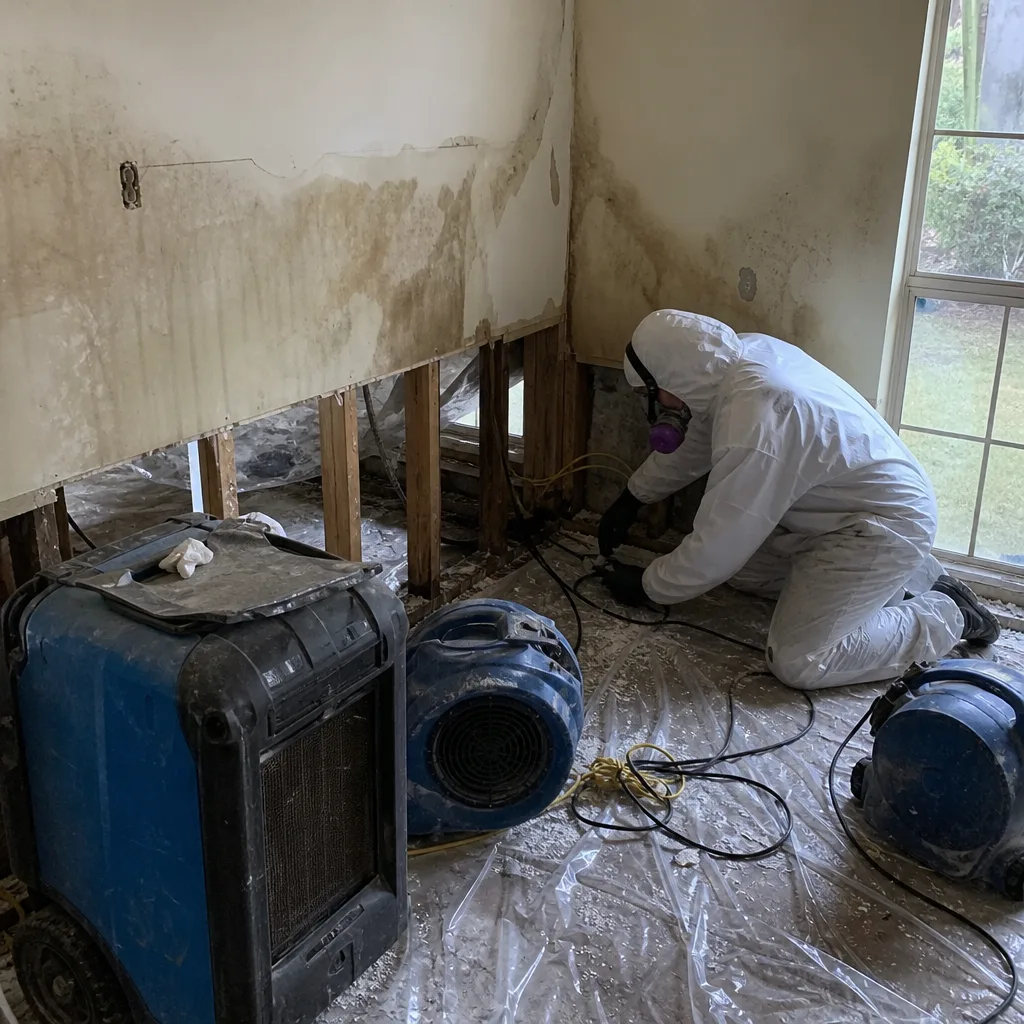 Before
 After
After