
Last updated October 16, 2026
 Water damage drying
 Fire & smoke cleanup
 Mold remediation
 Storm response
 Sewage cleanup
 Reconstruction
Free visual inspection and a written scope of work before any mitigation begins - photos, moisture readings, and drying logs go in your claim file
The scope we write is the scope we bill. Anything new gets shown to you, in writing, before we touch it.
Get your free estimateWater Damage Restoration Maintenance Checklist for Houston Homeowners
A generic seasonal maintenance checklist fails Houston homes. It tells you to clean gutters in October. It does not tell you that your pier-and-beam crawl space needs an inspection in August, after weeks of 100-degree heat have shrunk the clay soil away from your foundation, or that your HVAC condensate line will clog with algae in March because your air conditioner has already been running for two months. This guide is built around the actual calendar Houston lives by: hurricane season, soil contraction, humidity spikes, and the year-round air conditioner. By the end, you will know exactly what to check each month, what you can safely handle yourself, what to document for your insurance company, and when a problem has moved beyond maintenance.
Quick Answer
Water damage prevention for Houston homeowners means checking roof scuppers and gutters before June’s storm season, inspecting pier-and-beam or slab foundations after the dry summer months when soil contracts, and clearing HVAC condensate drain lines every 60 to 90 days because Houston air conditioners run 10 to 11 months a year. Most emergency water damage calls in Houston trace back to one of three failures: a clogged condensate line, a foundation crack opened by soil movement, or a roof penetration exposed by a 3-inch-per-hour rain event.
Restoration work we handle
Table of Contents
- April: Pre-Hurricane-Season Roof and Drainage Inspection
- HVAC Condensate Drain Lines: Houston’s Most Overlooked Leak Source
- Foundation Moisture Checks: Slab and Pier-and-Beam After Dry Spells
- Gutters, Downspouts, and Scuppers: Built for Houston Rain Intensity
- October: Post-Storm-Season Interior and Exterior Reset
- Documenting Damage with Your Phone Camera: What Adjusters Actually Look For
- Common Mistakes to Avoid
- When to Call a Professional
- Frequently Asked Questions
April: Pre-Hurricane-Season Roof and Drainage Inspection
Hurricane season starts June 1, but the prep work belongs in April. Houston averages 3 inches of rain per hour during intense weather events, which means a small roof penetration does not drip for a day or two before you notice it. It pours into your attic within minutes. The April checklist has one job: find every possible water entry point before the sky tests it for you.
Walk the perimeter of your home and look up. You are checking for cracked or missing shingles, lifting flashing around chimneys and vent pipes, and any spot where a tree branch has been rubbing against the roof surface. Pay special attention to roof valleys, the V-shaped channels where two roof planes meet. Water funnels through those valleys at double the speed of a flat roof section, and a single displaced shingle there can channel water directly into the decking.
Then inspect the flat surfaces. Houston has thousands of homes with low-slope or built-up roofs, especially in older neighborhoods like Timbergrove, Oak Forest, and Meyerland. If your home has a flat or low-slope roof, look for ponding, blisters, or cracks in the membrane. Standing water that does not drain within 48 hours after a rain is a warning sign, not a normal condition. On modified bitumen roofs, cracked seams at the edges are a common entry point for wind-driven rain.
- Check roof valleys and flashing for lifting, rust, or separated caulk.
- Inspect flat or low-slope roof sections for blisters, cracks, and ponding.
- Clear roof scuppers and parapet drains completely. A single leaf blocking a scupper can turn a Houston roof into a shallow swimming pool.
- Look inside the attic for daylight coming through the roof deck or dark stains on the underside of the sheathing.
- Test the roof from inside: on a dry day, use a garden hose to wet the roof surface in sections while someone watches the attic with a flashlight. Start low, move up slowly. This is how pros find the leak that only appears during certain wind directions.
If you find anything you are unsure about, a licensed roofer or a company offering Water Damage Restoration services can assess it. We regularly see Houston homes where a $200 flashing repair in April prevents a $7,000 interior dry-out in June. The math favors the April inspection every time.
HVAC Condensate Drain Lines: Houston’s Most Overlooked Leak Source
Here is a Houston fact most national checklists ignore: your air conditioner runs 10 to 11 months out of the year. In Minneapolis, a clogged condensate line causes a puddle once in August. In Houston, it causes a recurring leak that soaks drywall, warps baseboards, and feeds mold growth from March through November. The condensate drain line is the little pipe that carries water away from your indoor air handler. Every hour your AC runs, it pulls moisture out of the air and sends it down that line. Houston’s heat and humidity make that line a prime breeding ground for algae and bacterial sludge. When it clogs, the water backs up and overflows. Usually into a closet, a hallway, or a ceiling.
Most systems have a primary drain line and an emergency overflow pan with a secondary line. When the primary clogs, the pan fills. If the secondary line is also clogged or not installed properly, the pan overflows. The first sign is often a water stain on a ceiling below the attic unit. By the time you see that stain, water has been pooling for days.
The fix is simple and takes 15 minutes. Every 60 to 90 days, check the condensate line.
- Locate the drain line at the indoor air handler. It is a PVC pipe, usually white, running from the unit to an exterior wall or a plumbing drain.
- Find the drain opening or an access tee. If there is a cleanout cap, remove it carefully.
- Pour white vinegar, about one cup, down the line. The vinegar eats the algae without damaging the pipe. Bleach works but can crack older PVC over time.
- Wait 30 minutes, then flush with a quart of warm water.
- Check the exterior exit point to confirm water flows freely. If it does not, the line is still clogged.
If the line will not clear, there is likely a hard blockage deeper in the pipe. A wet-dry vacuum can pull it out. If you are not comfortable doing this, call a professional. The cost to clear a clogged condensate line in Houston runs $75 to $150. The cost to replace water-damaged drywall and remediate the resulting mold runs $1,800 to $4,500. Houston homeowners who run their AC nearly year-round should treat the check as a regular maintenance task, not an emergency response.
One often-missed detail: the float switch. Most modern HVAC systems have a safety float switch in the emergency pan. When the pan fills, the switch cuts power to the system. If your AC suddenly shuts off in July and the thermostat still shows power, check the pan. A full pan means a clogged line. Do not just reset the switch and run the unit. You will overflow the pan within the hour. Clear the line first. We have walked into Houston attics in August where a homeowner reset the float switch three times in one weekend. By the third day, the ceiling opened up.
Foundation Moisture Checks: Slab and Pier-and-Beam After Dry Spells
Houston sits on expansive clay soil. When it rains, the clay swells. When the rain stops and the summer heat arrives, the clay shrinks and cracks. Your foundation sits on top of that moving ground. A slab foundation does not float, it moves with the soil. A pier-and-beam foundation is more forgiving, but the crawl space underneath it becomes a moisture trap when the ground shifts and ventilation fails.
In a typical Houston summer, the soil around and under your home loses moisture unevenly. The perimeter dries faster than the center, which means the edges of your slab drop slightly while the middle stays put. That differential movement is what causes cracks in walls, sticking doors, and gaps between the foundation and the exterior brick. Those cracks are not cosmetic. They are pathways for water during the next heavy rain.
The maintenance task: in August, after several weeks of dry heat, walk the foundation perimeter.
- Look for new cracks in the exposed slab edge wider than the tip of a pen. Hairline cracks are normal. A growing crack is not.
- Check the soil near the foundation line. If you see a gap between the soil and the concrete edge wider than an inch, the soil has contracted away from the slab. When the next storm comes, water will pour directly down that gap and against the footings.
- Look at interior walls, especially above door frames and windows. New diagonal cracks from the corner of a door frame that appear in August and September are classic differential settlement.
- If you have a pier-and-beam home, open the crawl space access in August and look for standing water, a musty smell, or wet insulation hanging below the floor joists. Also check that the crawl space vents are open and clear. Closed vents trap moisture year-round, and that moisture rises into the floor system.
- Check plumbing leaks. The dry season is exactly when pipes take stress from soil movement. A slab leak in a Houston home is almost always tied to clay soil movement. When the slab shifts, it can shear a copper water line. The fix is expensive, often $3,000 to $6,000 for a re-route, and it requires a licensed plumber.
The dry-season foundation check is one Houston maintenance task almost no national checklist includes. For more guides & resources, explore our blog. If you wait until you see water in the house, the damage is already done. If you catch the soil gap in August and water the foundation, or call a foundation company to install a soaker hose system, you can often keep the movement small enough that it never becomes a leak. The trick is doing the check before the October rains return.
Gutters, Downspouts, and Scuppers: Built for Houston Rain Intensity
A gutter system that works in Seattle fails in Houston. A Seattle rain event drops 0.1 inches per hour for days. A Houston thunderstorm drops 3 inches per hour for 20 minutes. The water volume is not just higher, it arrives in a burst that overwhelms undersized or clogged systems. When a gutter overflows during one of those bursts, the water pours over the lip, lands at the foundation line, and runs straight down the gap between soil and slab. That is the exact scenario that causes the foundation movement problems from the section above.
The most important Houston-specific component is the scupper, a rectangular opening through a parapet wall that drains a flat roof. Most homeowners do not even know they have them until water pours through the opening and into the building. Scuppers clog with leaves, roofing granules, and Houston’s unique mix of oak pollen and humidity. When they clog, the water pools on the roof instead of draining. That pool eventually finds a crack, a seam, or a penetration.
The maintenance schedule for gutters and scuppers in Houston: clear them in April before hurricane season, clear them again in late July or early August as the first heavy storms hit, and clear them one more time in November after leaf drop. That is a two-to-three-times-a-year task, not the once-a-year task national checklists recommend.
- Check gutter pitch. A gutter that has sagged over time will hold water instead of carrying it to the downspout. The water sits, the debris accumulates faster, and the weight pulls the gutter further off its hangers. The correct slope is a quarter inch per 10 feet toward the downspout.
- Make sure downspouts extend at least 4 feet from the foundation. A downspout that dumps right at the corner is a foundation leak waiting to happen.
- Look at the splash blocks at the bottom of every downspout. If the splash block has shifted and water is running back toward the house, adjust it.
- Clean scuppers down to the bare metal or membrane. Use a gloved hand, a trowel, or a small wet-dry vacuum, and confirm the water flows out and away.
- If your home has internal roof drains, not visible scuppers, check the drain basket for debris and run a garden hose through the line for a minute to confirm it is flowing.
When we perform Water Damage Restoration in Houston, we often find the original failure started with a clogged scupper or a downspout that had been dumping against the foundation for years. The restoration work addresses the water that got in. The maintenance work you do now stops the same water from getting in again.
October: Post-Storm-Season Interior and Exterior Reset
October is the reset month for Houston homeowners. Hurricane season is not technically over until November 30, but the heaviest rain risk has passed by mid-October. That makes it the right time to do a slower, more thorough inspection inside and outside the house, after a summer of stress from heat, humidity, and storms.
Start inside. Walk every room and check the ceilings, especially below bathrooms, around chimneys, and under any area that housed a window AC unit over the summer. Look for water stains that appeared after a storm. A fresh stain means a leak that happened recently and needs to be chased immediately. An old, dry ring means a past leak, probably fixed, but worth a quick check with a moisture meter to confirm the area is dry.
Check the walls at the baseboard level in every room. Houston’s humidity means condensation can form inside wall cavities when an AC vent blows cold air directly onto drywall. That condensation runs down the back of the wall and collects at the baseboard. The first sign is usually a slight bubbling of paint or a soft spot in the baseboard itself. If you find a soft spot, the wall cavity may be holding moisture, and the fix often requires cutting out the affected drywall and drying the inside. That is a job for professional drying equipment, not a box fan.
Then move outside.
- Re-check the foundation perimeter for new cracks opened by the wet-dry cycles of late summer. Houston clay soil goes through dramatic expansion and contraction cycles from July through September. October is when the cracks are most visible.
- Inspect exterior caulk around windows and doors. A summer of heat opens hairline gaps in old caulk, and those gaps are where wind-driven rain enters. Re-caulk any gaps wider than a fingernail.
- Look at the roof again, this time with binoculars from the ground. Storm debris, fallen branches, and wind-lifted shingles are easier to spot after the season’s first strong fronts.
- Check the irrigation system. A sprinkler head spraying against the side of the house is a slow-motion water intrusion event. Adjust it.
- Open the water heater closet and check around the base for corrosion, rust, or moisture. Water heaters fail in Houston at roughly the same rate as anywhere else, but when a tank fails in a Houston garage, the water soaks into the garage drywall and often goes unnoticed for days.
The October reset is also the time to test your sump pump if you have one. Houston is flat and the water table is high in many areas, especially inside the loop and in older neighborhoods like Bellaire, West U, and parts of Spring Branch. Fill the sump pit with a few gallons of water and confirm the pump kicks on and discharges outside. A dead sump pump discovered in October can be replaced for $300 to $600. The same pump discovered dead during a May rain event is a $5,000 clean-up.
Documenting Damage with Your Phone Camera: What Adjusters Actually Look For
The single biggest mistake Houston homeowners make after discovering water damage is waiting to document it. They think the insurance adjuster will show up and take care of everything. But adjusters need evidence of what existed when the damage happened, not after the drywall has been ripped out and the blowers have run for a week. Your phone camera is the most useful tool you own in a water damage claim.
Take these photos immediately after discovering water damage:
- Wide shots showing the entire affected area, from multiple angles. These establish the scope.
- Close shots of the water source. If a pipe burst, photograph the pipe. If a scupper clogged, photograph the clog. The source photo is the single most important piece of evidence in the claim.
- Photos of standing water before any cleanup begins. Use a ruler or a coin next to the water to show depth, if possible.
- Photos of damaged contents: furniture, books, electronics, anything wet. Move them only after photographing them.
- Photos of the moisture markings on drywall or ceilings, taken from both sides of the wall or above the ceiling if you can access it.
- Photos of any mold growth, even a small patch. Mold marks the difference between a cleanup and a remediation, and it matters for your claim.
Then, keep a written log. Note the date and time you discovered the damage, the source if you can identify it, and every action you took afterward. That log is a powerful supporting document if your claim faces scrutiny. Adjusters respond to documentation. A homeowner who can show a timeline, source photos, and moisture readings before mitigation begins will almost always get a faster, more complete settlement than one who calls the insurance company and waits.
The same photo discipline applies before the damage happens. Houston homeowners should photograph the condition of their home at the start of every hurricane season. A walkthrough video, saved to the cloud, showing the roof, gutters, foundation, interior walls, and ceilings, creates a pre-loss record that makes any future claim smoother. Do the walkthrough in April and save it. It takes 20 minutes and it is free.
If you are looking for help with Mold Remediation in Houston after water damage, a restoration company that has documented the initial damage will have an easier time working with your adjuster to establish the scope of the cleanup. The documentation you do first makes every later step more straightforward.
Common Mistakes to Avoid
- Waiting until June to think about hurricanes. By the time the first named storm forms in the Gulf, the scuppers should have been cleared weeks ago. April is the time to prepare. June is too late.
- Ignoring the condensate line until the ceiling stains. Houston HVAC systems produce gallons of condensate daily. A clogged line can cause a leak within 48 hours of the clog forming. Check it every two months, not once a year.
- Using bleach to clean everything. Bleach kills surface mold but does not penetrate drywall or wood. For porous materials, the mold roots remain even after the surface looks clean. Professional mold remediation uses different approaches because the biology is different.
- Assuming a hairline crack is nothing. In Houston, hairline cracks in summer often widen into real cracks by winter. Track the crack width with a pen mark on each side. If it grows, call a foundation contractor.
- Not photographing the damage before calling a mitigation company. Once a restoration crew starts cutting drywall and pulling baseboards, the evidence of the original condition is gone. Take photos first, always.
- Pointing a downspout at the house and calling it good. Downspouts should discharge 4 to 6 feet from the foundation line. A splash block at the corner is not enough. Extend the run or install an underground drain.
- Running the AC with a tripped float switch. The float switch trips for a reason. Resetting it and walking away guarantees a bigger leak by morning.
When to Call a Professional
Most of the tasks in this checklist take an afternoon and a bucket. But some situations should always trigger a call to a licensed restoration company.
Call a professional if you find standing water that has been present for more than 24 hours. Call if you see mold growth larger than 10 square feet, roughly the size of a bath towel. Call if water has penetrated wall cavities or the space between floors. Call if the water is from a sewage backup or a flood. Call if the damage affects electrical wiring, whether you can see it or not. And call if your insurance company asks for a professional assessment before processing the claim.
Dryden Restoration Houston home services include water damage restoration, mold remediation, and fire damage restoration. We give a written price before any work starts, and we stand behind every repair with the 365-Day Done Right Promise. Estimates are free. Call (254) 277-4577 and a live person answers, day or night.
Frequently Asked Questions
Every 60 to 90 days, year-round. Houston air conditioners run 10 to 11 months a year, so the line is constantly producing water. A monthly check during June, July, and August is the safest schedule, especially if your air handler is in an unfinished attic where a leak can go unnoticed for days.
The three most common sources in our experience are clogged condensate drain lines, roof leaks from scuppers or flashing failures during intense rain events, and foundation movement that cracks water supply lines. A Houston check focusing only on the roof misses two of the three big risks.
It depends on your policy and the cause of the clog. If the clog resulted from a sudden event, like a backup, most policies cover the resulting damage. If the insurer argues the clog was a maintenance issue, they may deny the claim. Document the line with photos and log your maintenance schedule. A record of regular cleaning helps your case. For exact policy terms, call your adjuster or agent. We work directly with insurance companies to document damage and coordinate the restoration scope.
Normal settling in Houston shows as hairline cracks in the same spots year after year and without change. A developing foundation problem shows as new cracks wider than a pen tip, doors that begin to stick or not latch, and gaps at the foundation line that widen over a single dry summer. Track changes with dated photos and a simple ruler.
Stop the water at the source if you can do so safely, shut off electricity to the affected area if water is near outlets or wiring, photograph everything, and then call a restoration company. Do not wait. A response within the first 24 hours prevents the damage from spreading into drywall, flooring, and framing. Our team at Dryden Restoration Houston responds quickly and documents every step for your insurance claim.
Yes. A written price before any work starts protects you from a number that grows after the crew is already inside your home. It also gives your insurance company a clear scope to review. At Dryden Restoration Houston, every job receives a written price before any tool is touched. That price does not change at the door. It is part of the Kingswell Guarantee, and it is not optional.
The Bottom Line
Houston homes face a specific set of water risks. The checklist that keeps a home dry here is not the one written for Seattle or Minneapolis or Phoenix. It is built around hurricane season, clay soil movement, year-round air conditioning, and rain that falls in bursts of 3 inches per hour. Check your roof scuppers in April. Check your foundation in August. Clear your condensate line every two months. Document everything with your phone. The tasks are simple and fast. The damage they prevent is expensive, disruptive, and slow to fix. Follow the Houston calendar, not the national generic one, and your home will stay dry. If you ever need help, call (254) 277-4577 for a free estimate.
Written by Carl Brandt, Owner at Dryden Restoration Houston, serving Houston since 2005.
See the difference
 Before
 After
After Before
 After
After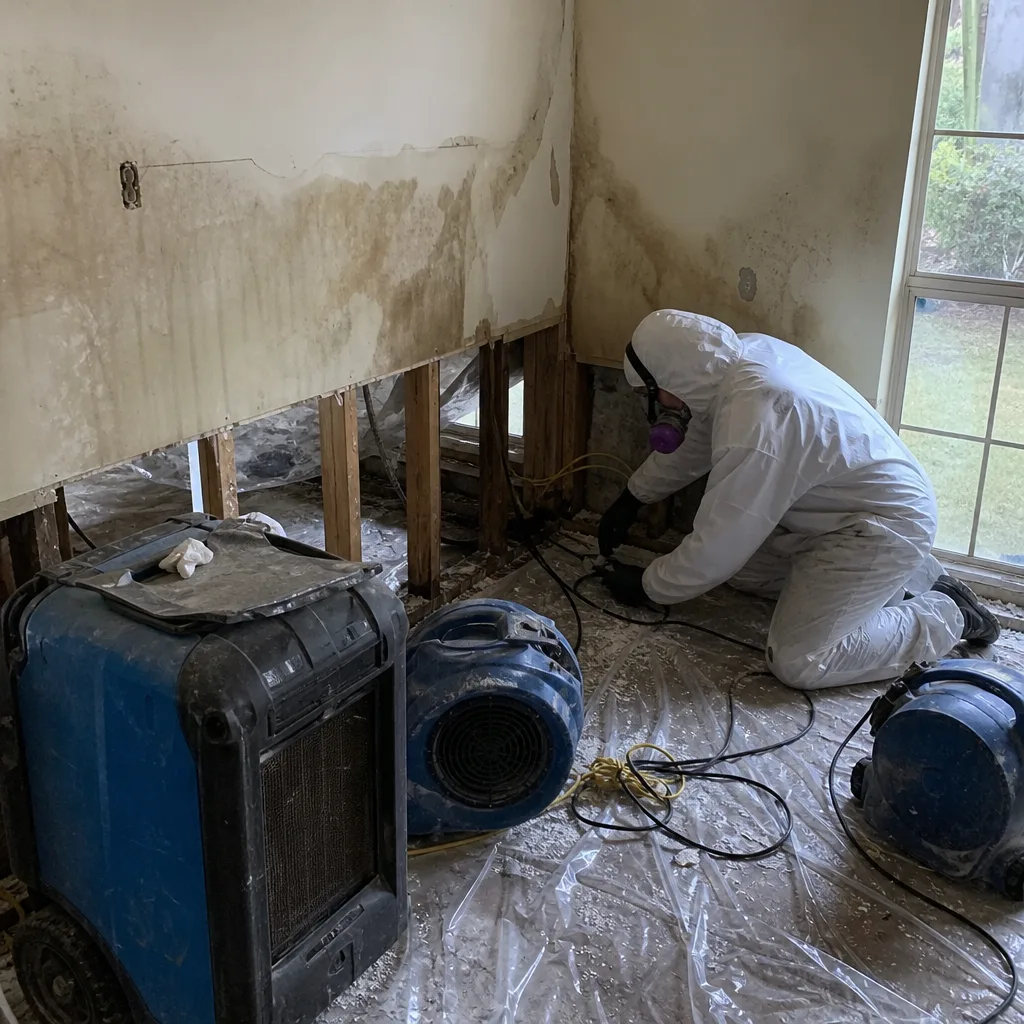 Before
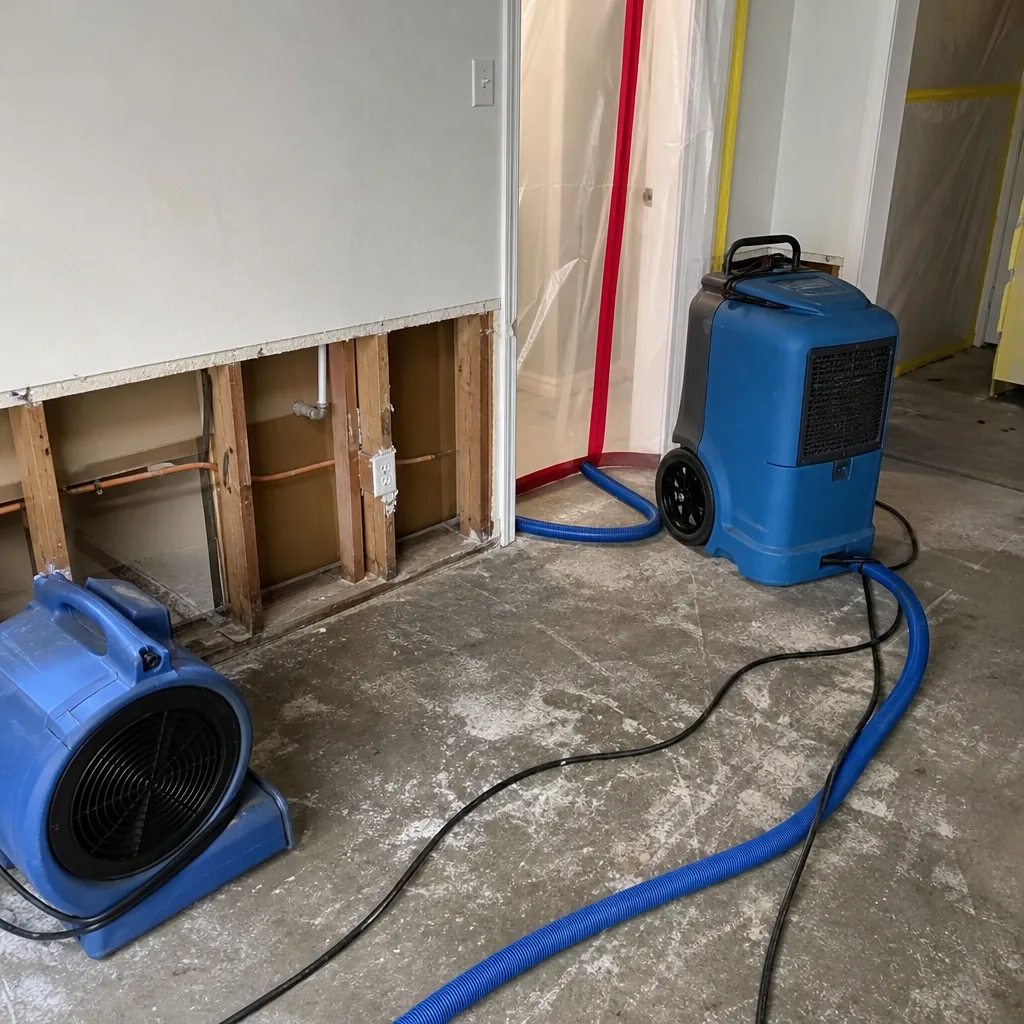 After
After