
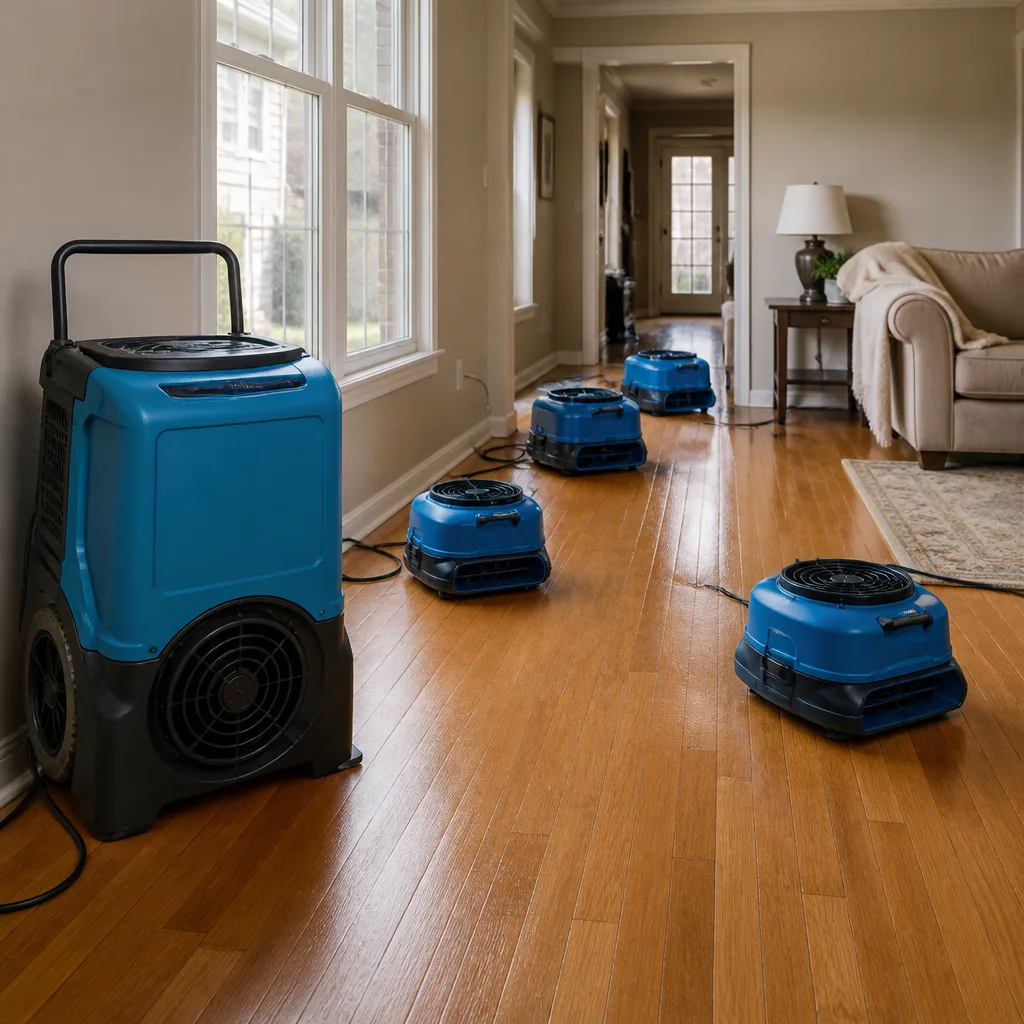
 Water damage drying
 Fire & smoke cleanup
 Mold remediation
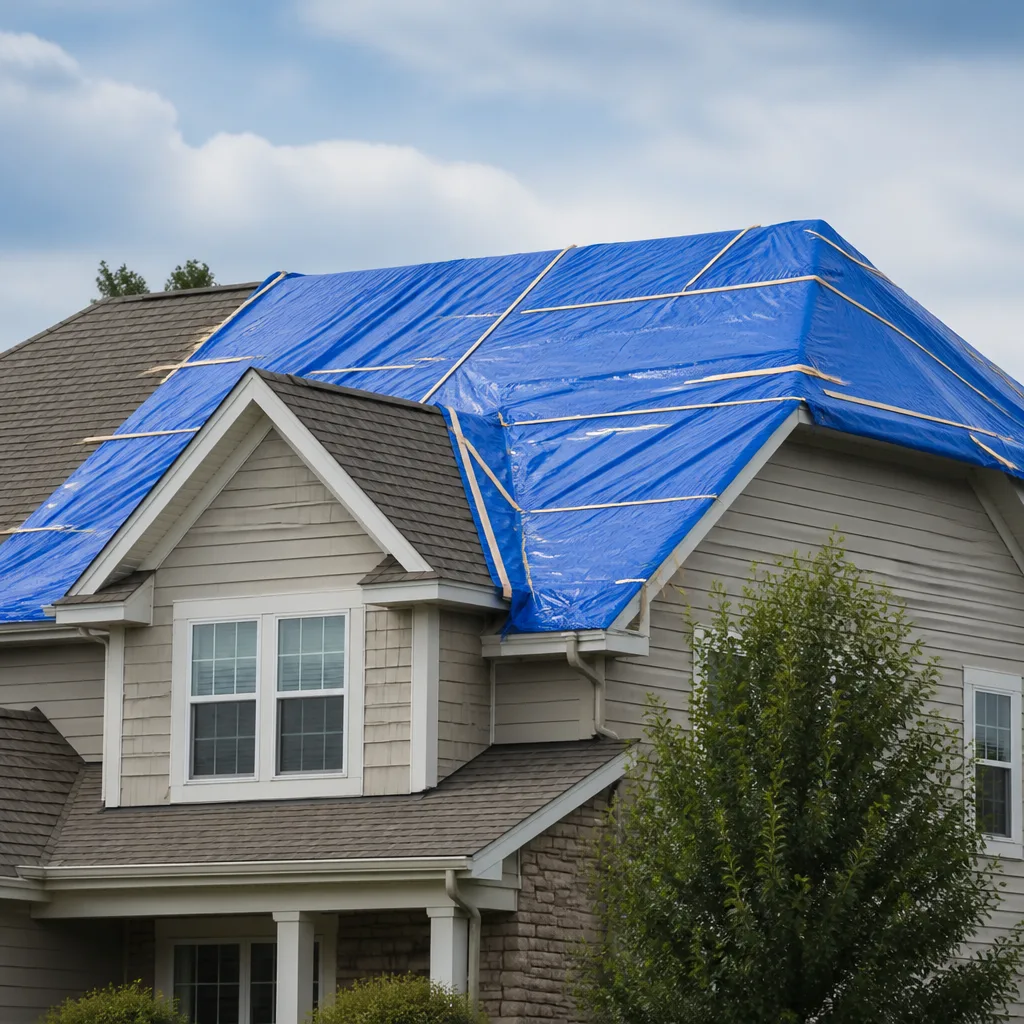 Storm response
 Sewage cleanup
 Reconstruction
Free visual inspection and a written scope of work before any mitigation begins - photos, moisture readings, and drying logs go in your claim file
The scope we write is the scope we bill. Anything new gets shown to you, in writing, before we touch it.
Get your free estimateRestoration work we handle
See the difference
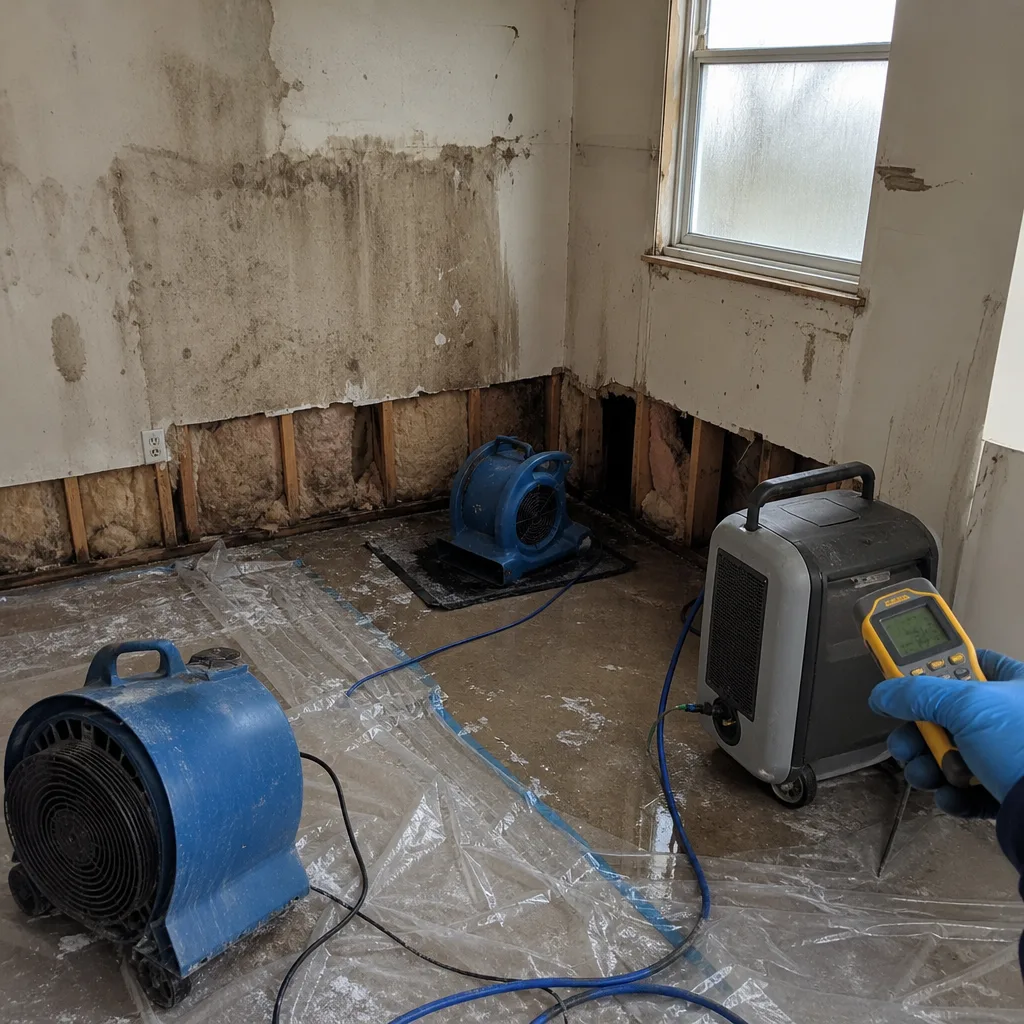 Before
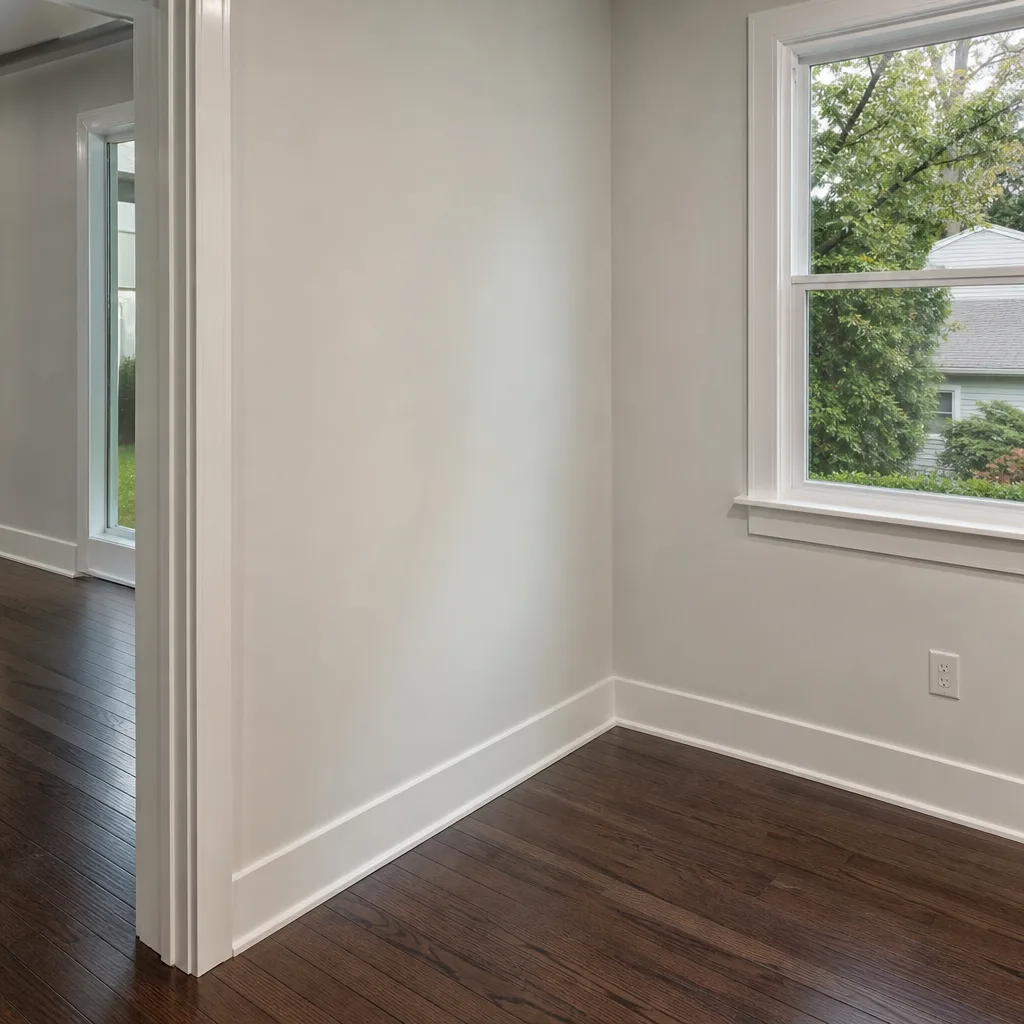 After
After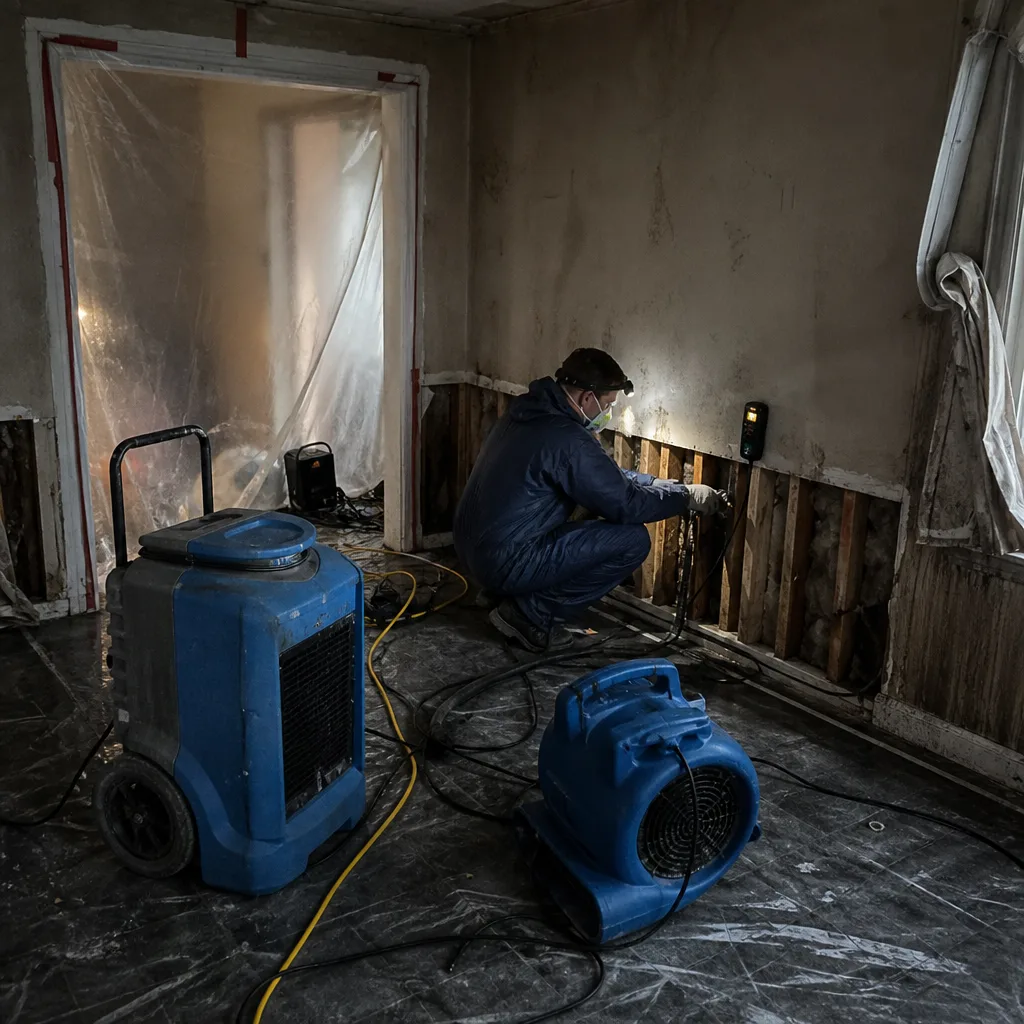 Before
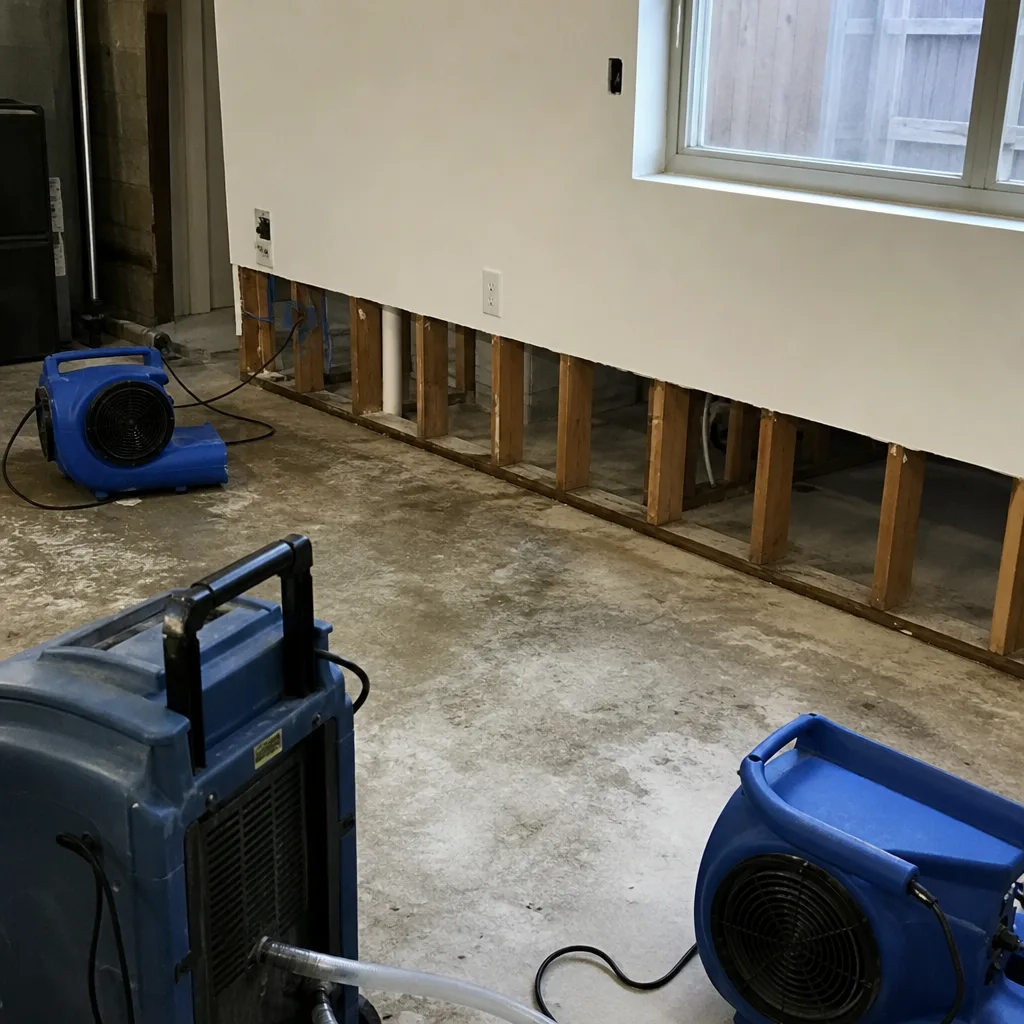 After
After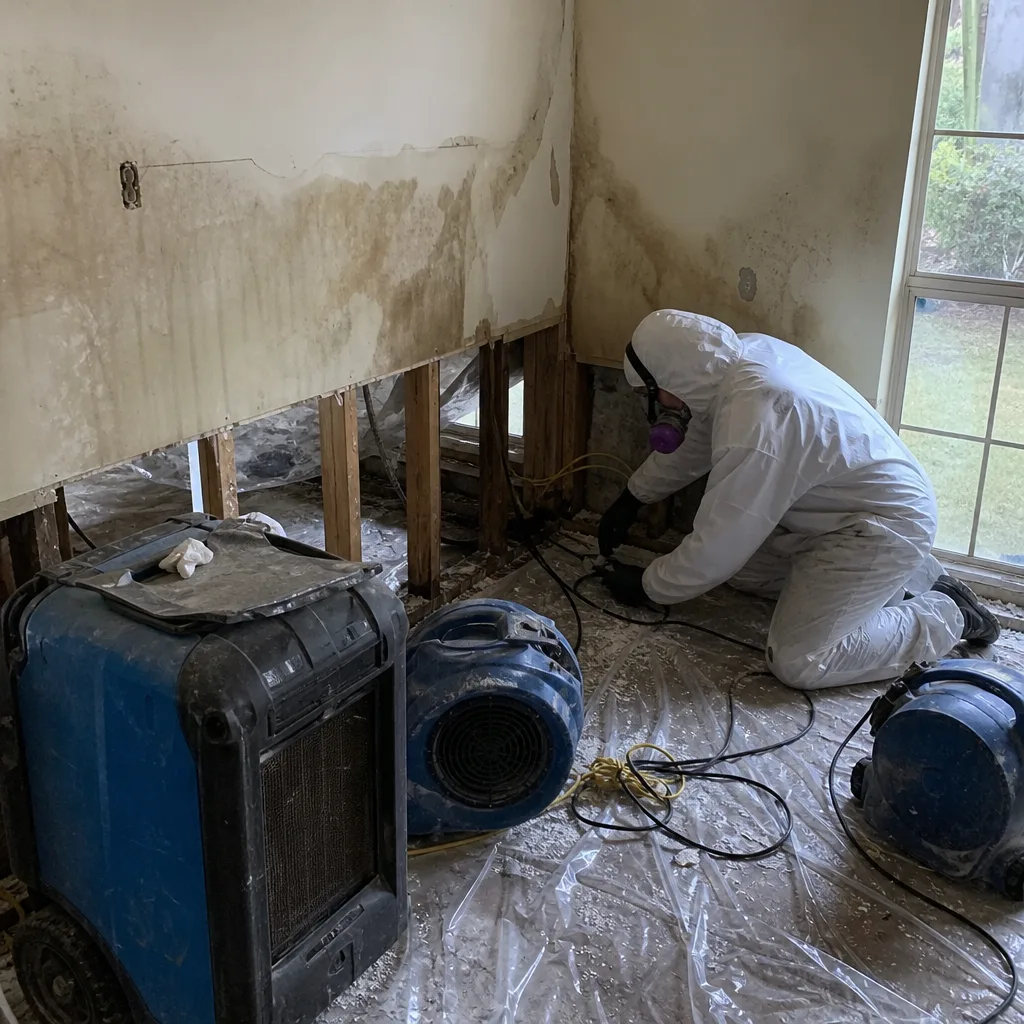 Before
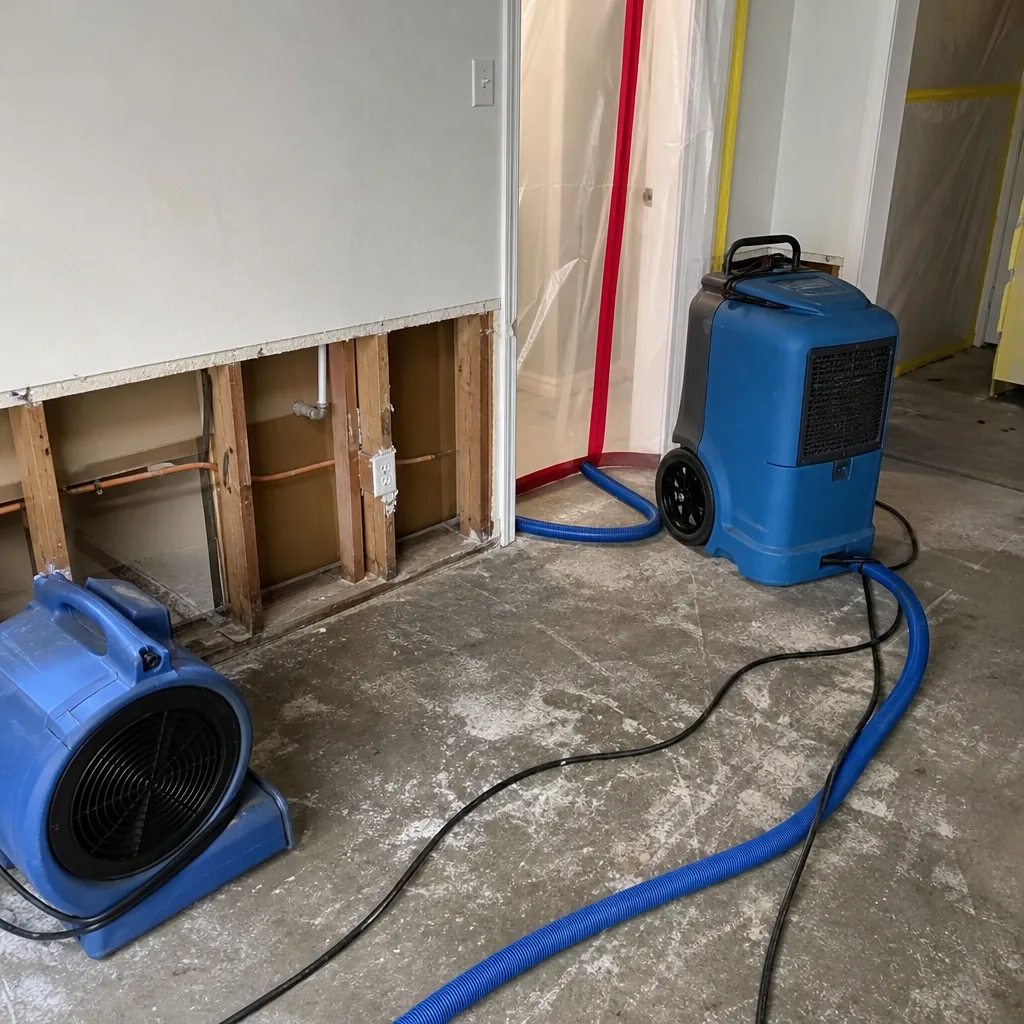 After
AfterStructural Drying & Dehumidification in Houston, TX
Structural drying in Houston typically costs between $1,800 and $4,500 for most single-room water events, with whole-home drying projects ranging from $6,000 to $15,000 depending on square footage, water category, and how long materials stayed wet. See our full 2026 Water Damage Restoration Cost Guide for Houston pricing details. The process uses commercial air movers and refrigerant dehumidifiers to pull trapped moisture out of drywall, subflooring, framing, and cabinetry until materials return to their normal moisture content, usually within 3 to 5 days. Dryden Restoration Houston handles the entire sequence from water extraction through final moisture verification, and you can call (254) 277-4577 any time to get a written estimate before any equipment enters your home.
If you’re dealing with a recent leak, a supply-line break, or water that sat while you were away, this page explains what structural drying actually involves, what it costs in the Houston market, and how we approach it as part of our broader Water Damage Restoration in Houston service. We’re an independently owned and operated Kingswell company, founded in 2005, and we document our pricing and our 365-Day Done Right Promise on every job before work begins.
Key Takeaways
- Structural drying uses commercial-grade air movers and dehumidifiers to remove moisture from building materials, not just surface water.
- Most Houston projects wrap up in 3 to 5 days of active drying, followed by moisture-content verification.
- Expect to pay $1,800 to $4,500 for a typical single-room water event; larger jobs scale up from there.
- We put our price in writing before we touch a tool, and we back the work with a written 365-Day Done Right Promise.
When You Need Structural Drying & Dehumidification
Houston’s heat and humidity work against you after a water event. A carpet can feel dry to the touch while the subfloor underneath is still holding 40% moisture, and that’s where mold starts. Here’s what typically tells a homeowner that drying has to go beyond towels and box fans:
- Water sat for more than 24 hours. The longer drywall and flooring stay wet, the deeper the moisture migrates. After a day, you’re almost always looking at professional drying, not surface cleanup.
- Baseboards are swelling or pulling away from the wall. When MDF and wood baseboards absorb water, they expand and warp. That’s a visible sign that moisture is trapped behind them, in the wall cavity.
- You smell dampness or must even after the area feels dry. Odor means microbial activity is already underway. In Houston’s climate, that window between “wet” and “moldy” can be just 48 hours.
- Hardwood floors are cupping or buckling. Wood flooring absorbs water fast and releases it slowly. Cupping edges and raised seams mean the flooring and likely the subfloor need professional drying with a floor-mat system like Injectidry.
- Water came from an HVAC overflow, a water heater in an upstairs closet, or a slab leak. These sources push water into concealed cavities where it won’t dry on its own, regardless of how much air you move through the room.
- Humidity in the home stays above 60% RH days after the event. Relative humidity (RH) is the amount of moisture the air is holding compared to what it can hold. In Houston, ambient outdoor RH runs 70% or higher much of the year, so without dehumidification, interior RH stays elevated and drying stalls.
If you’re seeing any of these signs in neighborhoods like Westbury, Sharpstown, the Heights, or Kingwood, call (254) 277-4577. We’ll walk you through what you’re seeing over the phone and tell you honestly whether you need professional equipment or can manage with what you have.
Our Structural Drying & Dehumidification Process
We follow the IICRC S500 standard for professional Water Damage Restoration, but here’s what that actually looks like on a Houston job, in plain English, step by step:
- Inspection and moisture mapping. We use penetrating and non-penetrating moisture meters to map exactly where water has traveled, including inside wall cavities and under flooring. We mark affected areas and record baseline moisture content readings for every material type.
- Written price before any equipment is placed. Based on the affected square footage, the category of water, and the drying goals, we give you a fixed written price for the drying scope. The number doesn’t change at the door, and it doesn’t grow as we work. If the scope genuinely changes, we discuss it before we expand it.
- Water extraction. We remove standing water using truck-mounted or portable extraction equipment. The less water that remains, the faster drying proceeds.
- Containment and air mover placement. We seal off affected areas to prevent cross-contamination, then position professional-grade air movers such as XPOWER and B-Air units to create directed airflow across all wet surfaces. Air movement is what converts surface moisture into vapor.
- Dehumidification. We install refrigerant dehumidifiers sized to the cubic footage of the affected space. These machines pull water vapor out of the air, which keeps RH low and allows materials to continue releasing moisture. This is the step most box-fan drying attempts miss completely.
- Daily monitoring and moisture-content verification. We return daily to take readings on walls, floors, and framing. Drying is complete when moisture content returns to the dry standard for each material type, not when the equipment has been running a certain number of days. We show you the numbers before we pack up.
For hardwood floors and other dense materials, we may add an Injectidry vacuum-panel system that actively draws water out from under the flooring. It’s the same approach commercial crews use, and it often saves wood floors that would otherwise be torn out.
Structural Drying & Dehumidification Pricing in Houston
Houston pricing for structural drying varies by square footage, water category, and how long the materials were saturated. We publish honest ranges because homeowners deserve a number before they commit, and a written price before work starts is one of the core commitments of The Kingswell Way. Say the price before the work. Show up in the window we gave. Leave the place cleaner than we found it. Put the guarantee in writing. Come back if it fails.
| Scope | Typical Houston Price Range | What’s Included |
|---|---|---|
| Small single-room event (bathroom, laundry, closet) | $1,800 – $3,200 | Water extraction, 2-4 air movers, 1 dehumidifier, daily monitoring, moisture verification |
| Multi-room event (kitchen plus adjacent rooms) | $3,200 – $6,500 | Extraction, 4-8 air movers, 2 dehumidifiers, containment, daily monitoring, final documentation |
| Whole-floor or whole-home drying | $6,000 – $15,000+ | Full containment, 8-15+ air movers, multiple dehumidifiers, Injectidry floor panels if needed, daily monitoring |
| Category 2 or 3 water (gray or black water) | Add 20-35% to base scope | Additional antimicrobial application, disposal of contaminated materials, extra containment |
What shifts the price most is the category of water, the type of flooring, and whether cabinets or built-ins need drying. A clean-water supply line break under a tile floor in Katy runs on the lower end. A sewage backup that soaked carpet, pad, and drywall in Meyerland runs higher because of the disposal and antimicrobial work involved. Basement water removal scenarios often fall into this higher range as well.
No matter the scope, you get a written estimate before we start, and that estimate is free. Call (254) 277-4577 and a live person answers, day or night.
Why Houston Homeowners Call Dryden Restoration Houston
Every technician who enters your home is background-checked and arrives in a Dryden uniform. You know exactly who you let in. Our team works to IICRC, RIA, and IFA standards, the recognized benchmarks for training and ethics in the damage-restoration industry. Our equipment fleet includes Dri-Eaz, Phoenix, XPOWER, B-Air, and Injectidry systems, the same professional-grade machines used by large commercial restoration crews.
We’ve seen what happens in Houston when drying isn’t verified: floors that look fine for six weeks, then cup badly in the first humid spell, and walls that bloom with mold behind the baseboards. That’s why we don’t pull equipment until the moisture meter shows the right numbers, and that’s why every job carries a written 365-Day Done Right Promise. If a covered repair fails within a year, we come back and correct it at no charge. It’s documented, not verbal.
Carl Brandt leads our Houston team, and the commitments above are the ones he holds every job to. If you’re somewhere between the Beltway and FM 1960, or out toward Pasadena or Sugar Land, we respond to water damage restoration near me calls the same day in most cases.
FAQs – Structural Drying & Dehumidification
How much does structural drying cost in Houston?
Structural drying in Houston typically costs $1,800 to $4,500 for a single-room water event and $6,000 to $15,000 for larger or whole-home projects. The main cost drivers are square footage, water category, flooring type, and how long materials were wet before drying started. Call (254) 277-4577 for a free written estimate with a price that’s fixed before any work begins.
How long does structural drying take in Houston’s climate?
Most structural drying projects in Houston complete in 3 to 5 days of active drying, though dense materials like hardwood and plaster can extend that to 7 days or more. Houston’s high ambient humidity is why professional dehumidification matters; without it, interior RH stays too high for materials to release moisture efficiently.
Can I dry the structure myself with fans and open windows?
In Houston, no, not reliably. The city’s outdoor RH typically runs 70% or above for much of the year, so opening windows can actually add moisture to the home rather than remove it. Box fans move air but don’t lower humidity. Professional drying requires controlled airflow plus refrigerant dehumidification sized to the cubic footage of the wet space.
Is structural drying covered by homeowners insurance in Houston?
Structural drying is typically covered by homeowners insurance when the water event qualifies as sudden and accidental, such as a supply-line break or an appliance failure. We document every step of the drying process with moisture readings and photos, which most Houston-area adjusters and carriers require for a smooth claim. Call (254) 277-4577 and we’ll help you understand what your policy is likely to cover for your specific situation.
What happens if the drying doesn’t hold, or mold appears later?
If a covered repair fails within 365 days, we return and correct it at no additional cost under our written 365-Day Done Right Promise. The free return visit is documented in your job paperwork, not just mentioned verbally. If you suspect the drying didn’t hold, call us; we’ll send a technician back to test moisture levels and address the problem.
Written by Carl Brandt, Owner at Dryden Restoration Houston, serving Houston.