
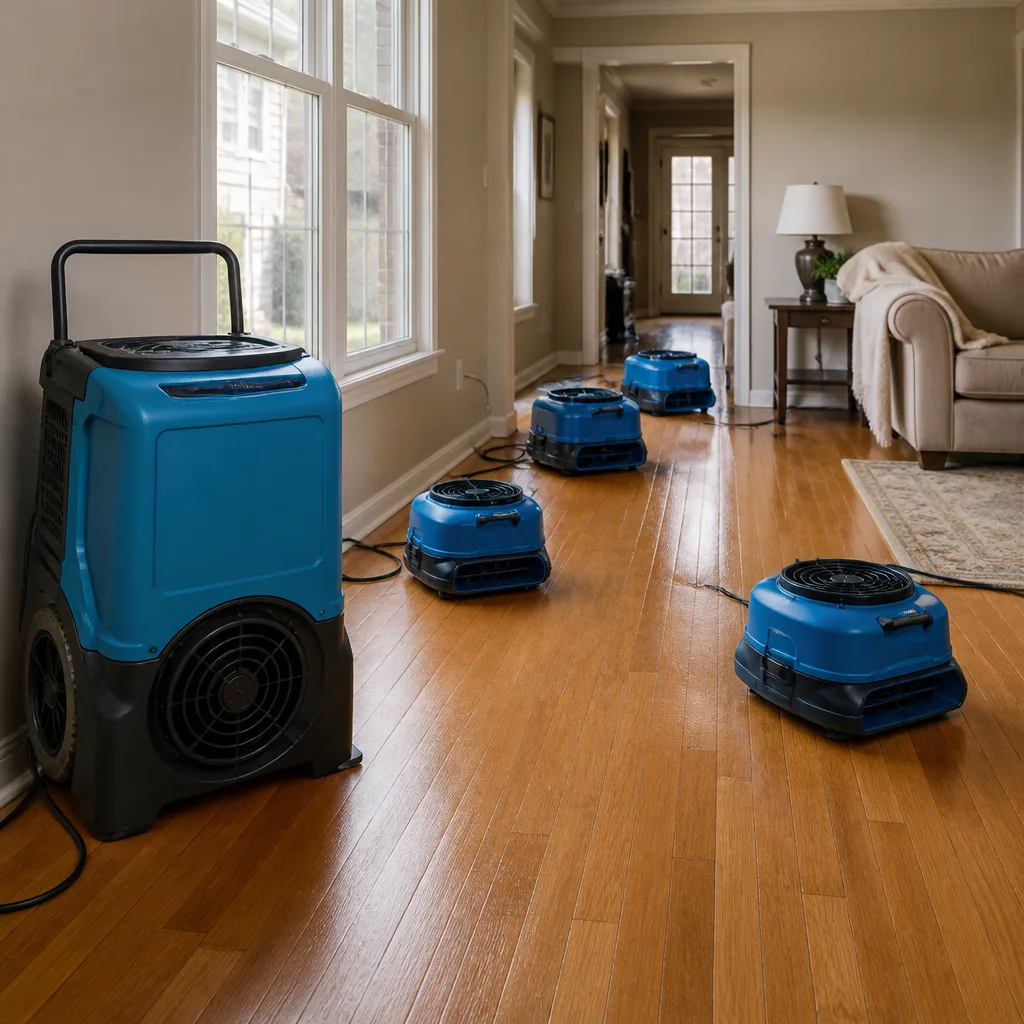
 Water damage drying
 Fire & smoke cleanup
 Mold remediation
 Storm response
 Sewage cleanup
 Reconstruction
Free visual inspection and a written scope of work before any mitigation begins - photos, moisture readings, and drying logs go in your claim file
The scope we write is the scope we bill. Anything new gets shown to you, in writing, before we touch it.
Get your free estimateRestoration work we handle
See the difference
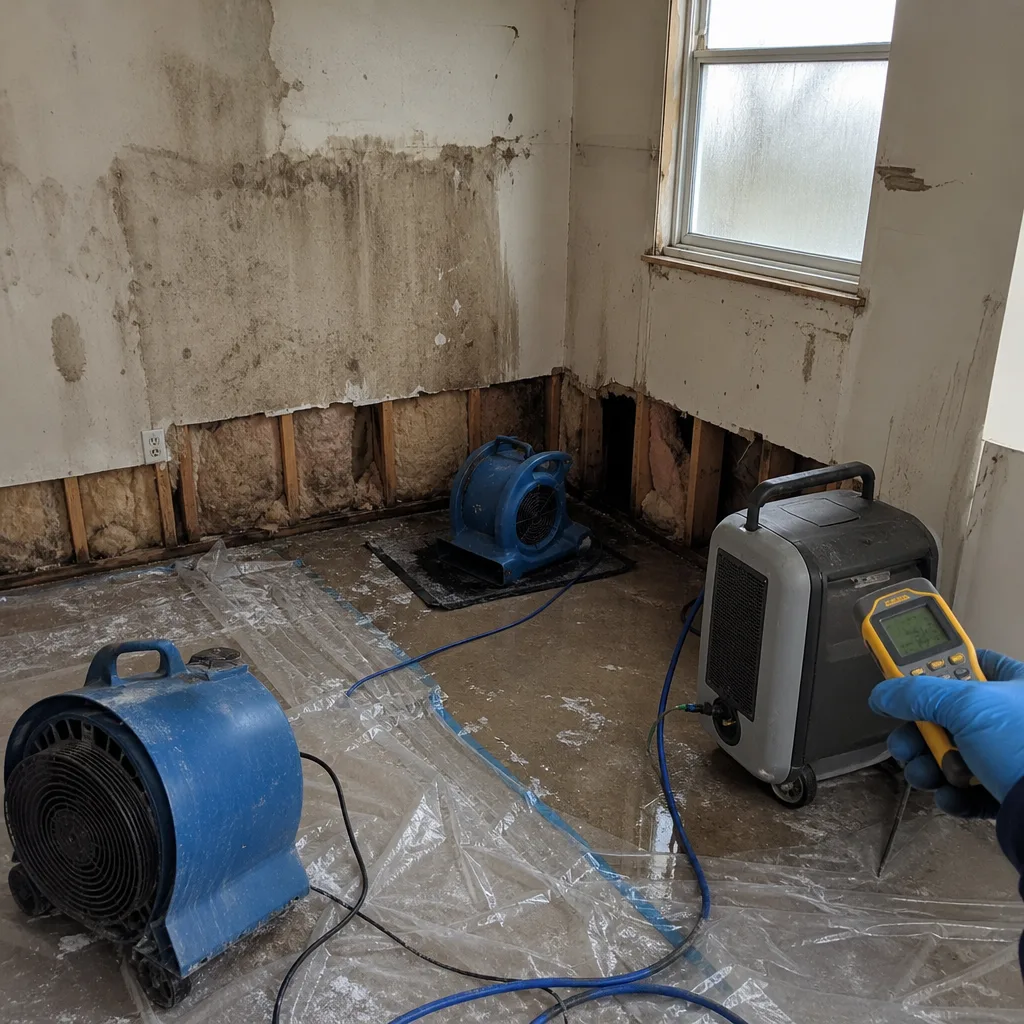 Before
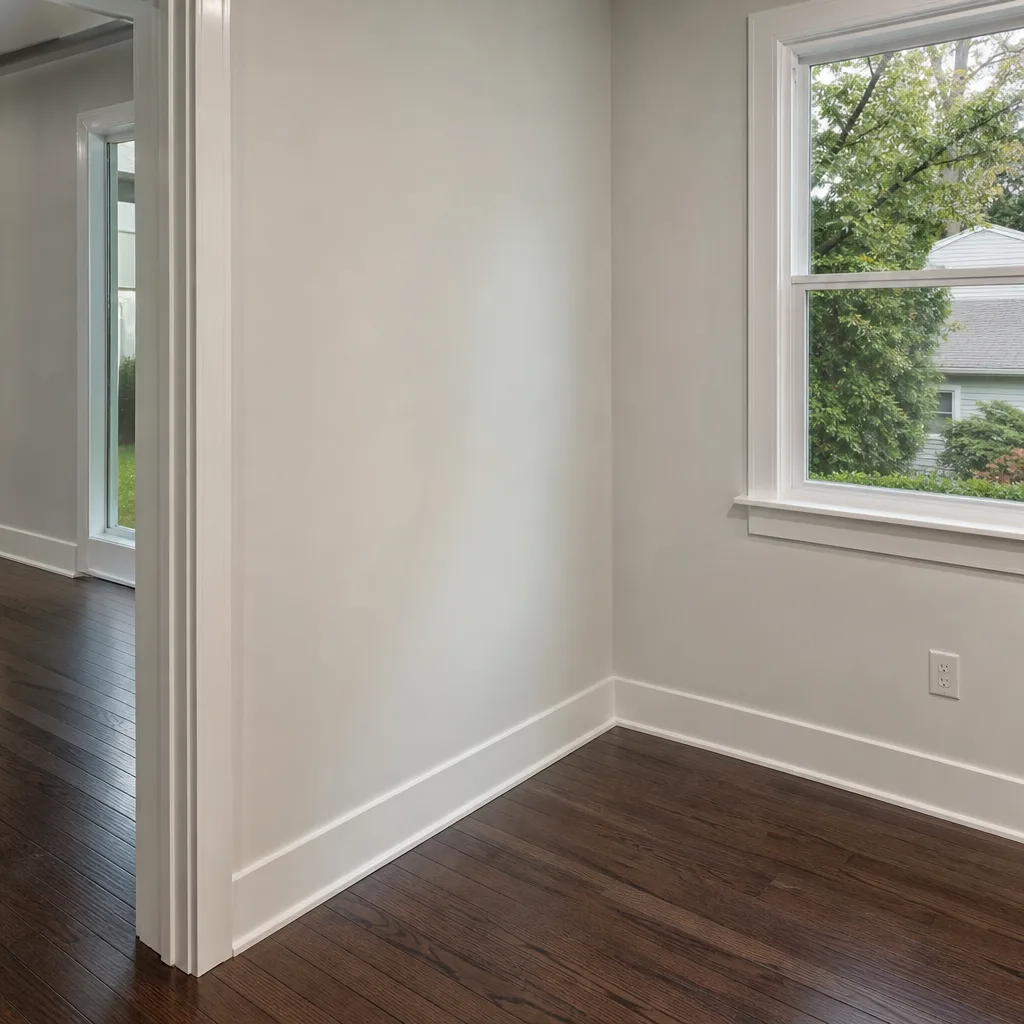 After
After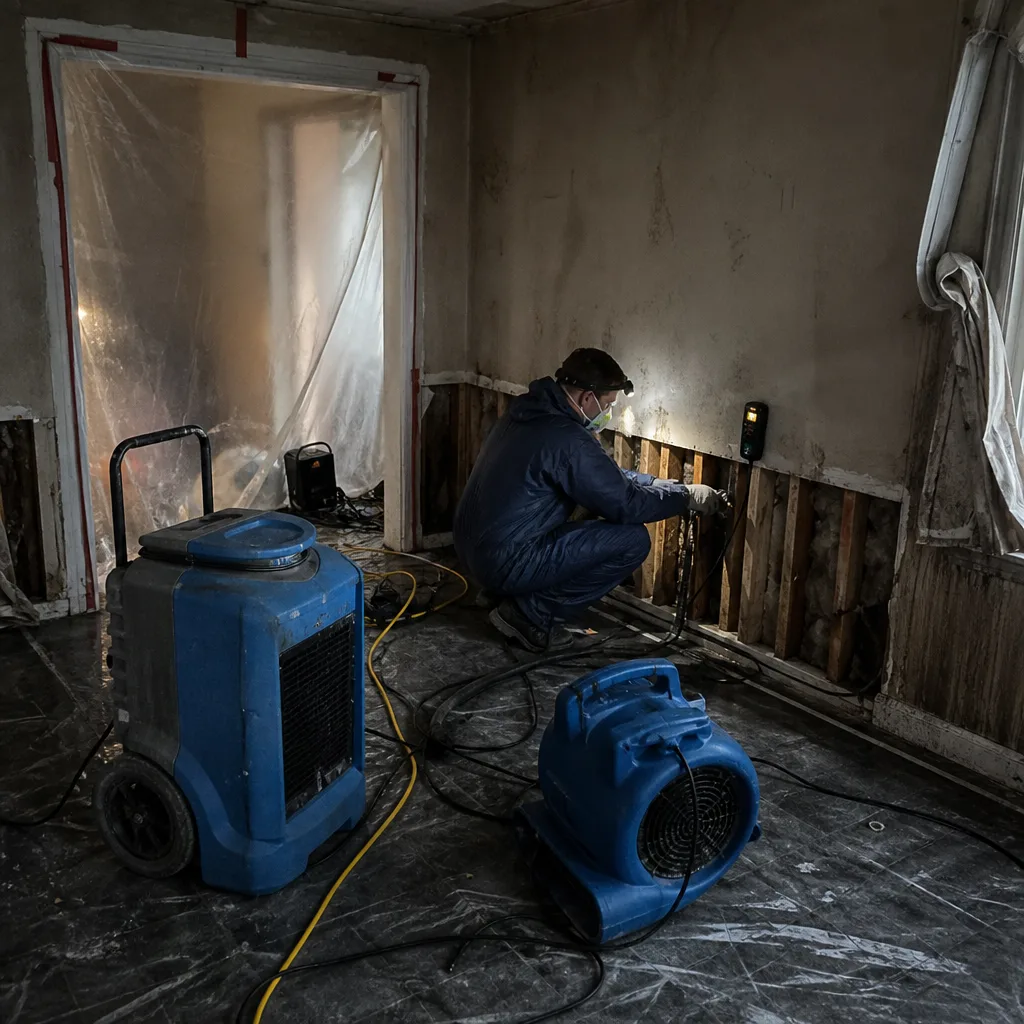 Before
 After
After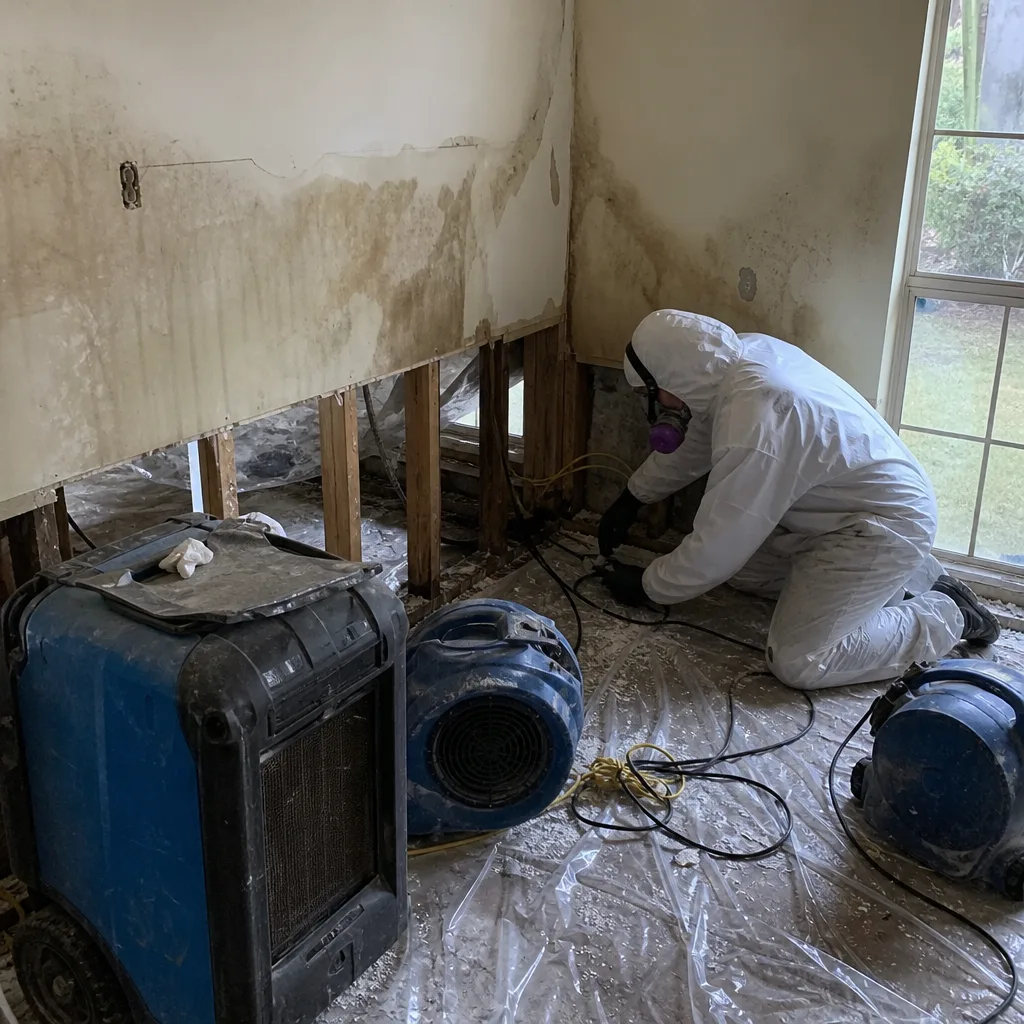 Before
 After
AfterBasement Water Removal in Houston, TX
Basement water removal in Houston typically costs between $2,100 and $5,800 for a complete extraction, drying, and cleanup job, depending on how much water entered and how long it sat. The work usually takes two to five days from first pump-out to final moisture check. At Dryden Restoration Houston, our Water Damage Restoration team handles the whole sequence: we get the standing water out, dry the structure, and document the drying with real numbers so you know when your basement is actually dry, not just when it looks dry.
Houston basements flood for reasons most of this city’s homes don’t share with the rest of the country. Our clay-heavy soil holds water against foundation walls. Our water table sits high in neighborhoods like Meyerland, Bellaire, and The Heights. And our rain comes in bursts: a five-inch afternoon storm can overwhelm a perimeter drain or a sump pump that worked fine the day before. When water gets in, it moves fast through drywall, flooring, and anything stored at floor level. If you’re standing in it right now, call us at (254) 277-4577. A live person answers, day or night, and we’ll get a crew moving. If you’re researching before trouble hits, this page explains what we do, what it costs, and how we keep a flooded basement from becoming a mold problem in six weeks. For a broader look at how we handle water damage of every kind, start with water damage restoration in Houston and then come back here for the basement-specific details.
When You Need Basement Water Removal
Not every damp basement needs a full extraction crew. But some situations call for it, and waiting is the most expensive decision you can make. Here’s what sends Houston homeowners to the phone:
- Standing water more than a quarter-inch deep. If water is pooling anywhere in the basement, you’re past the point of towels and box fans. Water that deep is already wicking into drywall, baseboards, and anything porous on the floor.
- Water came up through the floor or a floor drain. In Houston, this often means the water table rose under the slab or the city’s storm system backed up. It’s not just rainwater; it’s groundwater carrying whatever was in the soil. That water needs extraction and the floor needs professional drying.
- The sump pump failed during a storm. Pumps fail for a lot of reasons: a stuck float switch, a tripped breaker, a power outage. When that happens during a Houston downpour, the basement can take on two or three inches of water in under an hour.
- Water has been standing for more than 24 hours. After a full day of saturation, drywall wicks water upward, wood begins to swell, and mold spores have found the moisture they’ve been waiting for. Extraction alone won’t fix this; you need drying equipment and a moisture meter.
- You smell that smell. A musty, earthy smell in a basement usually means water has been getting in slowly for weeks. Even if you don’t see standing water now, the signs point to a water entry problem that hasn’t been dried properly. We can find it with a moisture meter and infrared camera.
Our Basement Water Removal Process
We follow the same sequence on every basement water removal job in Houston. It’s based on the Water Damage Restoration standards set by the IICRC, the restoration industry’s recognized training and ethics body. Here’s how it works:
- Assess and document. We arrive, find where the water came from and where it’s gone. We use moisture meters to map the extent of saturation, not just what’s visibly wet. You’ll get a written scope and a written price before any equipment comes off the truck.
- Stop the source. If the water is still coming in, we address what we can on the spot (shut off the supply line, divert the flow) and tell you what a longer-term fix will require. We don’t start drying until the water has stopped entering.
- Extract the standing water. We run professional extraction pumps and wet vacuums. For a typical Houston basement with one to three inches of water, we can remove the visible water in a few hours. The floor will look dry; the slab and walls won’t be.
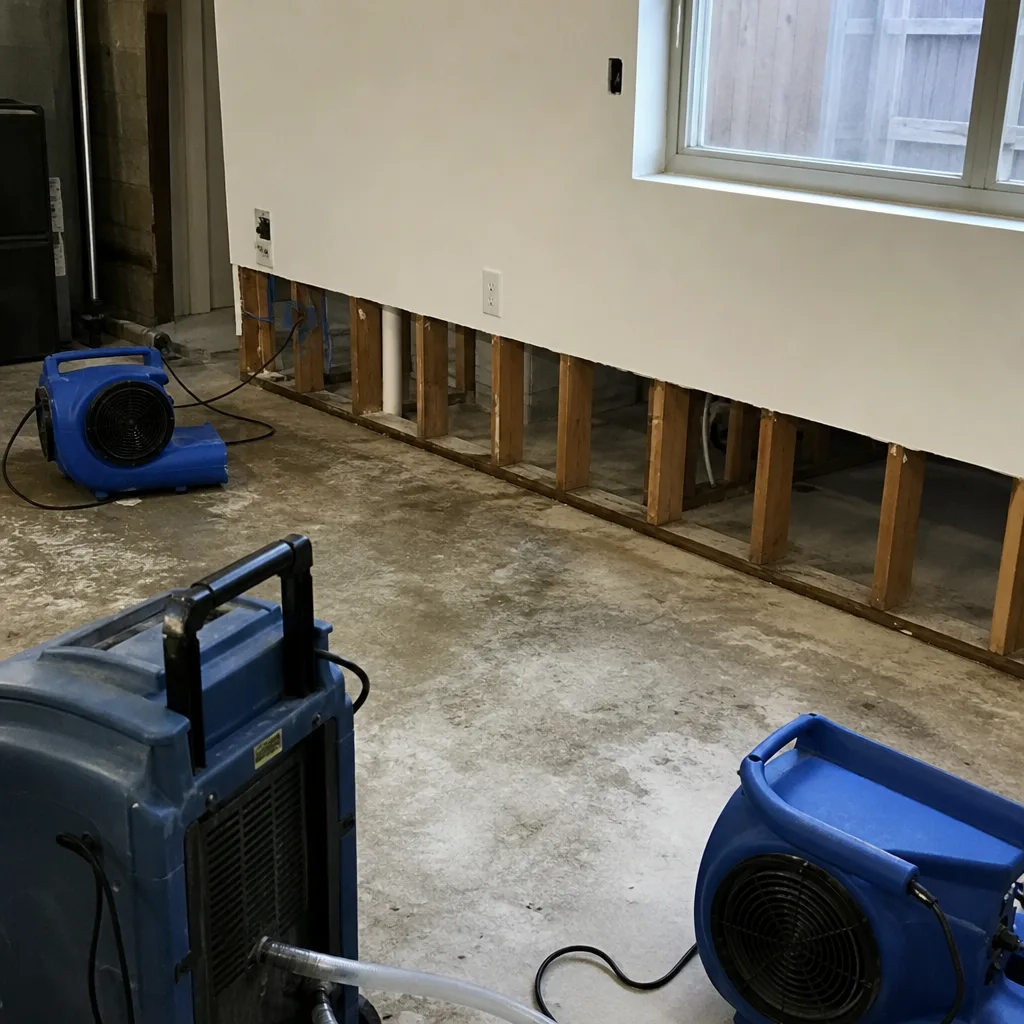
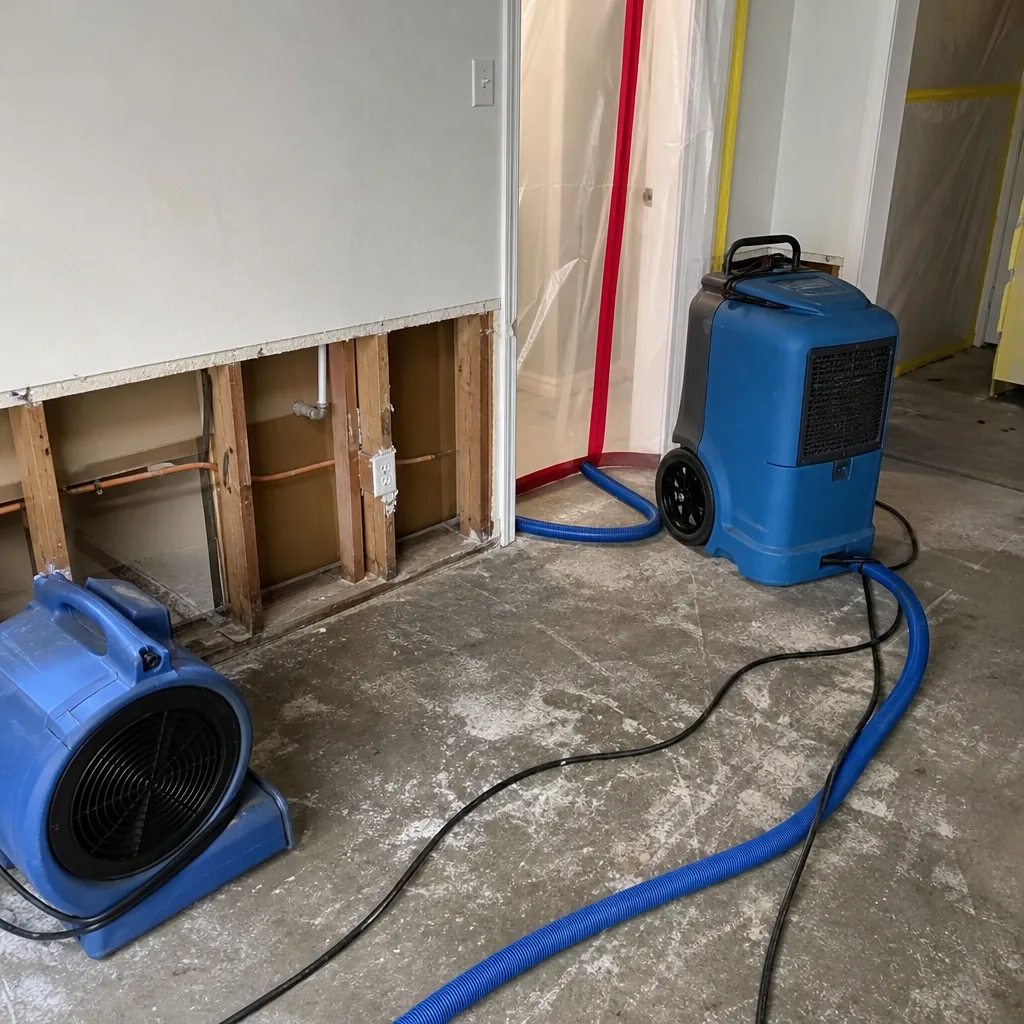
- Set up drying equipment. Depending on the size of the space and how much water the structure absorbed, we place high-volume air movers, dehumidifiers, and possibly an Injectidry mat system to pull water out of the slab and wall cavities. Brands you may see in your basement are XPOWER and B-Air; these are commercial-grade machines, not rental-counter units.
- Monitor daily with psychrometric readings. Psychrometric drying simply means we measure the invisible drying conditions: temperature, relative humidity (RH), and moisture content in the materials themselves. We record these numbers daily, because “it feels dry” is not a reliable way to know whether a slab has released its water.
- Final verification and cleanup. We pull equipment once the moisture content in your studs, slab, and drywall has returned to dry-standard levels for this area. We leave the space cleaner than we found it, and you get a written 365-Day Done Right Promise covering the extraction and drying work.
Basement Water Removal Pricing in Houston
We’re going to give you real numbers here, because a written price before work starts is the whole point of the way we operate. The ranges below reflect what Houston homeowners typically pay for the scenarios described. These are mid-market ranges, not the cheapest and not the most expensive in the city.
- Basic extraction, small basement (under 400 sq ft), no drywall damage: $2,100 to $3,200. This covers pumping, surface drying, and basic dehumidification when water is caught within a few hours.
- Extraction plus drying, moderate basement (400 – 800 sq ft), water stood 12 – 24 hours: $3,200 to $4,500. This adds air movers, a large dehumidifier, and three to four days of drying with daily monitoring.
- Extraction, drywall removal, and deep drying after 24+ hours of standing water: $4,500 to $5,800. When drywall has wicked water above the baseboard line, it usually has to be cut out and replaced after drying. That’s a separate repair scope, but the extraction and drying portion lands in this range.
- Overhead water damage affecting a finished basement ceiling: Add $400 to $900 for access cuts, ceiling cavity drying, and patching coordination with your drywall repair contractor.
What changes the price? Three things mostly: the square footage of wet flooring, how long the water sat, and whether we’re pulling drywall. Houston’s year-round humidity means drying takes slightly longer here than in, say, Phoenix, so plan on an extra day of equipment rental compared to drier climates. Every job gets a written price before tools are touched. The number doesn’t change at the door. To get an exact figure for your basement, call (254) 277-4577. Estimates are free, and we’ll walk the space with a moisture meter before we quote it.
Why Houston Basements Flood the Way They Do
Houston’s geology creates a particular flavor of basement flooding. The city sits on expansive clay soils that swell when wet and shrink when dry. That clay holds water against the outside of foundation walls, and hydrostatic pressure builds. Over time, water finds its way through the smallest cracks, the cove joint where wall meets floor, or the porous concrete itself, making Ceiling & Roof Leak Water Damage a related concern for Houston homeowners. In neighborhoods like Timbergrove, Garden Oaks, and the older sections of Spring Branch, this is a chronic issue, not a one-time storm event.
Then there’s the weather. Houston receives an average of 49 to 55 inches of rain per year, much of it in intense bursts. A three-inch-per-hour downpour can outpace a sump pump rated for 2,500 gallons per hour by overwhelming the perimeter drain that feeds it. Add a power blip, and the pump stops. The basement fills. It’s not a mystery and it’s not bad luck; it’s a combination of soil, slope, and storm intensity that any Houston basement owner should understand.
What We See in Houston Basements (and What It Means for You)
In older Houston homes with basements, we commonly find water entering at the cove joint, the seam where the floor slab meets the foundation wall. The fix isn’t always a new sump pump; often it’s grading outside, extending downspouts, or installing a proper interior drain. In newer builds, we see failures from overflow pan drains on water heaters, AC condensate lines that clog, and washing machine hose failures. Those are contained, but they still need Emergency Water Extraction and drying because the water goes straight under baseboards and into wall cavities.
Whatever the source-a Burst Pipe Restoration situation or seepage-the rule is the same: water in a basement doesn’t dry itself in Houston. Our ambient humidity sits in the 80% range during the summer, and a wet slab under humid air will stay wet for weeks. That’s a mold window. The faster you extract and start mechanical drying, the less you’ll spend on demolition and rebuild.
FAQs – Basement Water Removal
How long does basement water removal take in Houston?
Extraction of standing water typically takes two to four hours. Full drying, including wall cavities and the slab, takes two to five days in Houston’s climate, monitored daily with moisture readings. Call (254) 277-4577 and we can give you a time estimate for your specific basement.
Is it cheaper to do it myself with a shop vac and fans?
For a small spill caught in the first hour, yes; a shop vac and a couple of box fans will handle a few gallons on a sealed floor. But for standing water that has touched drywall, baseboards, or been down more than a few hours, DIY drying leaves hidden moisture that a shop vac can’t reach and a box fan can’t dry. That hidden moisture is where mold starts. The cost of professional drying is almost always less than the cost of replacing drywall and treating mold later.
Can you come today if my basement is flooding right now?
Yes. We run emergency basement water removal in Houston, and a live person answers our phone 24 hours a day, 7 days a week. We’ll give you a committed arrival window and dispatch a background-checked, uniformed technician. Call (254) 277-4577 right now.
Does the 365-Day Done Right Promise cover basement water removal?
Yes. The 365-Day Done Right Promise covers the extraction and drying work we perform. If a covered repair fails within one year, we return and correct it at no charge. It’s a written guarantee on every job, not a verbal assurance. If something goes wrong inside that year, the return visit is free, plain as that.
Written by Carl Brandt, Owner at Dryden Restoration Houston, serving Houston.