
 Water damage drying
 Fire & smoke cleanup
 Mold remediation
 Storm response
 Sewage cleanup
 Reconstruction
Free visual inspection and a written scope of work before any mitigation begins - photos, moisture readings, and drying logs go in your claim file
The scope we write is the scope we bill. Anything new gets shown to you, in writing, before we touch it.
Get your free estimateFast, Reliable Water Damage Restoration Across Webster
Water damage in Webster rarely arrives as a single clean event. It tends to come from a slow-moving thunderstorm that overwhelms drainage near Clear Creek, a tropical system pushing surge up from Galveston Bay, or a corroded garage-door spring that gives out during the storm and lets floodwater pour into a 1970s pier-and-beam home before anyone can react. Dryden Restoration Houston responds to Webster properties around the clock, typically arriving within 60 to 90 minutes of your call. We know the failure patterns here because we have worked on hundreds of local homes. If water is inside your house right now, call (254) 277-4577 and a live person answers. No phone tree, no voicemail.
Our Water Damage Restoration crews serve Webster with professional-grade drying equipment and a written price before any tool is touched. Carl Brandt, who leads our team, insists on that standard for every job we take.
Why Dryden Restoration Houston Is Webster’s Preferred Water Damage Restoration Company
Webster homeowners keep calling us back because we do what we say we will do. We show up in the window we gave you. We give you a written price before the first fan is plugged in. And we put a 365-Day Done Right Promise in writing on every job, so if a covered repair fails within a year, we return and fix it at no charge. That promise is not verbal. It is documented.
Our technicians are background-checked and uniformed, so when someone walks into your Webster home at 2 a.m. after a pipe burst, you know who you let in. We run Dri-Eaz, Phoenix, and XPOWER equipment, the same professional-grade machines large commercial restoration crews use, and we follow IICRC standards for structural drying. No shortcuts, no homeowner-grade box fans attempting to dry out drywall.
We coordinate dispatch and scheduling from our Houston office, but the crews that arrive at your Webster door are local, familiar with Clear Creek flood patterns, Bay Area Boulevard traffic, and the older subdivisions off NASA Road 1. That local knowledge changes how fast we find hidden water and how thoroughly we dry it.
Restoration work we handle
Flood Damage Restoration in Webster
Flood Damage Restoration in Webster is the service that brought us to this community’s attention decades ago, because repeated flooding is the defining water problem here. Webster sits at low elevation between Clear Creek and Galveston Bay, so a tropical system or a stalled thunderstorm can push water into homes that have flooded before, and will flood again. Restoration after a flood here is not just extraction. It is structural drying, contamination control, and often bringing repeatedly-damaged framing and flooring up to current codes. A typical flood damage restoration in Webster runs $2,800 to $7,500 depending on water category, square footage affected, and whether we are dealing with Category 1 clean water or Category 2 and 3 water carrying contaminants from overflow and ground seepage.
Structural Drying After Floodwater
After floodwater recedes, the real work begins. Webster’s year-round humidity means drywall, subfloor, and framing will hold moisture for weeks without professional drying. We run psychrometric drying, which means we measure relative humidity (RH) and temperature constantly to calculate exactly how much moisture the air can hold, then we size our dehumidifier and air-mover count to the structure. In a 1970s pier-and-beam home near Clear Creek, that often means four to six days of drying before we will sign off. The wood under those homes drinks floodwater and hides it.
Category 2 and Category 3 Water Handling
When Clear Creek overflows or storm surge reaches a Webster garage, the water is not clean. We classify it Category 2 (significantly contaminated) or Category 3 (grossly contaminated), and that classification dictates what we remove and what we can dry. Categorization is not a sales tactic. It is an IICRC standard that keeps your family from living on top of sewage-laced subfloor because someone wanted to save a few hundred dollars on disposal.
Water Damage Cleanup in Webster
Water Damage Cleanup in Webster is what most phone calls to us start with: a burst supply line, a failed water heater, a washing-machine hose that let go, or seepage through an exterior wall during a heavy storm. Cleanup means extracting standing water first, then removing saturated materials that will not dry safely such as carpet pad, some drywall, and insulation. A typical water damage cleanup in Webster runs $1,200 to $3,400 for a contained single-room event, and $4,000 to $9,000 when multiple rooms, cabinetry, or subfloor are involved. You get a written scope and price before we start. Not an estimate after the fact.
Contents and Flooring Decisions
We decide on-site, with you, what is salvageable and what is not. Solid hardwood in a Webster home can often be dried in place using an Injectidry system that pulls water out through the board gaps. Laminate and most vinyl plank trap water underneath and usually have to come out. Carpet pad never survives. We walk you through each decision with a written list so you are not surprised by a pile of removed material at the curb.
Drying Logs and Documentation
Every Webster cleanup includes a daily moisture log. We document readings from studs, subfloor, and drywall until every surface hits its pre-loss moisture level. Those logs are yours to keep. They matter for insurance claims, for the 365-Day Done Right Promise, and because if mold appears six months later, the logs show whether the area was dried to standard. We also photograph everything before, during, and after, so your adjuster can see exactly what we saw.
Trusted Brands We Service in Webster
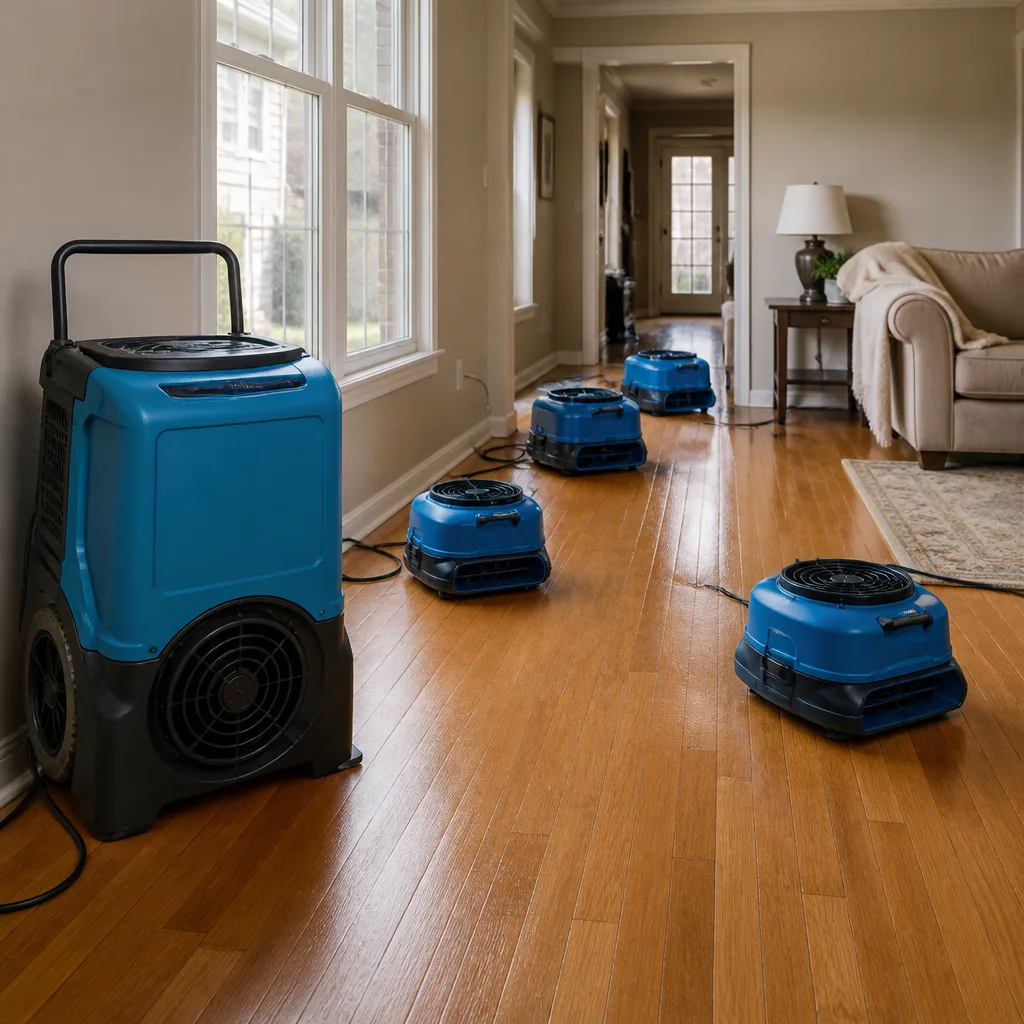
We service and deploy the brands Webster homeowners and commercial property managers rely on: Dri-Eaz dehumidifiers, Phoenix axial air movers, XPOWER for high-velocity airflow, and Injectidry systems for hardwood and hard-to-reach cavities. Because we are a local Webster-response team, we keep parts and units staged for fast deployment after storms, which shortens the time between your call and the moment drying actually starts. Our techs are trained on these specific machines, and we explain in plain English what each piece is doing and why it is running. You should never walk past a machine in your own hallway wondering what it is for.
See the difference
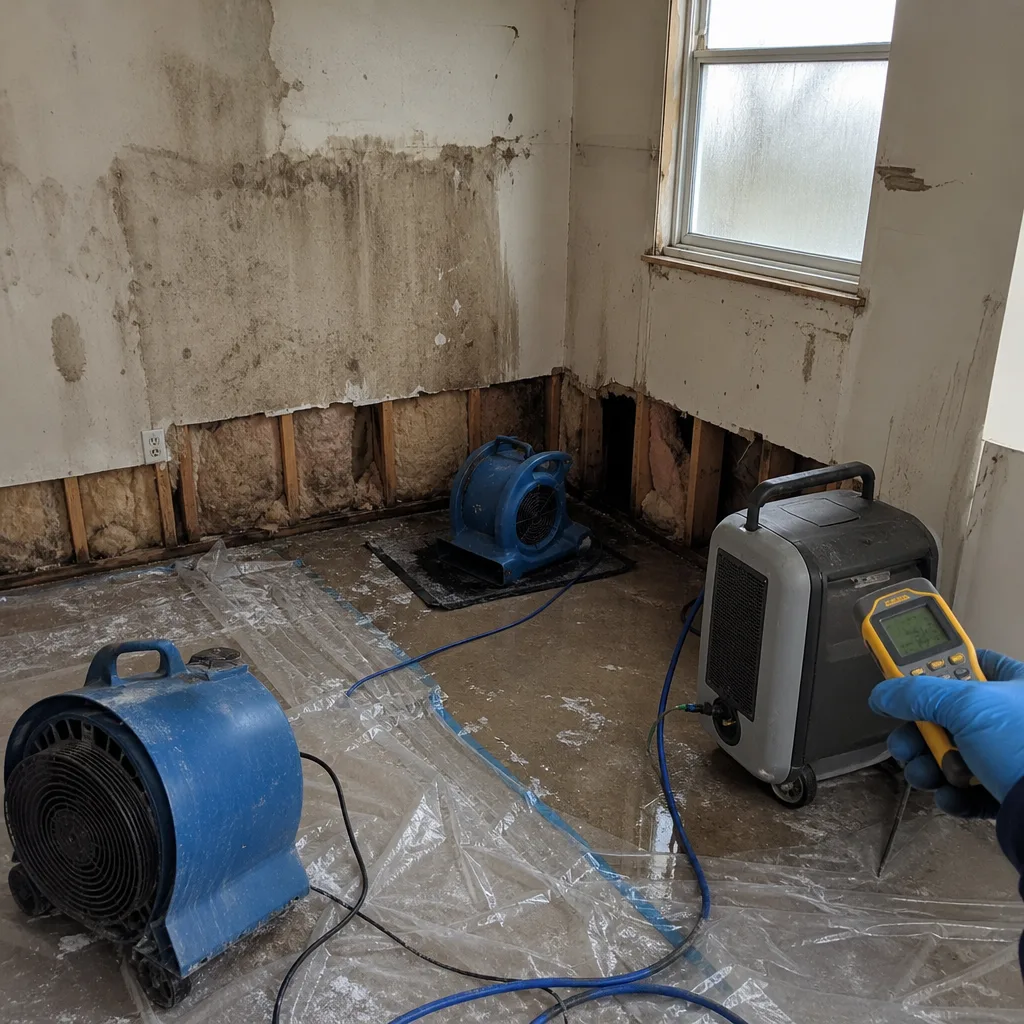 Before
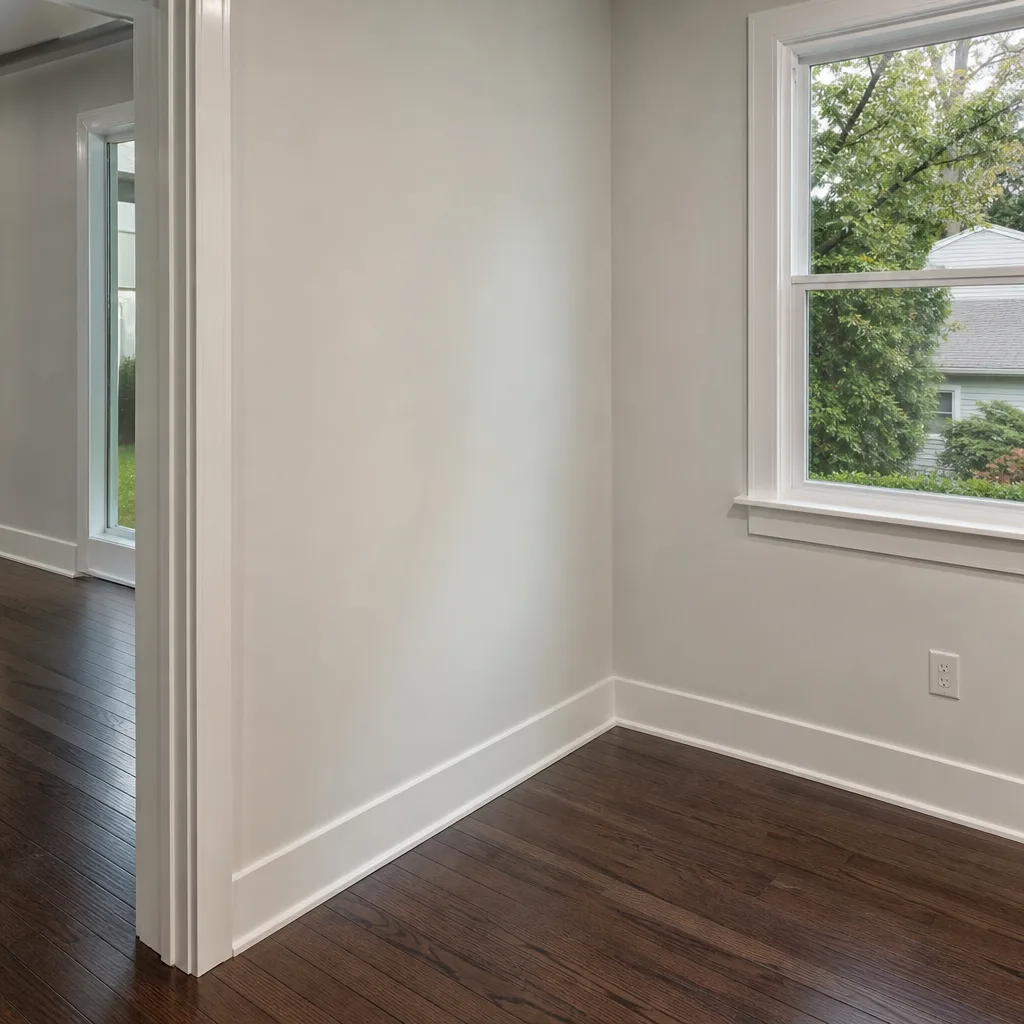 After
After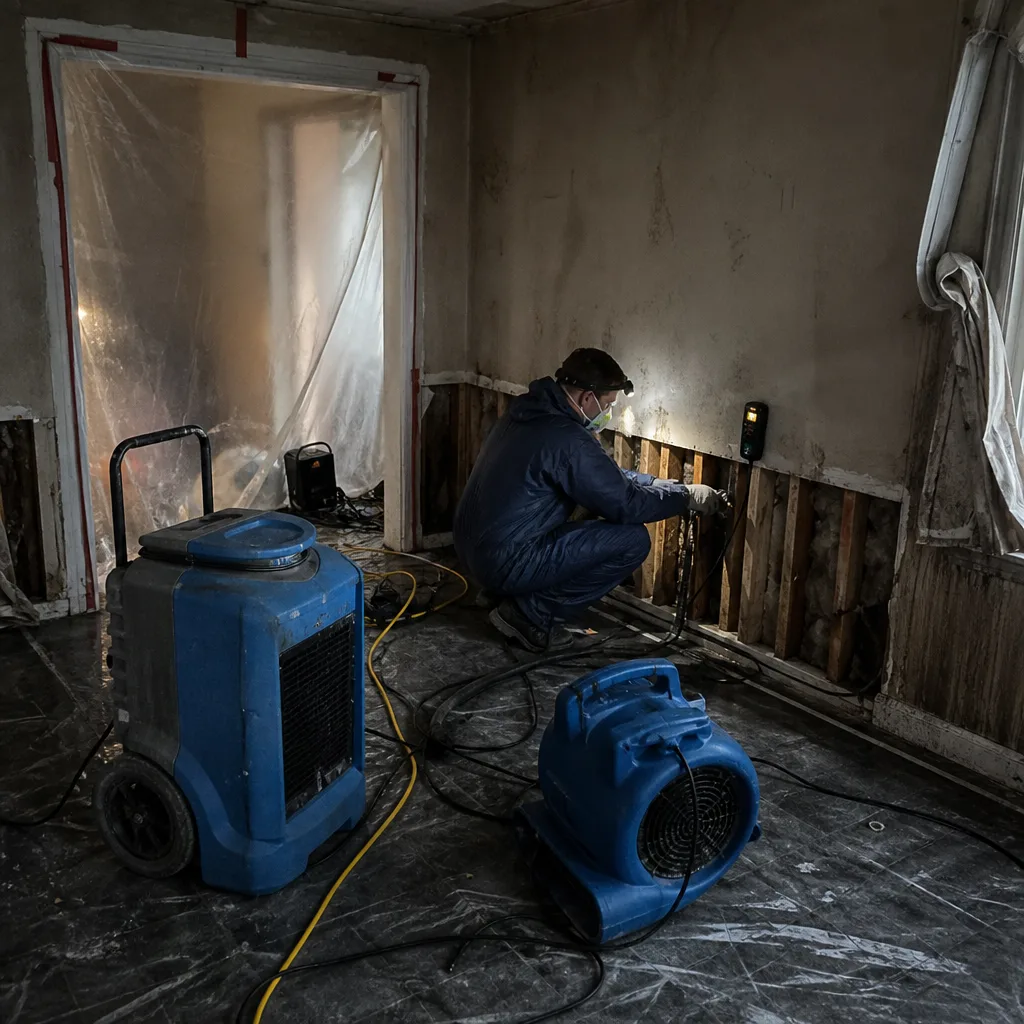 Before
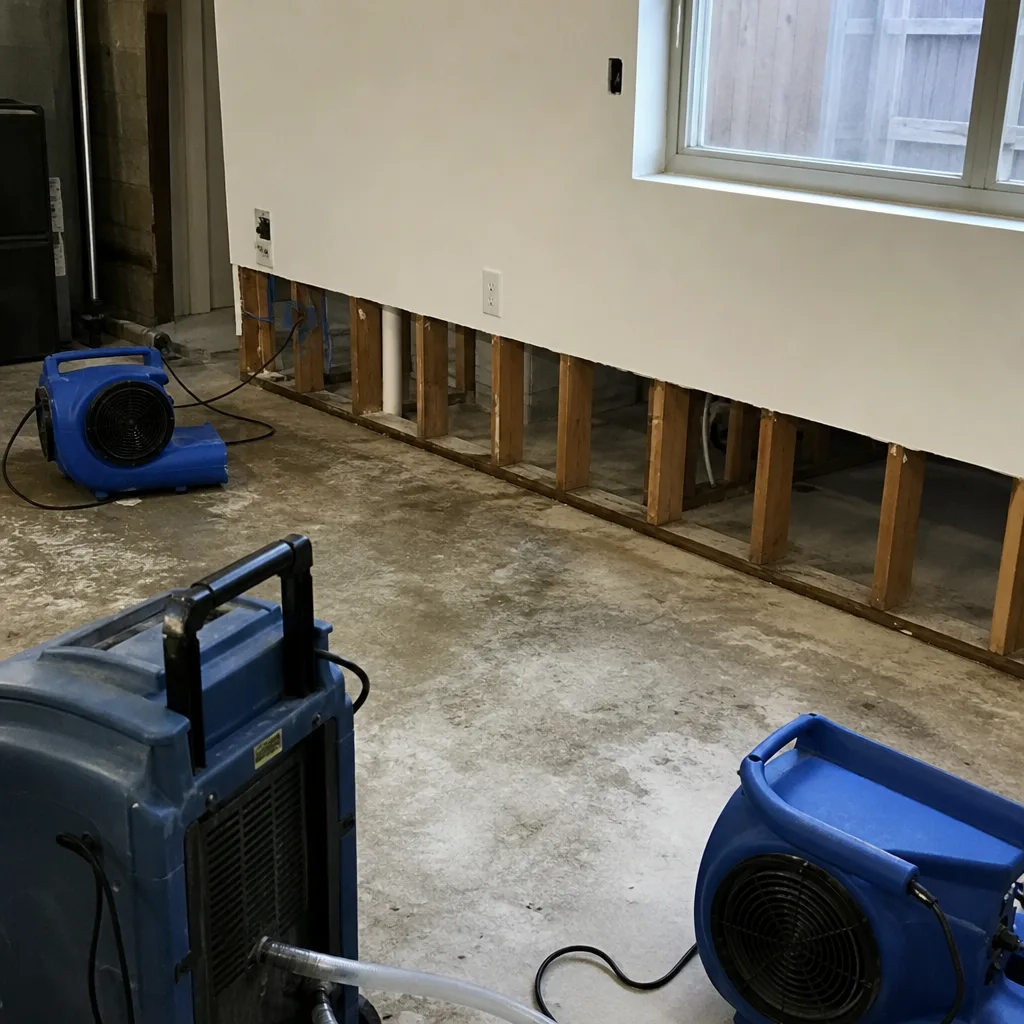 After
After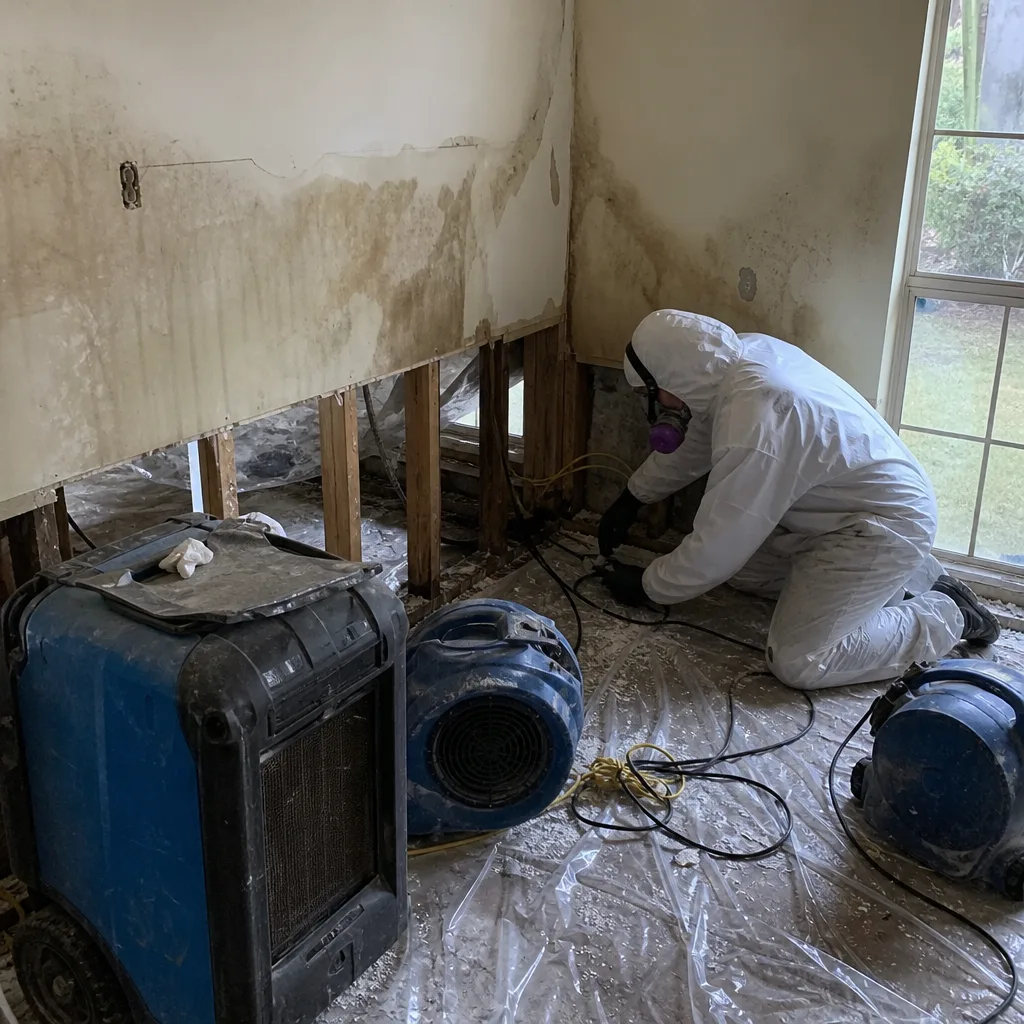 Before
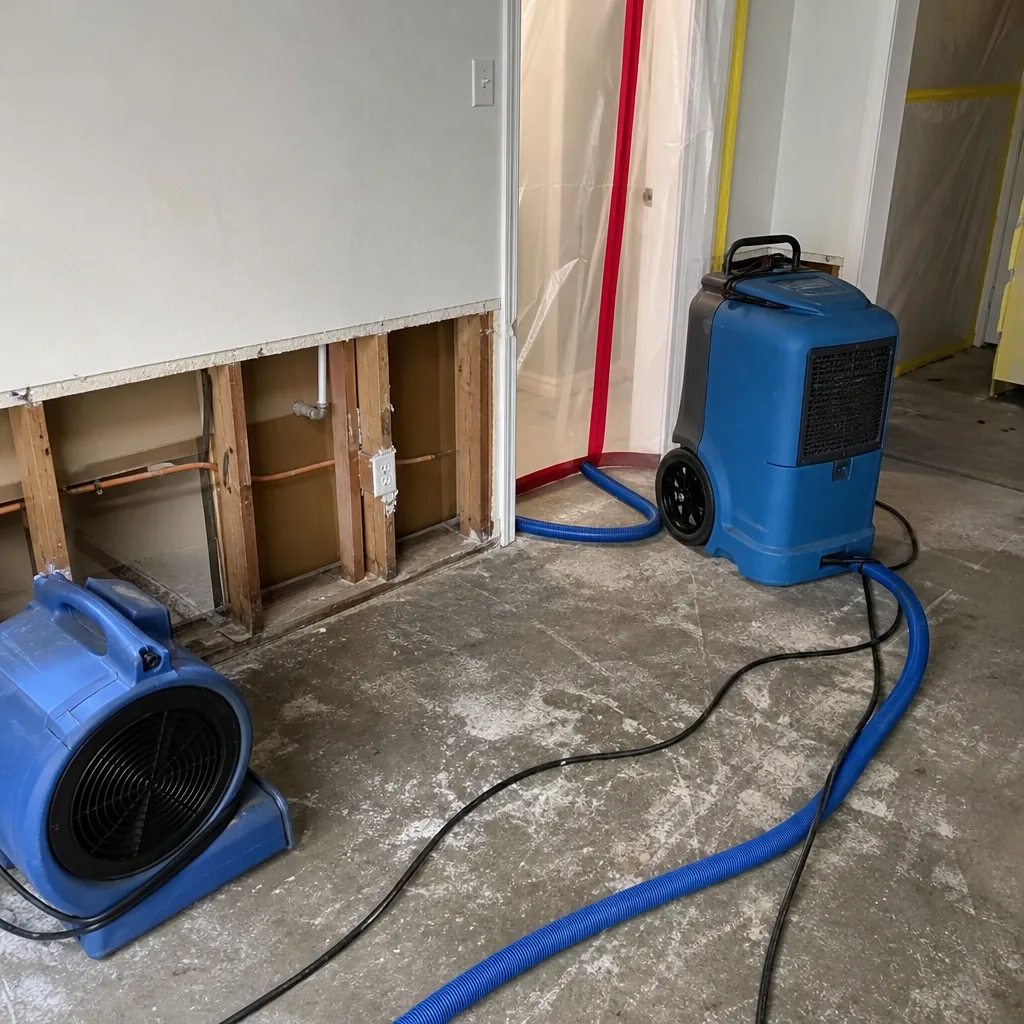 After
AfterCommon Water Damage Restoration Problems We See in Webster Homes
- Weeping slabs near Clear Creek. Water seeps up through slab-on-grade foundations after heavy rain, especially in older subdivisions built before modern floodplain rules. Homeowners often notice buckling laminate or a musty smell before they ever see standing water.
- Salt-air corrosion on garage-door hardware. Springs, hinges, and tracks near Galveston Bay corrode years faster than inland. A corroded spring fails during a storm, the door cannot open or close, and floodwater enters the garage while the homeowner is still trying to get the door up.
- Post-hurricane mold acceleration. Webster’s subtropical humidity pushes mold growth within 24 to 48 hours after any water intrusion. If a cleanup stops at extraction without aggressive dehumidification, the job just becomes a mold remediation later, at a much higher cost.
- Repeated flooding in pre-floodplain-regulation homes. Many Webster houses from the 1970s and 1980s sit low and were built before current elevation and drainage codes. Each flood event re-wets previously repaired framing, which weakens it and often requires code upgrades rather than simple replacement.
Pricing for Water Damage Restoration in Webster, TX
You deserve actual numbers, so here they are. Emergency water extraction in Webster typically runs $900 to $2,200 for a single room. Structural drying with dehumidifiers and air movers runs $1,500 to $4,000 depending on square footage and how many days it takes to reach dry standard. Flood damage restoration across multiple rooms runs $2,800 to $7,500. Burst pipe restoration runs $1,400 to $3,800. What changes the price is really three things: how much water is in the structure, what category that water is, and how long it has been sitting. Every Webster job starts with a free assessment and a written scope. No surprises at the door because the price is already on paper before the first fan is plugged in. Call (254) 277-4577 and we will walk you through what your specific situation costs.
We Also Serve Cities Near Webster
Dryden Restoration Houston serves the communities around Webster, including Seabrook, La Porte, Channelview, and Highlands. If you are in one of those areas and need Water Damage Restoration in Webster or a neighboring community, we can typically reach you just as quickly. The same written pricing, the same 365-Day Done Right Promise, and the same live-person phone answer apply everywhere we work.
Serving Webster, TX - Our Local Coverage Area
We’re based in the Webster area and know this community well. Use the map below to see our service coverage - if you’re nearby, we can almost certainly help.
FAQs About Water Damage Restoration in Webster
Living near Clear Creek means floodwater arrives faster and stays longer, so we stage equipment for Webster and typically begin extraction within 60 to 90 minutes of your call. The creek’s low-lying drainage basin and Webster’s clay-heavy soils slow natural water movement, which means water sits against your foundation and wicks upward through concrete and wood longer than in higher-elevation neighborhoods. We pull standing water immediately, then run dehumidifiers and air movers calibrated to Webster’s high RH so the drying phase accounts for the creek’s influence on your home’s moisture load. Call (254) 277-4577 and a live person will tell you when a crew can be at your door.
A weeping slab is a slab-on-grade foundation that lets groundwater seep up through the concrete because the water table rises after heavy rain, especially in low-lying Webster neighborhoods near Clear Creek and Galveston Bay. We check for it after every heavy rain because by the time flooring buckles, water has often been traveling through the slab for days or weeks, wetting the bottom plate of walls and creating hidden mold inside wall cavities. On a 1980s Webster home we inspected after a thunderstorm, the slab read 99% RH at the surface and the vinyl plank was floating on a film of water, even though no standing water was visible anywhere in the house. If you suspect a weeping slab, call (254) 277-4577 and we will bring thermal moisture mapping to find it before you tear out flooring blindly.
Yes, older Webster homes from the 1970s and 1980s typically need longer drying cycles and more aggressive dehumidification than newer builds because their framing has been through multiple wet-dry cycles, their insulation is often less effective, and their pier-and-beam or slab foundations hold moisture differently than newer elevated or sealed foundations. We also find that older Webster homes near Clear Creek have water that travels further into the structure through repeated flood paths, so we dry areas beyond the obvious wet spot. On a 1978 pier-and-beam home off NASA Road 1, we ran Dri-Eaz LGR dehumidifiers and XPOWER air movers for four days, checking moisture readings daily until every stud and slab patch hit pre-loss condition. Your house gets a drying plan sized to its actual construction, not a generic timer. Call (254) 277-4577 for a free assessment of what your specific home needs.
We classify water by its contamination level, because what we can safely dry and what we must remove changes completely. Category 1 is clean water from a supply line or water heater. Category 2 carries significant contamination, such as washing-machine overflow or dishwasher discharge. Category 3 is grossly contaminated, such as Clear Creek floodwater or storm surge, and that means we remove carpet, pad, and any porous material it touched because drying it will not make it safe. In Webster, after a storm-surge event, a garage that looks like it just has some muddy water on the floor is often a Category 3 scene that requires disposal of everything porous, plus antimicrobial treatment on the concrete. The classification protects your family, and we explain it in writing before we remove anything. Call (254) 277-4577 to have your situation classified and scoped.
In Webster’s salt-air environment near Galveston Bay, garage-door springs, hinges, rollers, tracks, and fasteners should be inspected every 12 months because corrosion sets in years faster than inland, and a corroded spring can fail during a storm exactly when you need the door closed against floodwater. We have arrived at Webster homes after a storm where the garage door failed and water entered through the garage before any other opening, simply because salt corrosion had weakened the spring. We recommend galvanized or coated springs and stainless hardware for Webster garage doors, and we include a corrosion inspection when we assess water damage that involves the garage, because the door is often the reason the water got in. That connection between door hardware and interior flooding is something you will not find on a generic water damage page. Call (254) 277-4577 and we will inspect the door and the water damage together.
When water is inside your Webster home, you need a crew that knows the difference between a one-off leak and a house that has been fighting Clear Creek for 40 years. You need a written price before work starts, a crew that shows up in the window it gave you, and a 365-Day Done Right Promise in writing. That is how Dryden Restoration Houston works, on every job, for every Webster homeowner. Call (254) 277-4577 now and a live person answers.
Written by Carl Brandt, Owner at Dryden Restoration Houston, serving Webster and the surrounding communities since 2005.