

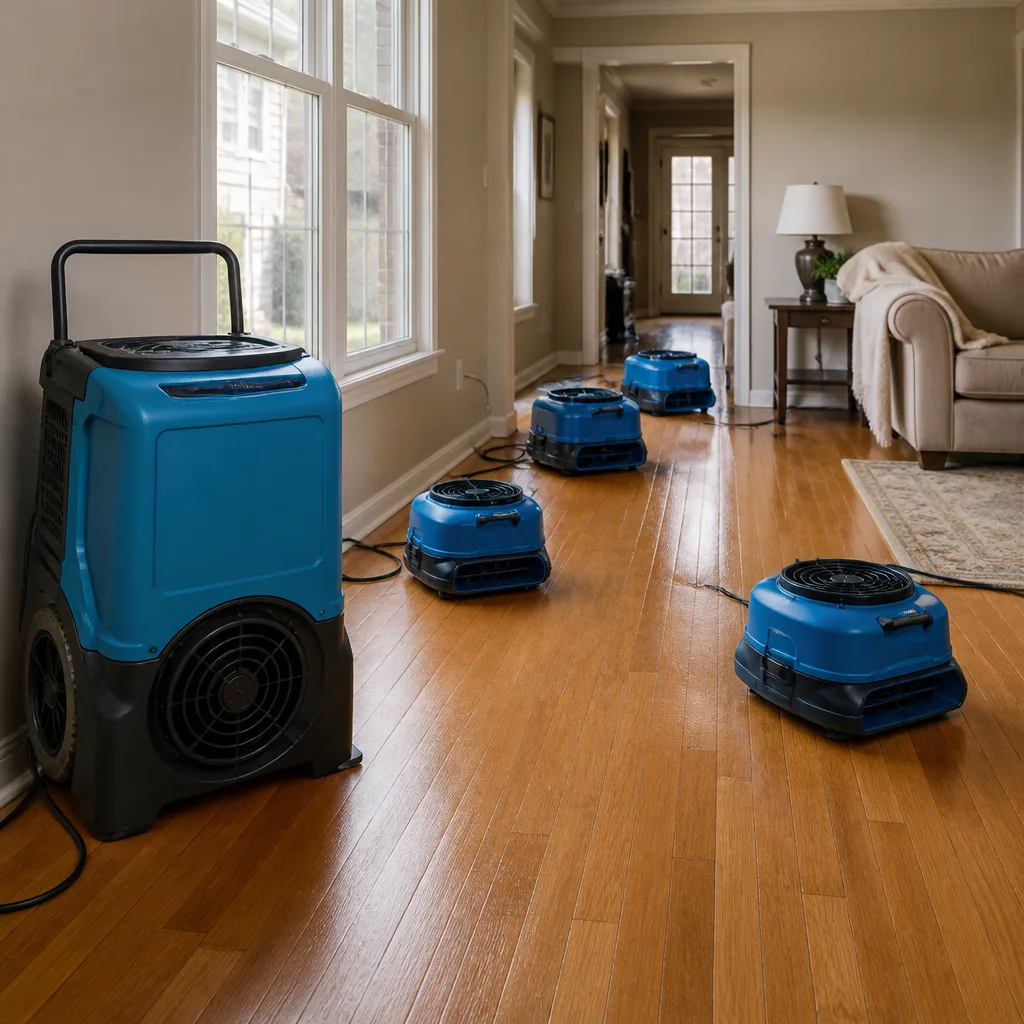
 Water damage drying
 Fire & smoke cleanup
 Mold remediation
 Storm response
 Sewage cleanup
 Reconstruction
Free visual inspection and a written scope of work before any mitigation begins - photos, moisture readings, and drying logs go in your claim file
The scope we write is the scope we bill. Anything new gets shown to you, in writing, before we touch it.
Get your free estimateFast, Reliable Water Damage Restoration Across Pecan Grove
Water damage in Pecan Grove moves fast, and so do we. A burst pipe or slab leak in a 1990s brick-veneer home off Plantation Drive can saturate drywall, wick under flooring, and hit the 24-to-48-hour mold window before you’ve finished mopping. Dryden Restoration Houston answers every call with a live person, 24 hours a day, and our water damage restoration crews reach Pecan Grove homes quickly, with professional-grade drying equipment already on the truck. Call (254) 277-4577 the moment you see water where it shouldn’t be. We’ll give you a written price before any tool comes off the truck, and a named arrival window you can plan around.
Key takeaways before we go deeper:
- Emergency water extraction in Pecan Grove typically runs $1,200 – $4,500 depending on affected square footage and water category.
- Structural drying and dehumidification usually adds $800 – $2,800 for a typical single-room event.
- Pecan Grove’s polybutylene plumbing and expansive clay soil create hidden water damage patterns most restoration crews misdiagnose.
- Every job includes a written price before work starts and a 365-Day Done Right Promise in writing.
Why Dryden Restoration Houston Is Pecan Grove’s Preferred Water Damage Restoration Company
We’ve been part of the Kingswell family of independently owned restoration businesses since 2005, and the reason Pecan Grove homeowners call us isn’t a slogan. It’s the specific commitments we put in writing on every job: a named arrival window, a written price before work begins, a clean job site, and a 365-Day Done Right Promise that says if a covered repair fails within a year, we come back and fix it at no charge. Our Water Damage Restoration teams are background-checked, uniformed, and trained to IICRC, RIA, and IFA standards; the equipment on our trucks includes Dri-Eaz, Phoenix, XPOWER, and B-Air systems, the same professional-grade machines commercial restoration crews use.
Carl Brandt, who leads our restoration practice, has a simple test for whether a job gets closed out: moisture readings back to a stable baseline, surfaces dry to the touch, and a homeowner who understands exactly what was done and why. We don’t leave a job until all three are true. When you call about water damage in Pecan Grove, you’re talking to someone who knows Plantation Drive, knows the polybutylene problem in the original subdivisions, and knows that a window-frame crack here is usually not a window problem. It’s slab movement, and we’ll explain that in plain English before we ever recommend opening a wall.
Restoration work we handle
Water Extraction in Pecan Grove
Water extraction in Pecan Grove is the first and most urgent step after a leak or flood, and in our experience, doing it within the first few hours is what separates a five-day drying job from a two-week demolition and rebuild. The work involves pulling standing water with truck-mounted or portable extractors, removing saturated carpet pad and baseboards where necessary, and mapping exactly how far moisture has migrated so the drying plan targets the right cavities. Homes in the original Pecan Grove subdivisions often have water that’s been silently wicking behind walls for days, so extraction here frequently includes pulling baseboards and drilling small access points to release trapped water you’d never see from the surface.
Slab Leak and Under-Floor Extraction
When a polybutylene fitting fails under a Pecan Grove slab, water doesn’t pool on the floor. It travels under the slab, through the capillary channels in the soil, and up into walls two rooms away. We use thermal imaging and moisture meters to trace that migration path, then extract from the affected cavities directly rather than just drying the visible puddle and calling it done.
Post-Storm and Overflow Extraction
Fort Bend County thunderstorms dump water fast, and the flat topography around Pecan Grove means drainage is slow. When water pushes under an exterior door or over a sill, the first extraction pass matters less than the containment and drying plan that follows, because that water is usually category 2 or 3 and requires more than a shop vac.
Emergency Water Removal in Pecan Grove
Emergency water removal in Pecan Grove is what we do when a polybutylene pipe lets go at 2 a.m., a water heater in a garage closet fails while you’re at work, or a storm drains into a finished room. The goal is to stop the source, contain the affected area, and remove standing water before it reaches the 24-to-48-hour mold threshold that Fort Bend County’s humidity makes shorter than most people expect. Our emergency crews stage the same drying equipment whether the call comes at noon on a Tuesday or 4 a.m. on a Sunday, and a real person answers the phone either way.
Containment Before Demolition
One of the most common mistakes we see in Pecan Grove is a crew tearing out drywall before setting up containment. In high-ceiling custom homes with open floor plans, that spreads mold spores and category 2 water dust through the entire living space in minutes. We put up containment barriers first, run negative air pressure where needed, and only then open walls or pull flooring. It’s slower to start, faster to finish, and it protects rooms that were never wet.
Moisture Mapping and Documentation
Before we cut anything, we map the moisture. Thermal imaging shows us cold spots that indicate saturation inside wall cavities; moisture meters give us exact percentages; and photos document every reading. That documentation matters twice: once for the drying plan, and again for your insurance adjuster, who will want proof of loss before approving a claim. We handle direct adjuster coordination with photo evidence from start to finish.
Trusted Brands We Service in Pecan Grove
Pecan Grove homes run the full range of plumbing and appliance brands, and our techs work on all of them: Moen, Delta, Kohler, Rheem, AO Smith, Bradford White, and the older polybutylene systems (Qest, Vanguard, and the unmarked gray pipe) that still hide in many original subdivisions here. Because we stock common fittings, valves, and connectors for the plumbing brands most often found in 1980s-2000s Fort Bend County construction, we typically complete source repairs during the same visit as extraction, rather than capping a line and scheduling a plumber days later. When we say we know Pecan Grove’s housing stock, that includes knowing what’s behind its walls.
See the difference
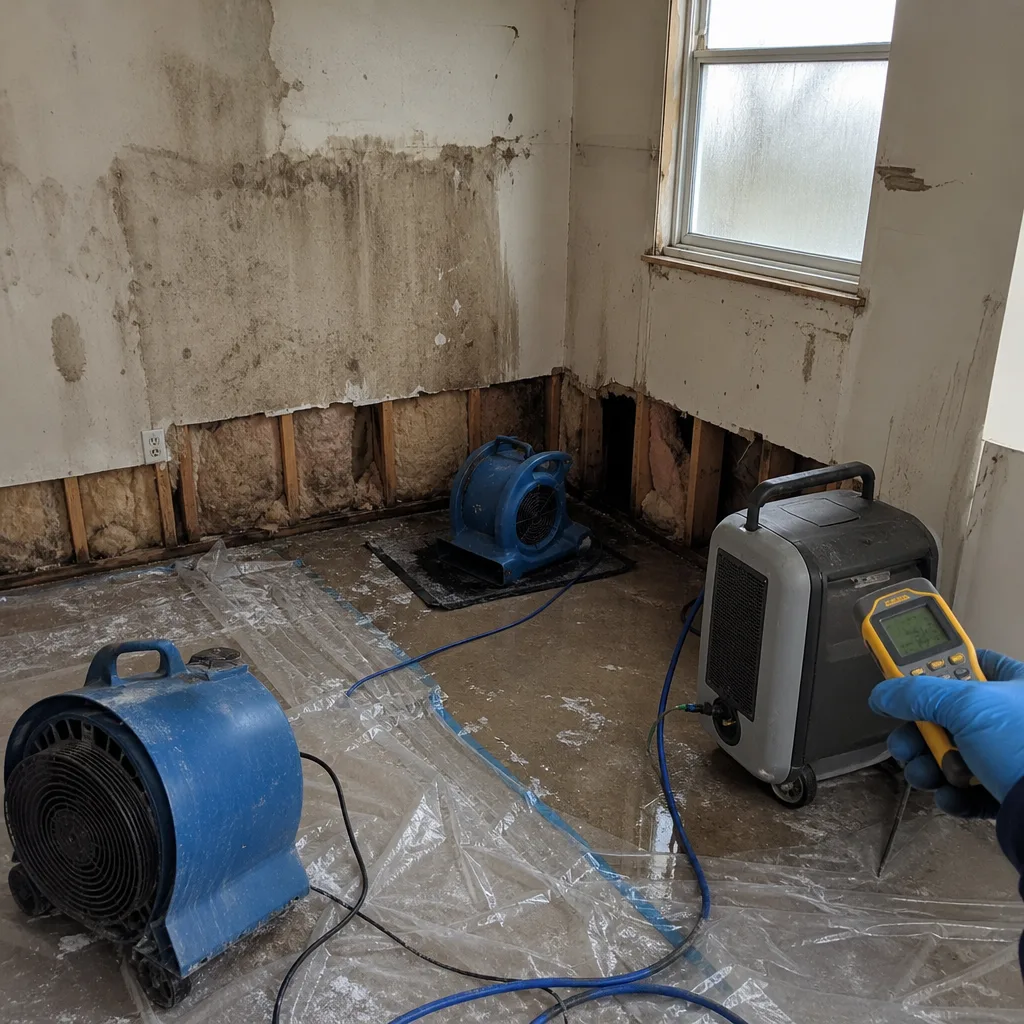 Before
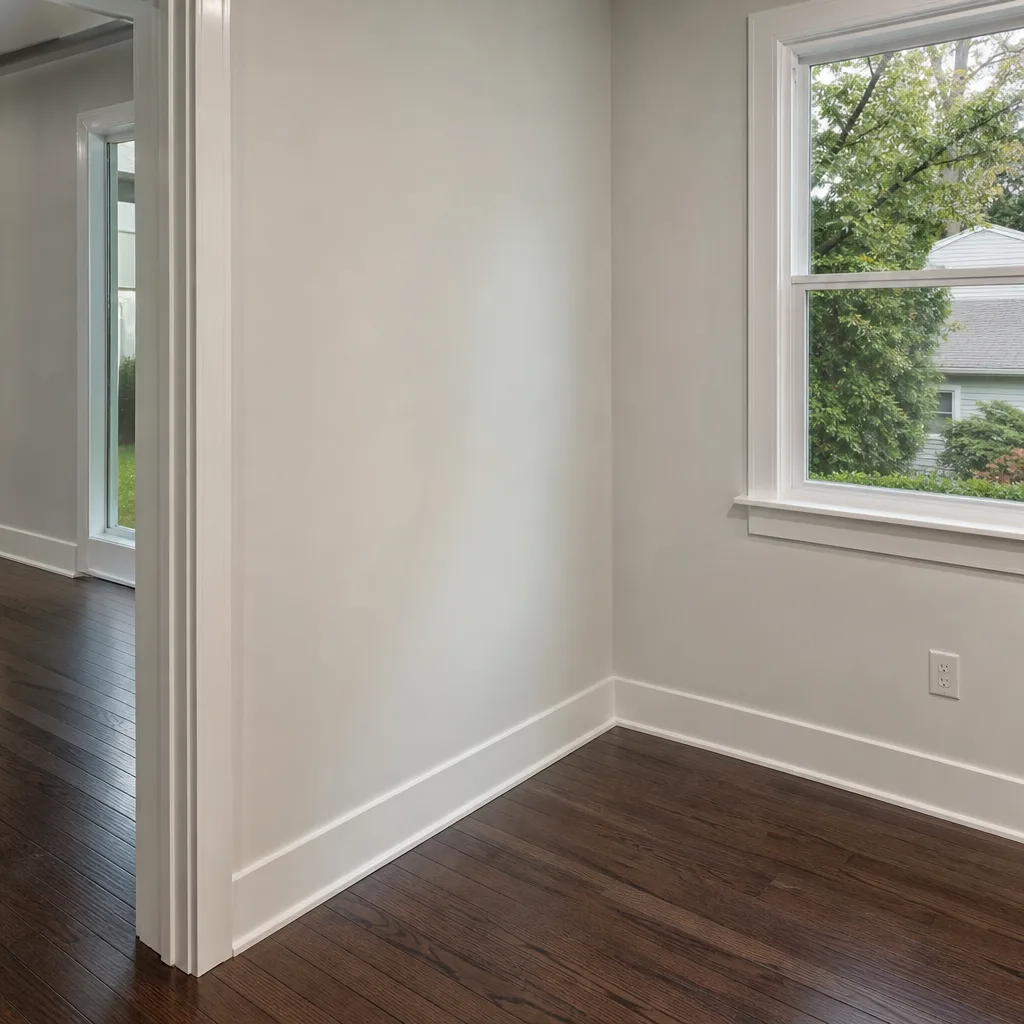 After
After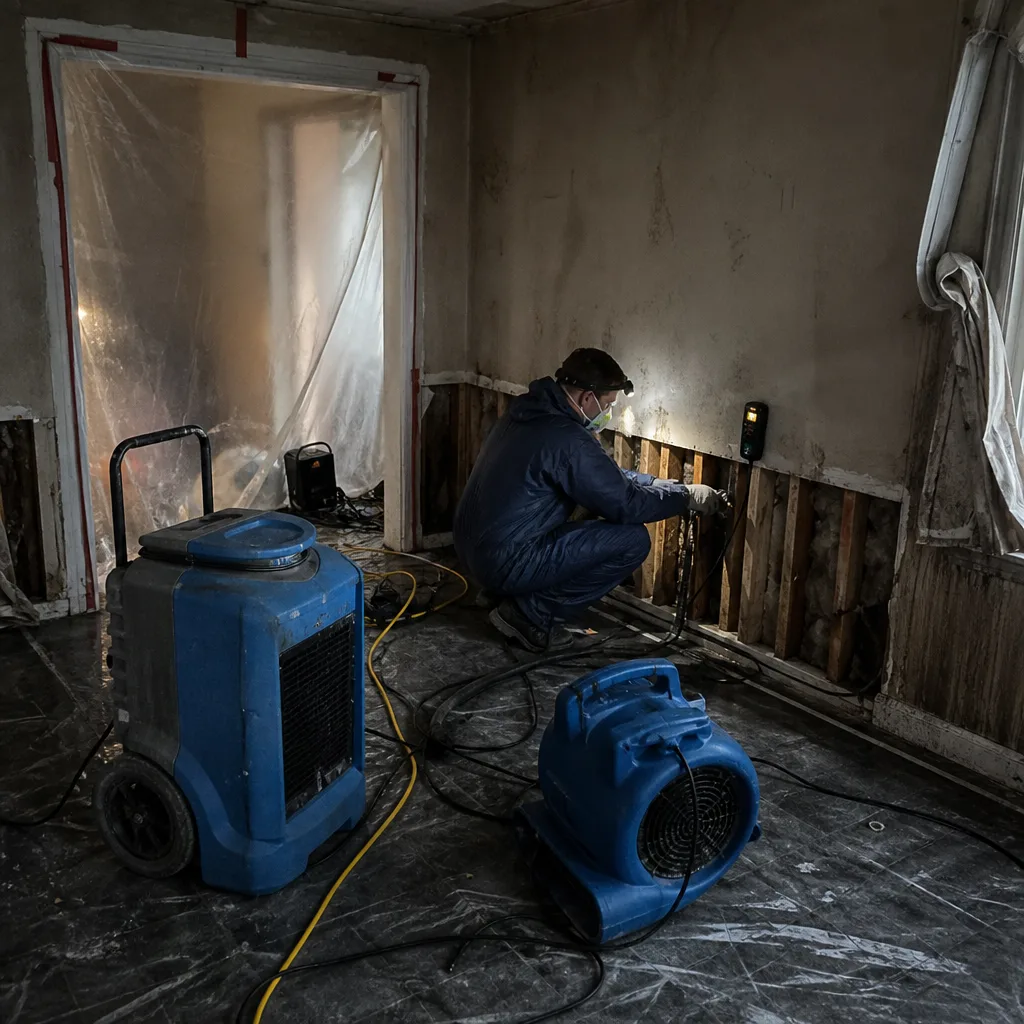 Before
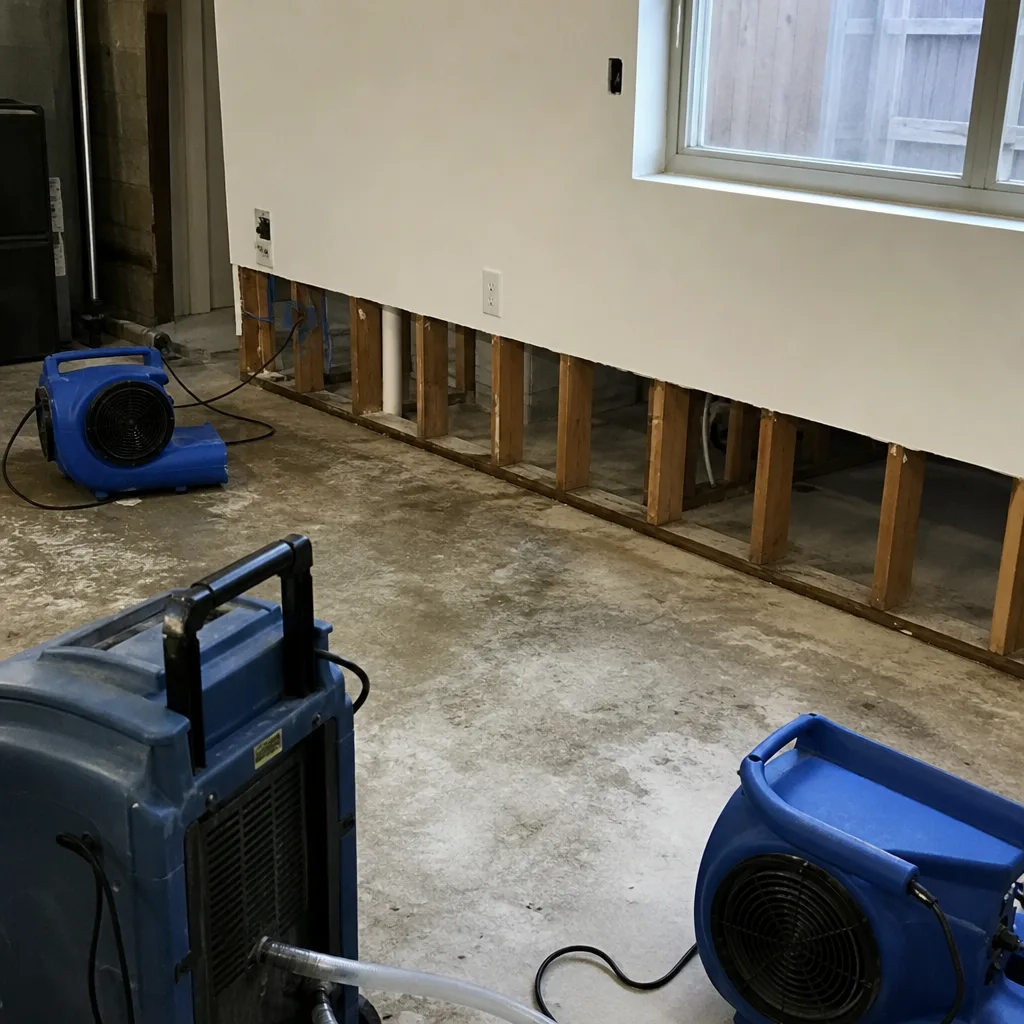 After
After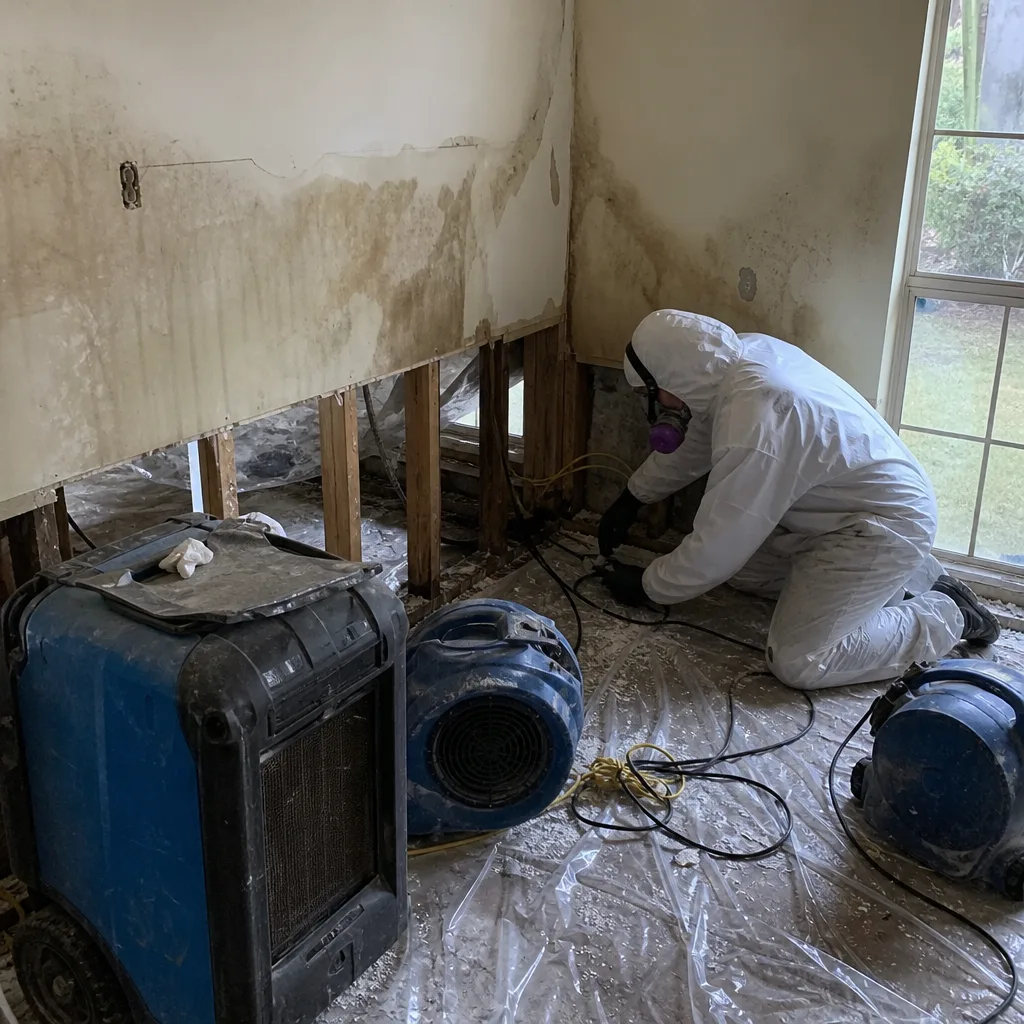 Before
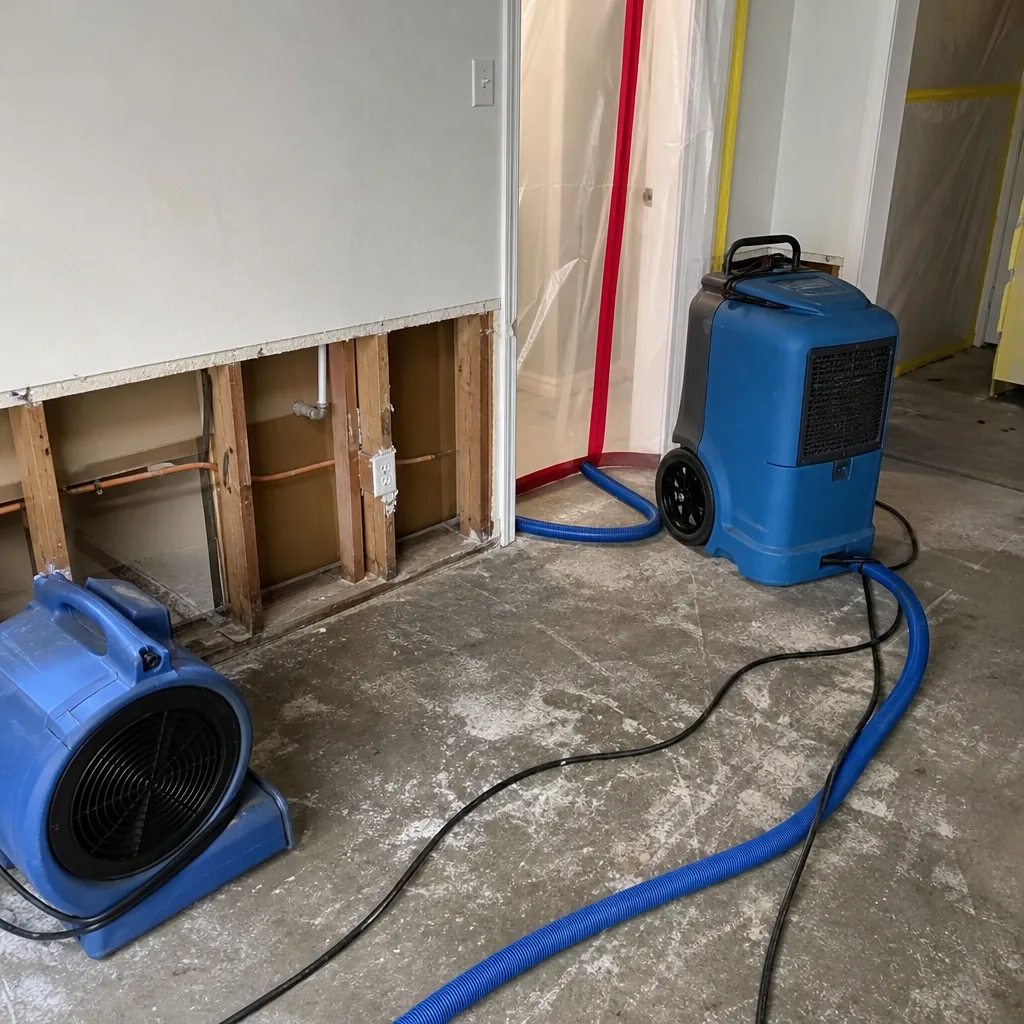 After
AfterCommon Water Damage Restoration Problems We See in Pecan Grove Homes
- Polybutylene pipe failures behind walls and under slabs. The original subdivisions were plumbed with polybutylene, and those pipes fail catastrophically after 20-35 years. By the time you see water, it has usually been wicking through wall cavities and under flooring for days.
- Expansive clay soil shifting slabs and cracking windows. Pecan Grove sits on Fort Bend County’s gumbo clay, which swells when wet and shrinks when dry. That seasonal movement creates ceiling stains and window frame cracks that look like roof leaks, and treating them as roof leaks means the real water source stays active.
- Mold acceleration in Fort Bend County humidity. After any water intrusion in Pecan Grove, the ambient relative humidity is often 60-80%, which compresses the mold growth window. Air drying alone won’t bring RH down fast enough inside wall cavities; mechanical dehumidification is required.
- Open floor plans spreading contamination fast. Newer custom homes in Pecan Grove have high ceilings and open sight lines from kitchen to living to hallway. Water and microbial contaminants move through those spaces quickly, so containment and zoning are more important here than in older, compartmentalized ranch-style homes.
Pricing for Water Damage Restoration in Pecan Grove, TX
We Also Serve Cities Near Pecan Grove
If you have a rental property or a family member in a neighboring community, our Pecan Grove service area extends to Houston, Spring, Humble, and Richmond. The same crews, equipment, and written guarantees apply everywhere we work, and we schedule service calls across the metro every day.
Serving Pecan Grove, TX - Our Local Coverage Area
We’re based in the Pecan Grove area and know this community well. Use the map below to see our service coverage - if you’re nearby, we can almost certainly help.
FAQs About Water Damage Restoration in Pecan Grove
Does my Pecan Grove home’s polybutylene plumbing mean hidden water damage is likely even if I don’t see a leak?
If your home was built between roughly 1985 and 1996 and still has polybutylene pipes, hidden water damage is a real possibility even when nothing visible is wet. These pipes fail at fittings and along runs behind walls and under slabs, and the damage accumulates silently for days or weeks before a fitting finally lets go and water becomes visible. We routinely find elevated moisture readings in wall cavities of Pecan Grove homes where the homeowner called us for a completely different reason. If you know or suspect you have polybutylene, call (254) 277-4577 and we’ll walk you through what to check without opening a single wall.
How does expansive clay soil cause water damage that looks like a roof leak in Pecan Grove?
Fort Bend County’s clay soil swells when wet and shrinks when dry, and that seasonal movement pushes against slab foundations, causing micro-shifts that manifest as ceiling stains, window frame cracks, and door frames that stick. In Pecan Grove, a ceiling stain near an exterior wall is often not a roof leak, but moisture being pulled up from a slab-level source through the wall cavity, wicking through drywall and showing up where gravity carries it. Our moisture mapping process traces the actual water migration path instead of assuming the stain’s location is the source’s location. That’s how we stop the real leak instead of painting over the symptom.
How fast does mold grow after a water leak in a Pecan Grove home during summer?
In Pecan Grove’s summer conditions, with ambient temperatures in the mid-90s and relative humidity above 70%, mold can begin colonizing wet drywall and organic materials within 24 to 48 hours. That’s faster than the same leak would behave in a dry climate, and it’s why mechanical dehumidification with Dri-Eaz or Phoenix equipment is not optional here. Our crews target getting moisture levels down and relative humidity inside affected cavities below 50% within the first 48 hours. Call (254) 277-4577 the day you notice the leak, because the clock is already running.
Why do high-ceiling custom homes in Pecan Grove spread water damage faster than older ranch-style houses?
High-ceiling, open-plan custom homes have fewer interior wall partitions to interrupt airflow and moisture migration. That means water from a single source, like a kitchen supply line or an upstairs bathroom leak, can affect drywall, flooring, and cabinetry across a 2,000-square-foot living space within hours, instead of being contained to one room. The same dynamic allows mold spores and water-damage dust to spread during demolition if containment isn’t set up first. That’s why we treat containment as a non-negotiable first step in Pecan Grove’s custom homes, before any wall is opened.
What is the difference between category 1 and category 3 water in a Pecan Grove restoration?
Category 1 water comes from a clean source, like a supply line or a tub overflow, and is the least contaminated, meaning more materials can typically be dried and saved. Category 3 water is grossly contaminated, carrying sewage, storm runoff, or river water, and requires full containment, antimicrobial application, and removal of porous materials like drywall, insulation, and carpet. In Pecan Grove, storm water that pushes into a home through a door or window is almost always category 2 or 3, because it has picked up soil, fertilizers, and lawn chemicals from the yard. Our team determines the water category on site and documents it in the written scope before any extraction begins, because that determination drives the entire restoration plan. Call (254) 277-4577 for a professional assessment and the same written documentation your adjuster will need.
Written by Carl Brandt, Owner at Dryden Restoration Houston, serving Pecan Grove and surrounding Fort Bend County communities.