

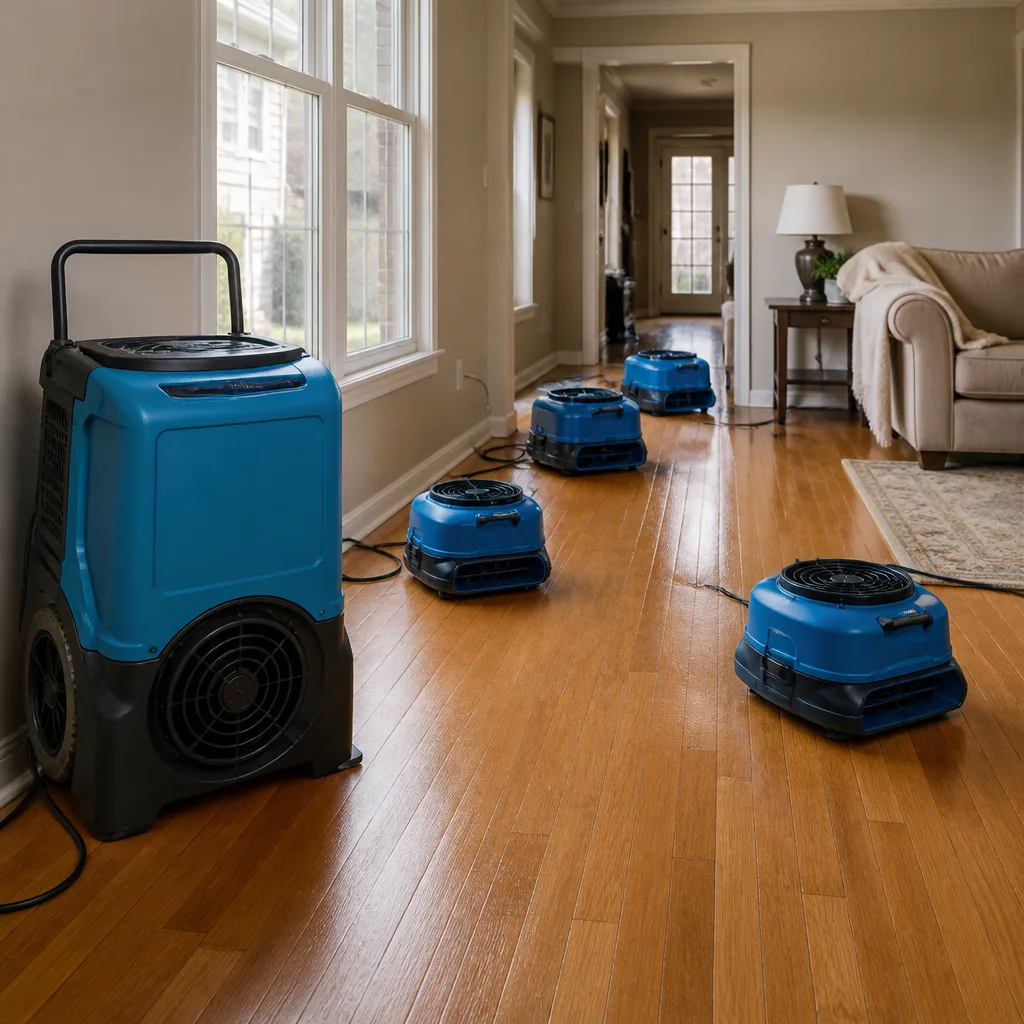
 Water damage drying
 Fire & smoke cleanup
 Mold remediation
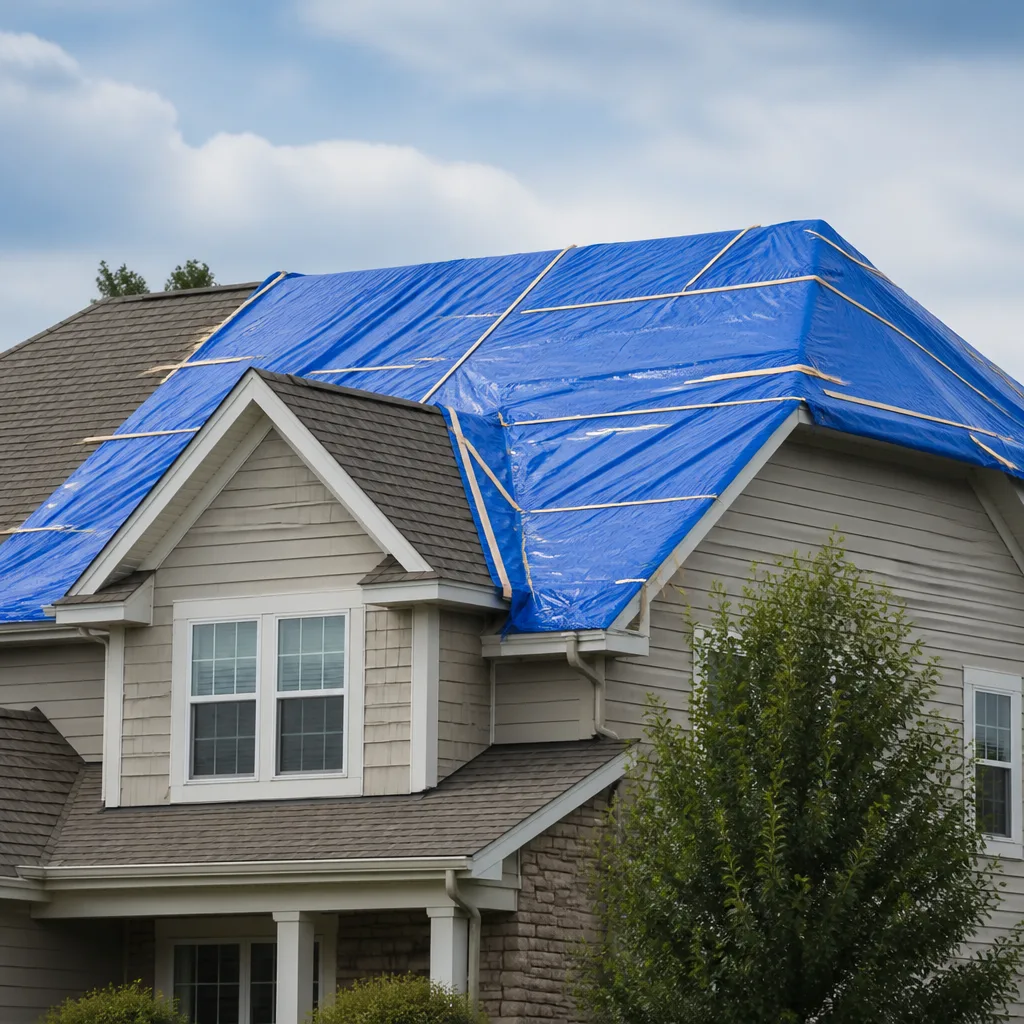 Storm response
 Sewage cleanup
 Reconstruction
Free visual inspection and a written scope of work before any mitigation begins - photos, moisture readings, and drying logs go in your claim file
The scope we write is the scope we bill. Anything new gets shown to you, in writing, before we touch it.
Get your free estimateFast, Reliable Fire Damage Restoration Across Spring
After a fire in Spring, the first 48 hours decide whether you’re facing a cleanup or a full rebuild. Soot sets into paint and drywall fast. Water from the fire department soaks into slab-on-grade foundations and doesn’t want to leave. Our crews know Spring’s homes, Spring’s clay soil, and Spring’s flash flood patterns because we work here every week. Call (254) 277-4577 and a live person answers, day or night. We’ll give you a written price before any tool touches your home.
Why Dryden Restoration Houston Is Spring’s Preferred Fire Damage Restoration Company
Spring homeowners call us because we answer the phone and we show up. Dryden Restoration Houston is part of the Kingswell family of independently owned restoration businesses, and we’ve been doing this work since 2005. Carl Brandt leads our team, and he holds every job to the same standard: written price first, named arrival window, uniformed and background-checked technicians at your door.
Our Spring customers know the 365-Day Done Right Promise by name. If a covered repair fails within a year, we come back and make it right at no charge. That’s in writing, on every job. Not a verbal assurance. Not a “trust us.” A written guarantee. We also use professional-grade equipment: Dri-Eaz, Phoenix, and B-Air systems, the machines commercial restoration crews use, not rental counter leftovers.
We’re familiar with the neighborhoods east and west of I-45, from Cypresswood to Northampton to the newer subdivisions off Rayford Road. We know what a 1970s brick veneer does when it meets extinguisher water and clay soil. That local knowledge changes how we dry, clean, and restore.
Restoration work we handle
Fire and Water Damage Restoration in Spring
Fire and water damage restoration in Spring isn’t a single process. It’s two emergencies running on the same clock. The fire leaves soot, char, and odor. The water used to fight it soaks into floors, walls, and the slab below. In Spring, where the clay soil holds moisture and releases it slowly, that water doesn’t just evaporate. It wicks upward for days, raising indoor relative humidity (RH) and feeding mold within 24 to 48 hours. A typical fire and water restoration job in Spring runs $3,200 to $9,800 depending on square footage and how far the moisture traveled.
Structural Drying After Fire Suppression
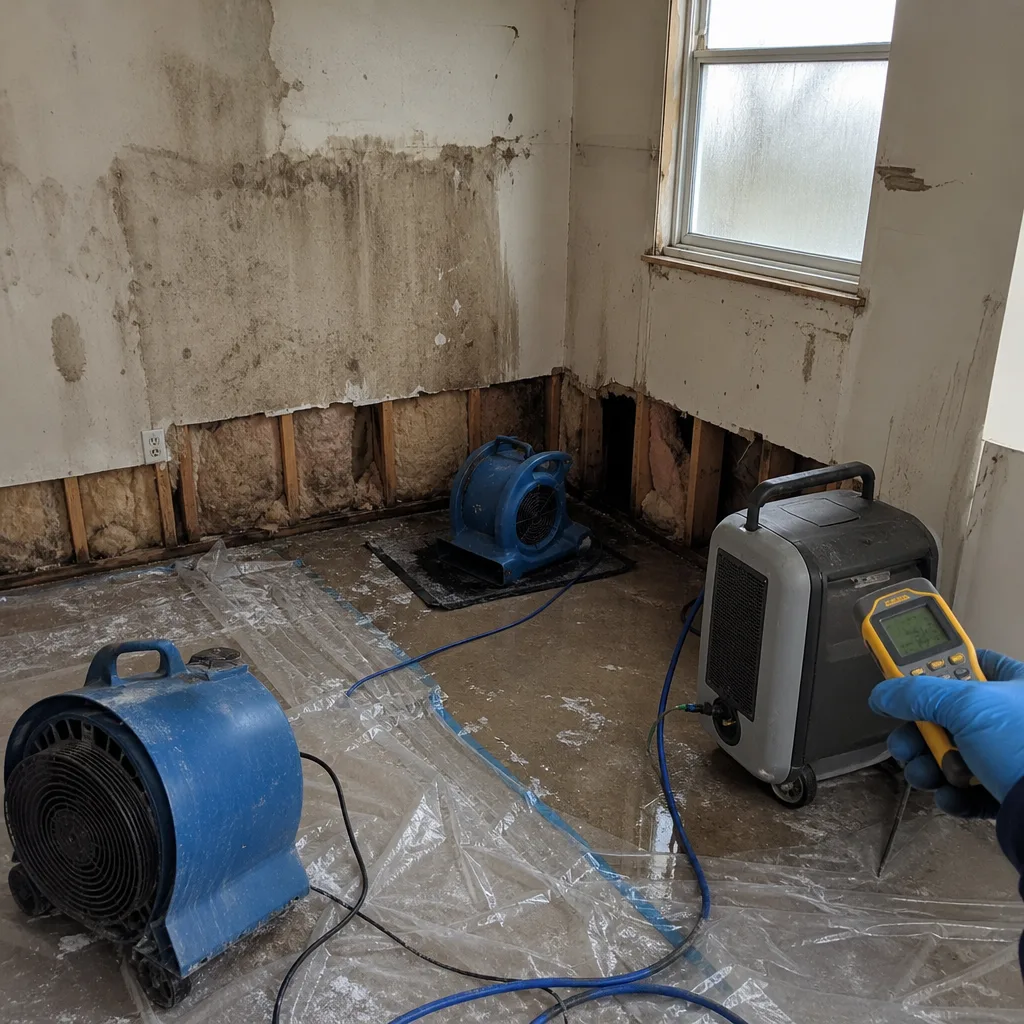
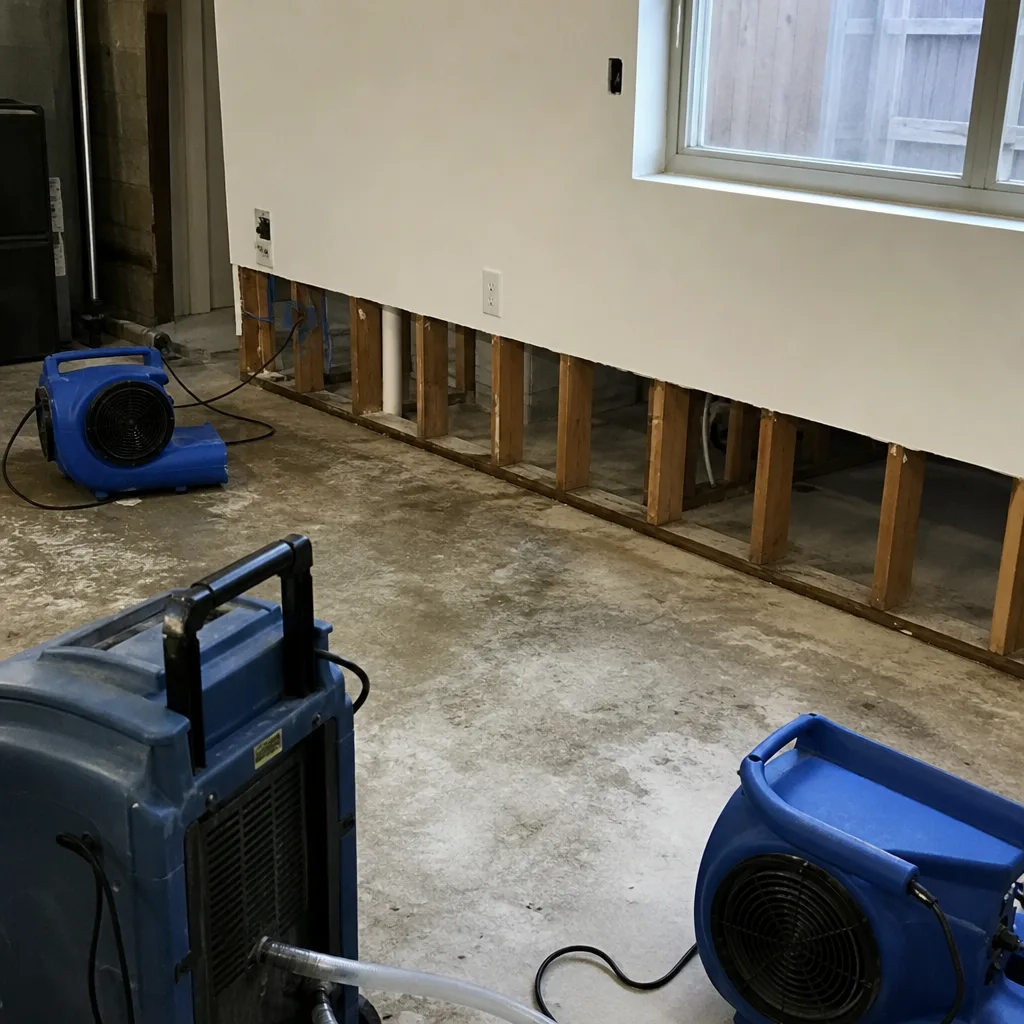
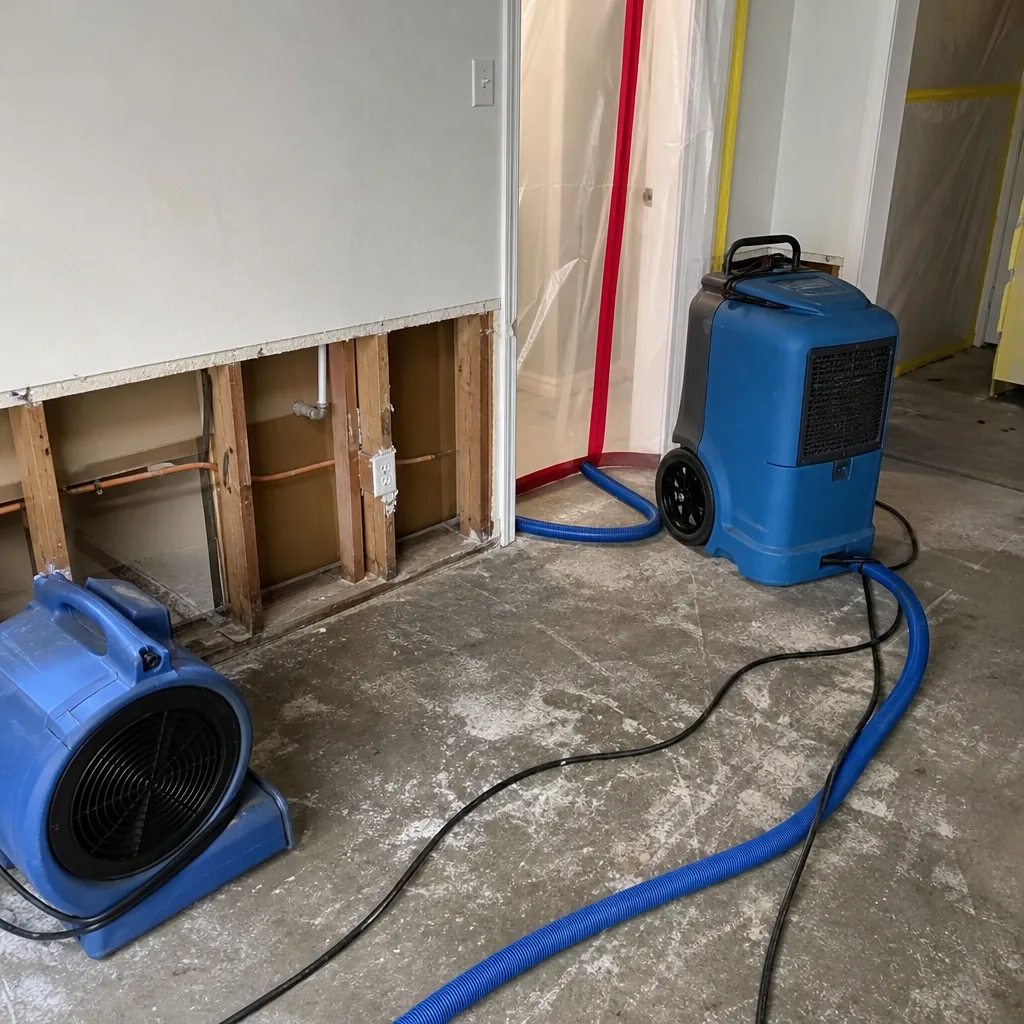
We use psychrometric drying: we measure temperature, humidity, and moisture content in building materials, then calculate exactly how much water needs to move and how fast. That’s different from just “setting up fans.” On slab-on-grade homes, we monitor moisture in the slab itself because Spring’s clay sub-base re-releases water slowly. Rushing this step means mold under the flooring six weeks later.
Containment and Air Quality
Older Spring tract homes share ductwork across the whole house. Soot from a kitchen fire gets pulled into the HVAC return and pushed into every bedroom. We set up containment barriers and negative air pressure before demolition or cleaning starts, so fine soot doesn’t recirculate through rooms that were never touched by the fire.
Soot Removal in Spring
Soot removal in Spring homes requires understanding what’s in the soot and where it landed. Soot from a grease fire is different from soot from burned plastics or synthetics. Each type needs a different cleaning agent. A standard soot removal and cleaning in Spring runs $1,100 to $3,400, depending on the affected area and whether duct cleaning is needed. Most jobs include odor control and one round of wipe-down on horizontal surfaces.
HVAC Duct Contamination
Spring’s older homes, especially those built in the 1980s and 1990s, often have interconnected ducting with no fire dampers. That means soot travels. We inspect and often recommend duct cleaning as part of the scope when we find soot beyond the room where the fire started. Skipping this step is the most common reason Spring homeowners call us back for “that smoke smell that won’t go away.”
Smoke Odor Neutralization
Smoke odor embedded in drywall, carpet, and insulation doesn’t respond to air fresheners. We use thermal fogging and ozone treatment in sealed rooms, then ventilate properly. The goal isn’t masking the smell. It’s breaking down the odor molecules at the source. If the home has original insulation from the 70s or 80s, we usually recommend replacing it rather than attempting deodorization.
Trusted Brands We Service in Spring
We stock replacement parts and cleaning products specific to the brands most common in Spring homes. Our crews service and restore damage in homes with Trane, Carrier, Rheem, Lennox, and Goodman HVAC systems, and we use Injectidry systems for hard-to-reach cavities and wall voids where water hides. For air movement and dehumidification, we rely on Dri-Eaz, Phoenix, and B-Air equipment. When the fire suppression water got inside your walls, Injectidry panels pull it out without tearing open every stud bay. Our techs train to IICRC and RIA standards, and they’ll explain what they’re doing in plain English while they work.
Common Fire Damage Restoration Problems We See in Spring Homes
- Clay soil holding fire suppression water against the slab. Spring’s expansive clay doesn’t drain. Water sits against the foundation and wicks upward through the slab, keeping indoor humidity high for weeks after the visible water is gone. We see this pattern in Cypresswood and Northampton frequently.
- Cast-iron sewer lines cracked from soil movement. Homes east of I-45, especially in older subdivisions, often have original cast-iron sewer lines. The same clay soil expansion that cracks exterior walls also cracks these lines. Fire restoration that doesn’t check for this misses a sewage backup waiting to happen during the next heavy rain.
- Soot that traveled through shared ductwork. Most Spring homes built before 2000 have a single HVAC system serving the entire house. Soot from one room ends up everywhere. We check duct interiors on every fire job because we know what we’ll find.
- Delayed drying leading to mold in 24 – 48 hours. Spring’s humid subtropical climate moves fast. If water isn’t extracted and dehumidified within the first day or two, mold takes hold. Our equipment fleet is sized to start the same day we arrive.
See the difference
 Before
 After
After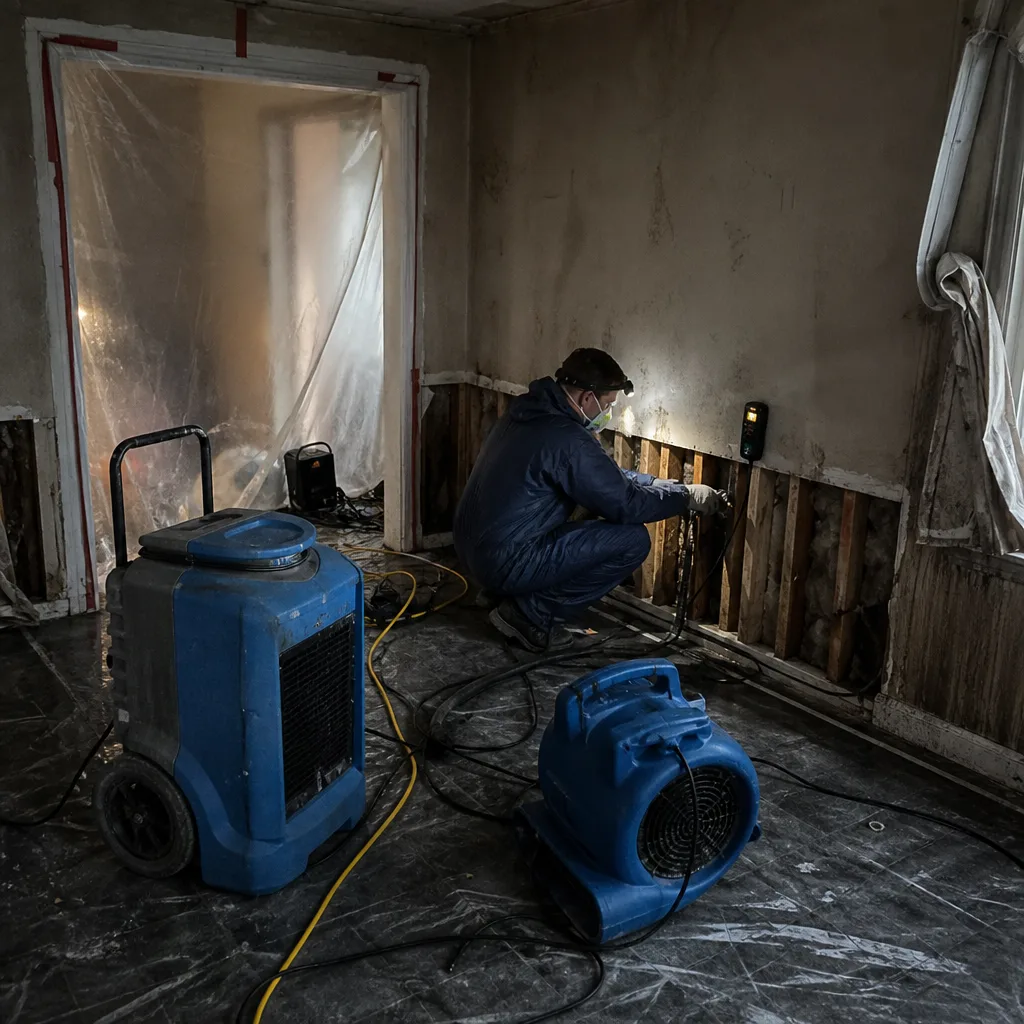 Before
 After
After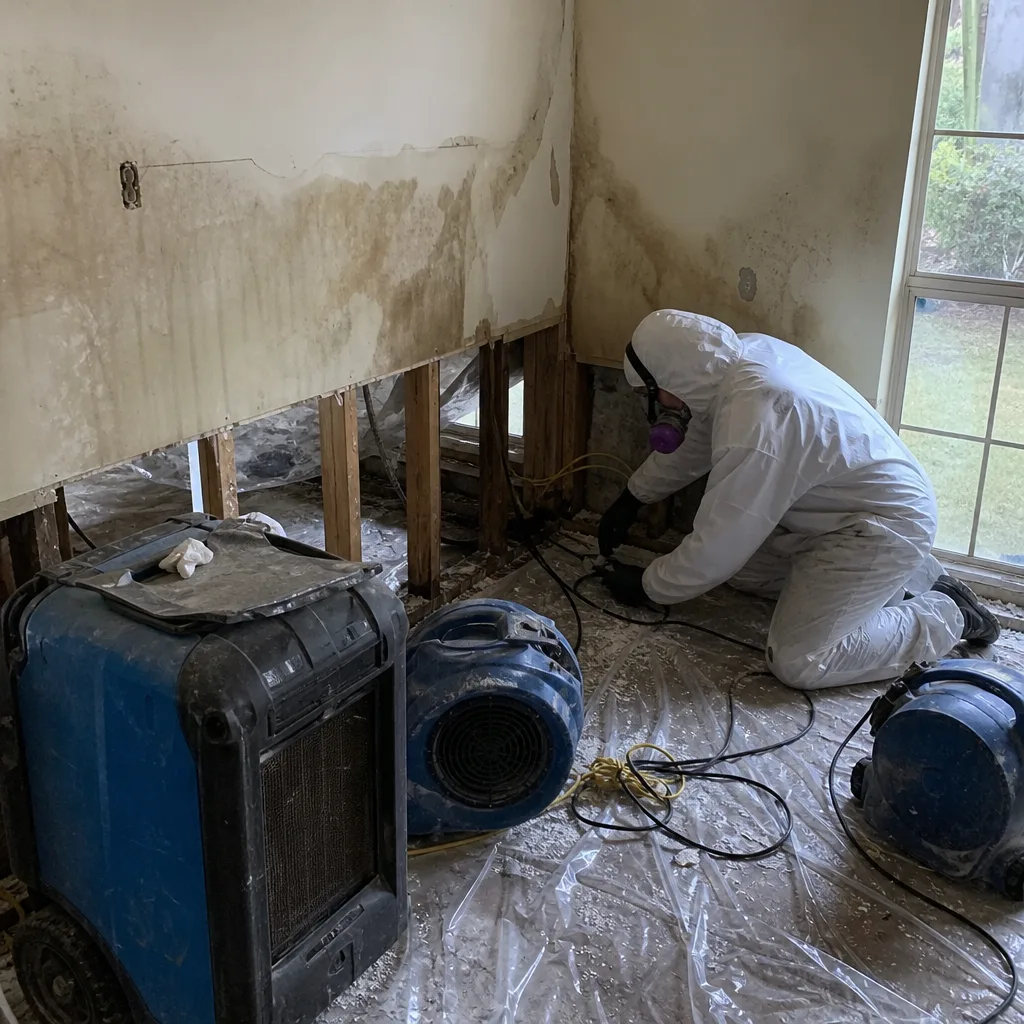 Before
 After
AfterPricing for Fire Damage Restoration in Spring, TX
Here are the ranges you can expect in Spring. Fire damage cleanup for a contained kitchen fire: $2,800 – $6,500. Smoke and soot removal with duct cleaning: $1,800 – $4,000. Emergency board-up and temporary roof covering: $450 – $1,200. Structural fire repair, including framing, drywall, and paint: $4,500 – $12,000+. The biggest cost drivers are square footage, how much water soaked into the slab, and whether cast-iron plumbing was damaged. Every estimate we give in Spring is written and fixed before we start. Call (254) 277-4577 for a free, no-oligation quote.
We Also Serve Cities Near Spring
Our crews work across northern Harris County and the surrounding areas. If you’re in Humble, Houston, Channelview, or Highlands, our Fire Damage Restoration team can help. We coordinate scheduling from our Houston office and serve Spring with local dispatch every day.
Serving Spring, TX - Our Local Coverage Area
We’re based in the Spring area and know this community well. Use the map below to see our service coverage - if you’re nearby, we can almost certainly help.
FAQs About Fire Damage Restoration in Spring
Spring’s expansive clay holds water from fire suppression and releases it slowly back into the slab, which keeps indoor humidity high and can cause mold within 24 to 48 hours. That’s why we run dehumidifiers longer here than in cities with sandy soil, and we monitor slab moisture for days, not hours. Call (254) 277-4577 if you’ve had a fire and water is sitting in or under your home.
Because shifting clay soil in Spring cracks cast-iron sewer lines, and fire suppression water plus a cracked sewer line means a sewage backup waiting to happen. Homes east of I-45 in Cypresswood and Northampton are especially prone. We check before we dry, before we clean, and before we rebuild.
Sometimes, but not always. Drywall that got wet from fire hoses usually needs to come out because it wicks water upward and feeds mold inside the wall cavity. Drywall with only smoke staining can often be sealed and repainted. We test moisture content in each wall and give you a written scope with exactly what needs to come out and what stays.
Waiting to start structural drying. Spring’s humidity accelerates mold growth, and fire suppression water trapped in clay soil keeps releasing moisture into the home. The second biggest mistake is letting a general contractor who doesn’t understand slab-on-grade construction handle the drying. We’ve corrected both. Call (254) 277-4577 the day of the fire if you can.
Yes. If a fire happens during or after a flood, the water isn’t clean. It’s category 3 water, contaminated with sewage, chemicals, and debris from flooded streets and backup systems. Spring’s flat terrain and poorly draining soil make standing water common after heavy rain. We use different PPE, different cleaning agents, and different disposal protocols for flood-contaminated fire damage.
Call Dryden Restoration Houston for Fire Damage Restoration in Spring
If you’ve had a fire in Spring, call (254) 277-4577 now. A live person answers, 24 hours a day, 7 days a week. We’ll schedule a crew to your home, give you a written price before any work starts, and put the 365-Day Done Right Promise in writing. The goal is simple: dry it fast, clean it properly, and rebuild it so it stays fixed.
Written by Carl Brandt, Owner at Dryden Restoration Houston, serving Spring homes with fire and water damage restoration since 2005.