
 Sewage cleanup
 Water damage drying
 Fire & smoke cleanup
 Mold remediation
 Storm response
 Reconstruction
Free visual inspection and a written scope of work before any mitigation begins - photos, moisture readings, and drying logs go in your claim file
The scope we write is the scope we bill. Anything new gets shown to you, in writing, before we touch it.
Get your free estimateRestoration work we handle
See the difference
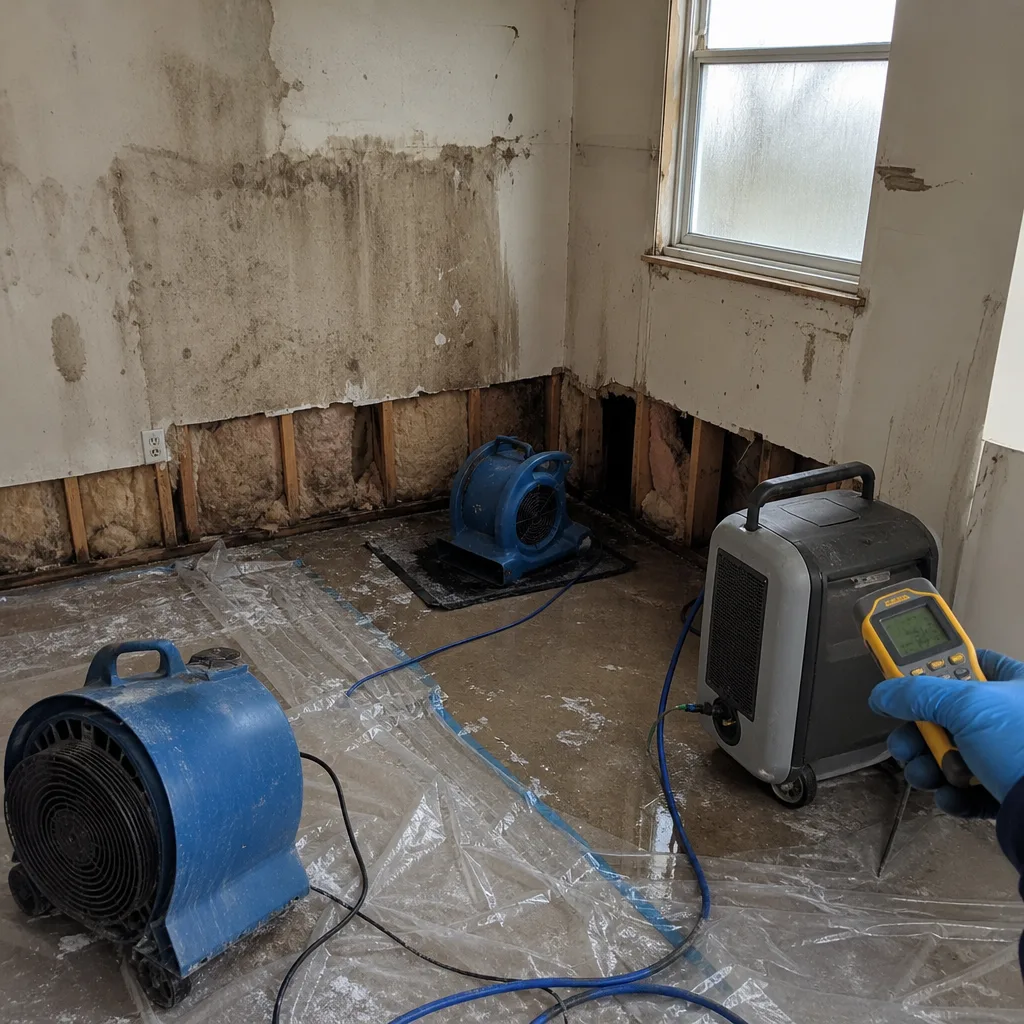 Before
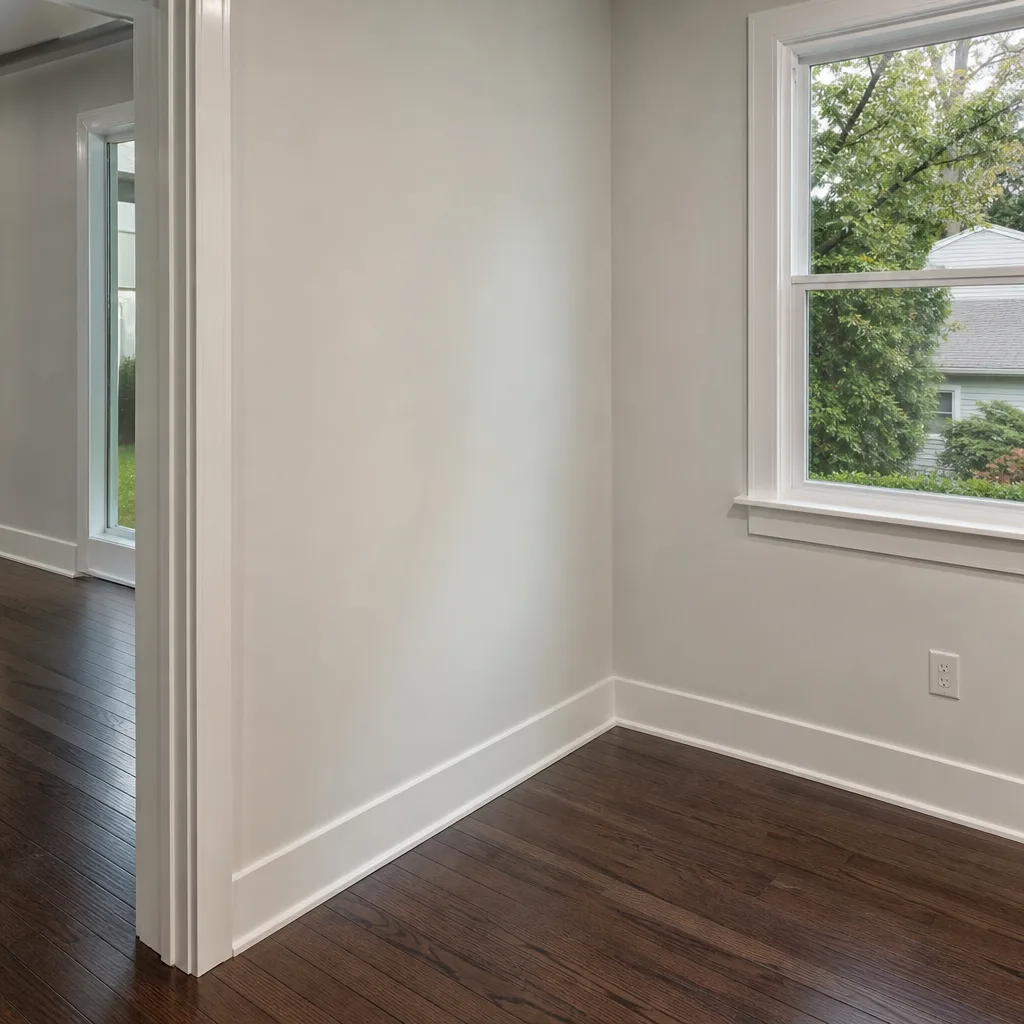 After
After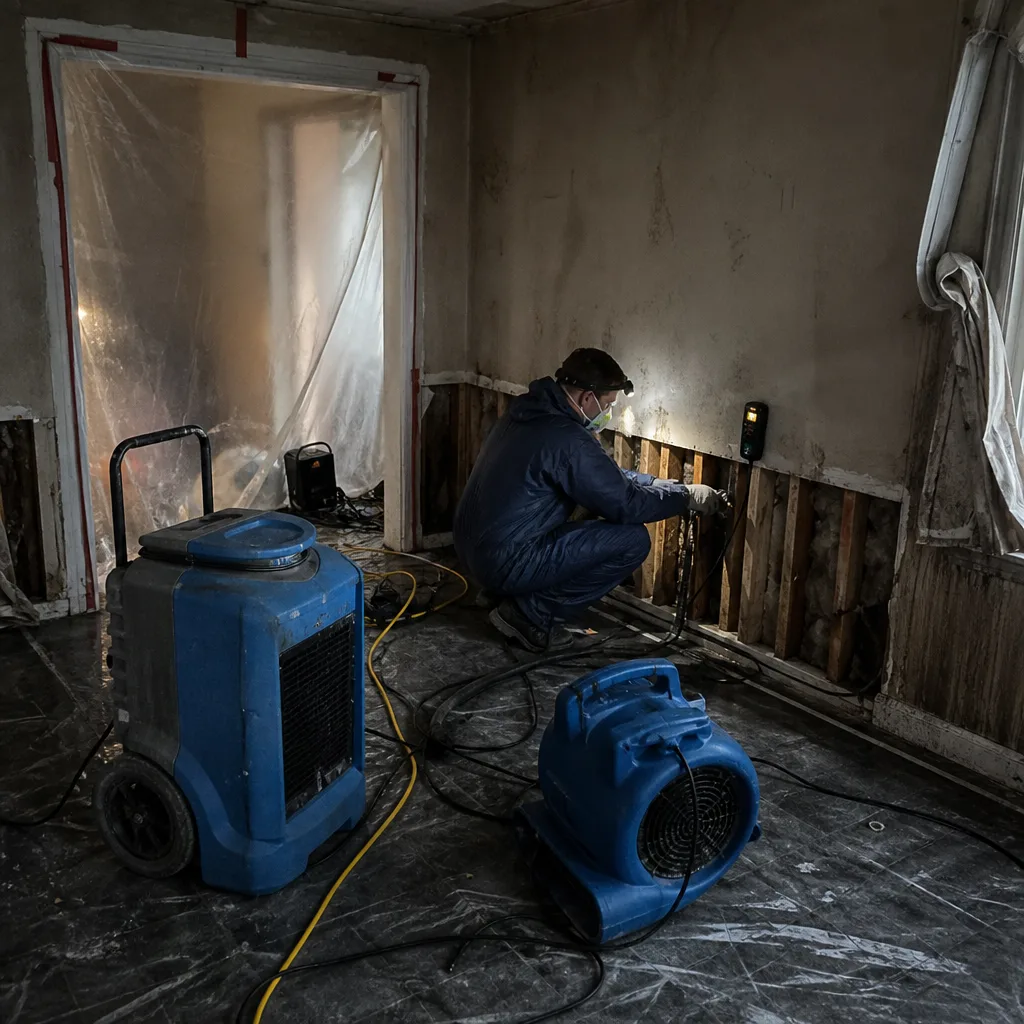 Before
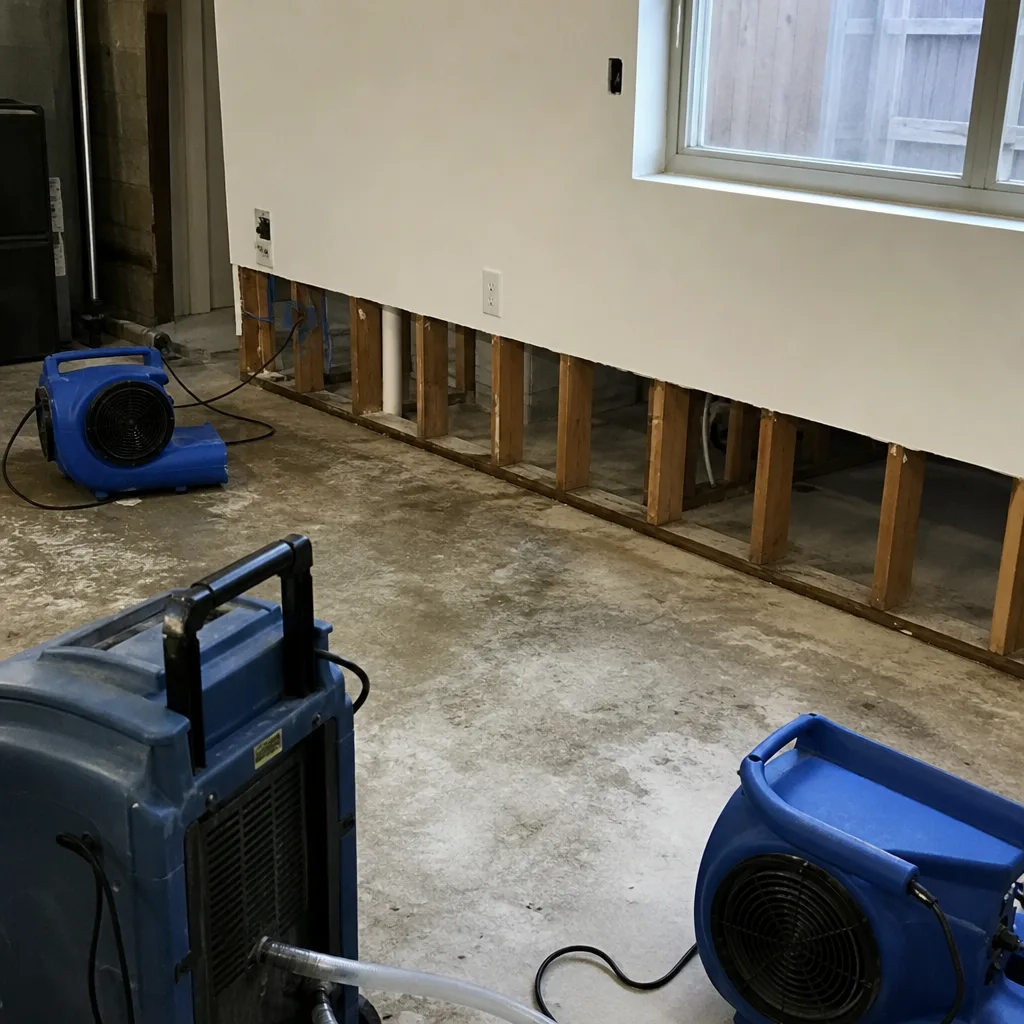 After
After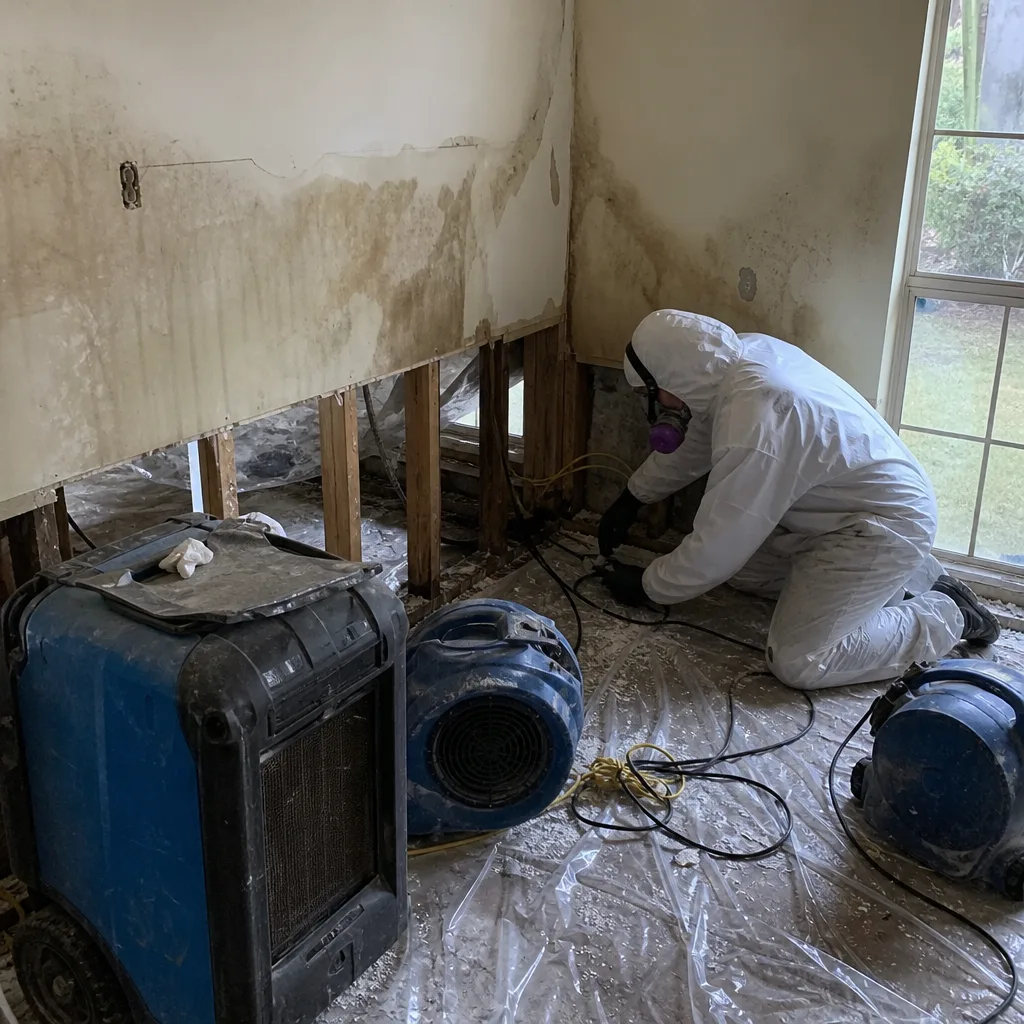 Before
 After
AfterHow Much Does Sewage Cleanup Cost in Houston?
Sewage cleanup in Houston typically costs between $1,200 and $4,500 for a standard residential backup affecting one bathroom or a small section of flooring. For a full sewage flood involving multiple rooms, contaminated drywall, and subfloor saturation, expect $6,000 to $15,000 or more. Most Houston homeowners pay around $2,800 to $3,500 for a moderate Category 2 or Category 3 water loss with sewage contamination.
These are real numbers from the Houston market, not national averages. Your actual cost depends on how far the sewage traveled, what materials it soaked into, and whether you need structural drying or full material removal. We’ll walk through exactly what drives those numbers below.
One thing worth knowing before you read further: sewage work is not something to shop purely on price. A low bid that skips proper decontamination or leaves moisture behind the drywall will cost you twice when the odor comes back or the mold starts. At Dryden Restoration Houston, we put a written price in front of you before any tool comes off the truck, and we back every job with a 365-Day Done Right Promise. You’ll know the number before you commit, and you’ll know what happens if something goes wrong.
Key Takeaways
- Typical sewage cleanup in Houston: $1,200 to $4,500 for contained backups; $6,000 to $15,000+ for multi-room sewage floods.
- Category 3 (black water) jobs cost more than Category 2 (gray water) because they require full material removal, not just drying.
- Houston’s slab-on-grade foundations and clay soil mean sewage backups often affect tile and concrete, not just carpet, which changes the labor profile.
- Insurance covers sewage cleanup only if you have a specific endorsement or if the backup originated outside your home’s plumbing.
- You should get a written, line-item price before any work starts. If a company won’t give you one, that’s your signal to call someone else.
Sewage Cleanup Cost Breakdown for Houston (2026)
Here’s where your money goes on a typical Houston sewage cleanup job. These are the line items we see most often, with the ranges we quote in this market. Every job is different, but this gives you a realistic picture.
| Line Item | Typical Houston Range | What It Covers |
|---|---|---|
| Emergency response & extraction | $350 – $750 | Arrival, sewage water removal, initial containment |
| Contaminated material removal | $900 – $3,200 | Cutting out and disposing of affected drywall, carpet, pad, baseboards |
| Antimicrobial treatment & disinfection | $400 – $1,200 | EPA-registered antimicrobials applied to all affected surfaces |
| Structural drying (if salvageable) | $600 – $2,000 | Dri-Eaz and Phoenix air movers, dehumidifiers, and moisture monitoring |
| Subfloor or slab treatment | $500 – $1,800 | Cleaning and sealing concrete, treating wood subfloor, vapor barrier work |
| Rebuild-ready prep | $300 – $900 | Final cleaning, HEPA vacuuming, clearance testing |
| Total (typical contained backup) | $2,850 – $9,850 | Before any rebuild or flooring replacement |
If the sewage came up through a toilet in a single bathroom and was caught within a few hours, you’re looking at the low end. If it sat overnight, spread under the tile in an adjoining hallway, or wicked up the drywall in three rooms, you’re climbing past $8,000 quickly.
Rebuild costs, meaning new drywall, paint, flooring, and trim, are separate. In Houston, expect $2,500 to $7,000 for a single bathroom rebuild, and $12,000 to $25,000 for a multi-room restoration. Some restoration companies, including us, can handle the rebuild directly. Others will hand you a referral. Ask before you sign anything.
What Affects Sewage Cleanup Pricing in Houston
- Water category: Category 2 (gray water from washing machines or sinks) is less expensive to remediate because some materials can be dried rather than removed. Category 3 (black water from toilets or sewer lines) means anything porous that got wet gets cut out and thrown away. Category 3 jobs run 30 to 60 percent higher.
- How long the sewage sat: Houston’s heat and humidity accelerate bacteria growth. Sewage that sat for 8 hours in an air-conditioned house is a different job than sewage that sat for 3 days in a vacant home in July. Longer contact time means more material removal and more antimicrobial treatment.
- Square footage affected: A sewage backup contained to a half bath is a $1,200 to $2,500 job. Sewage that runs from a second-floor bathroom down into a first-floor ceiling and then onto a wood floor can hit $10,000 to $15,000 before you factor in rebuild.
- Slab foundation vs. pier and beam: Much of Houston is built on slab-on-grade concrete. Sewage that gets under tile on a slab requires the tile to come up so the concrete can be cleaned, treated, and sealed. On a pier-and-beam home, the crawlspace adds access challenges and often means subfloor repair. Both are common in Houston and both affect cost differently depending on your home’s construction.
- Contaminated HVAC or ductwork: If sewage water reached a floor vent or the air handler ran while contamination was present, you may need duct cleaning or replacement. Duct cleaning adds $400 to $1,000. Replacing a section of flex duct adds $800 to $1,500.
- Houston permitting and disposal rules: The City of Houston requires sewage-contaminated material to be bagged, sealed, and disposed of as regulated waste at approved facilities. That disposal cost is built into every legitimate quote. A contractor who tells you they can just throw it in a dumpster is cutting a corner you don’t want cut.
Does Homeowners Insurance Cover Sewage Cleanup in Houston?
The honest answer: sometimes, and it depends entirely on your policy language. Standard Texas homeowners policies exclude sewage backup unless you purchased a specific water backup endorsement. Many Houston homeowners don’t have it, or they have it with a cap of $5,000 or $10,000.
If the sewage backed up because of a city sewer line failure, the City of Houston may have some liability, but pursuing a claim is slow and rarely covers the full cost. If the backup came from tree roots in your own lateral line, that’s on you unless you have backup coverage.
What this means for your wallet: before you call any restoration company, dig out your policy declarations page. Look for the words “water backup” or “sewage.” If you see the endorsement, call your agent and start a claim immediately. Take photos of everything before anything gets disturbed. A good restoration company will document the scene thoroughly and work with your adjuster directly.
At Dryden, we walk through your policy with you on the first call. If your claim gets denied or your coverage is capped, you’ll know the out-of-pocket number before we start. Not after.
How Sewage Cleanup Works: Step by Step
This is the process we follow on a Houston sewage job. It mirrors the IICRC S500 standard for water damage restoration, which is the document that defines how professional sewage remediation should be done. Knowing these steps helps you spot a contractor who’s cutting corners.
- Assessment and safety check (30 to 60 minutes): We identify the water category, map the affected area with moisture meters, and check for electrical hazards. Houston homes built before 1980 may have wiring that’s not grounded properly, and sewage water is conductive. We shut off power to affected areas before anything else.
- Containment and extraction (1 to 3 hours): We set up containment barriers to keep sewage particles from going airborne and moving into clean rooms. Then we extract the standing water using truck-mounted or portable extraction units. This is the step where speed matters most.
- Material removal (2 to 6 hours, sometimes over two days): Any porous material that absorbed Category 3 water gets cut out: carpet, pad, drywall up to the flood line plus 12 to 24 inches above it, baseboards, insulation, and sometimes cabinetry. This is the most labor-intensive part and the biggest cost driver.
- Antimicrobial treatment (1 to 2 hours): Every affected surface, including exposed studs, slab, and subfloor, is treated with an EPA-registered antimicrobial. We use products specifically rated for sewage decontamination, not general-purpose bleach solutions.
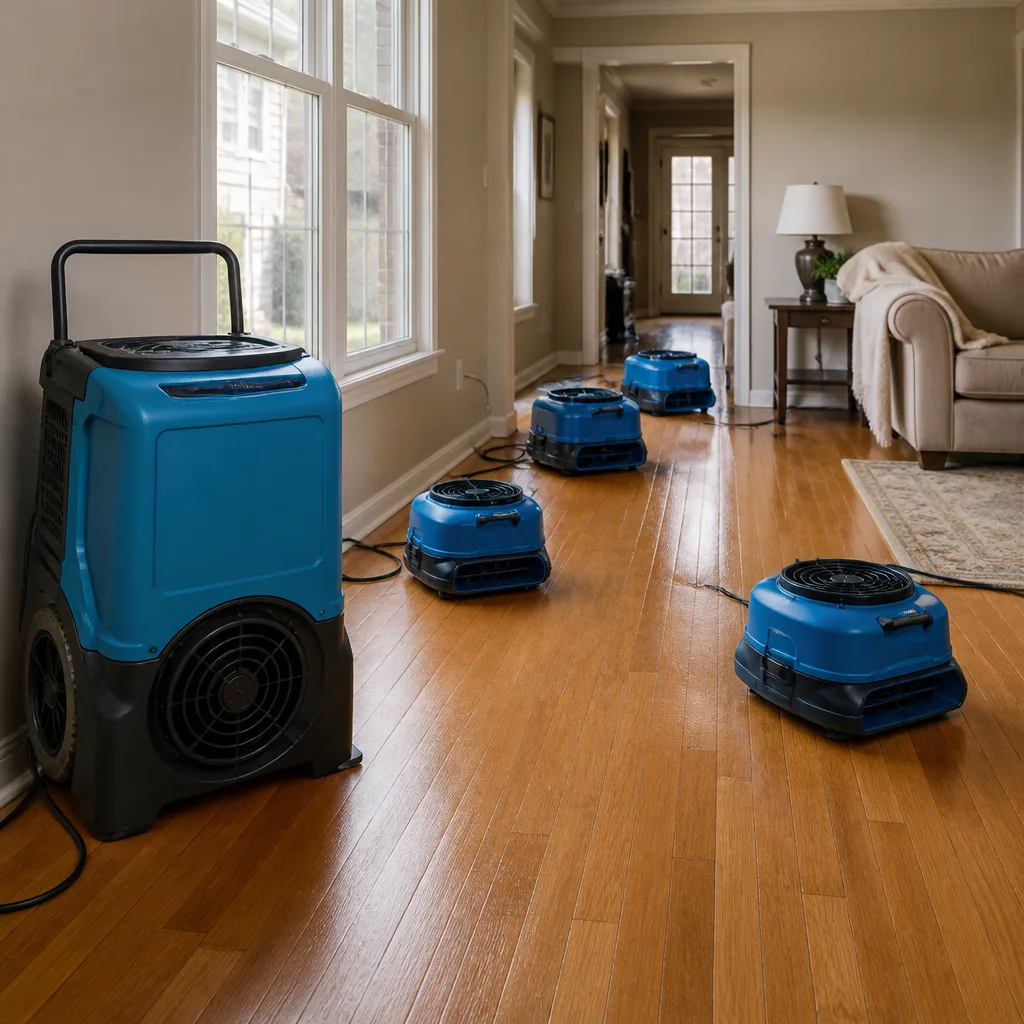
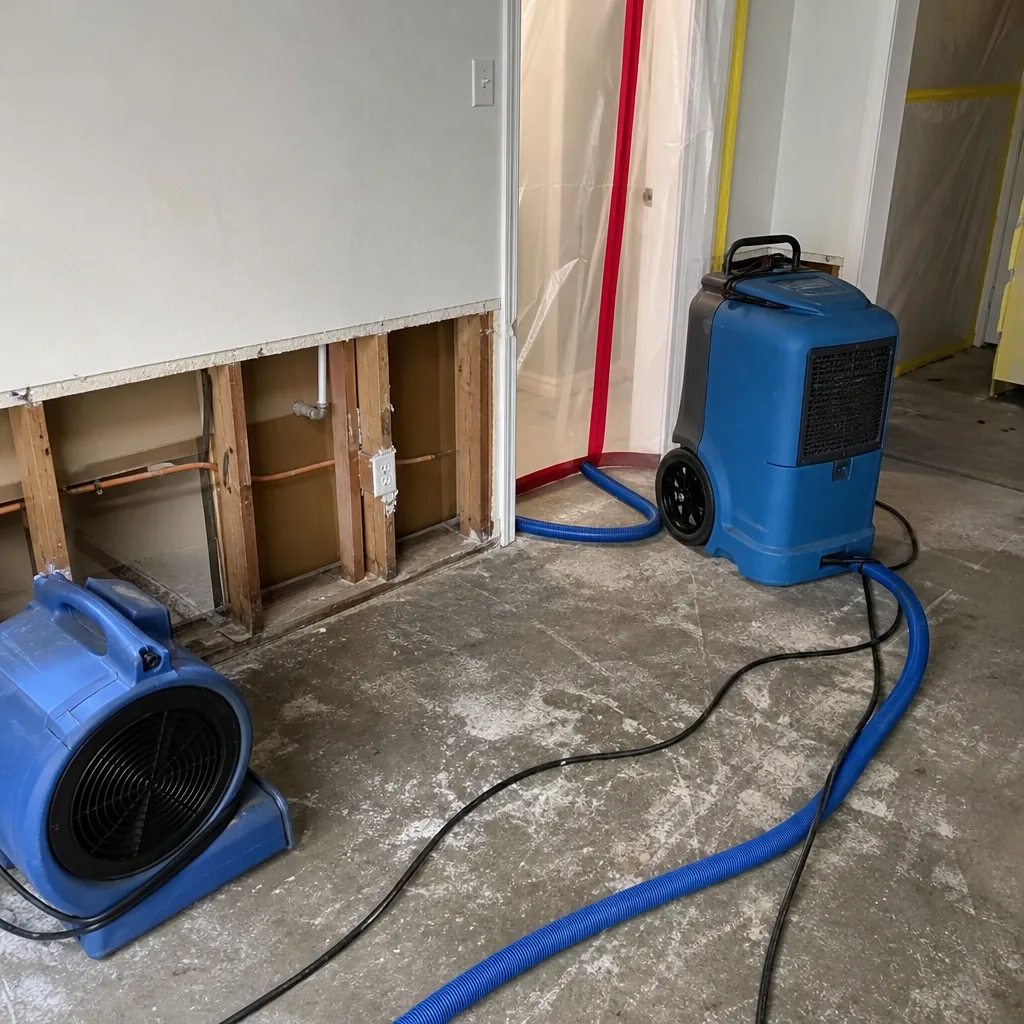
- Structural drying (2 to 5 days): If any materials can be saved (tile on slab, some wood framing), we set up professional drying equipment: Dri-Eaz dehumidifiers, Phoenix air movers, and in some cases Injectidry systems for hardwood floors or wall cavities. We monitor daily with moisture meters and track the numbers until the structure reaches its drying goal, measured in relative humidity (RH) and moisture content percentages.
- Clearance testing and final cleaning (same day as equipment removal): We confirm the structure is dry and the antimicrobial treatment has done its job. Then we HEPA-vacuum all surfaces, wipe down every horizontal surface, and leave you with a clean, dry structure ready for rebuild.
The whole process for a contained sewage backup usually takes 3 to 6 days from first call to equipment out. Larger jobs can run 10 to 14 days. Rebuild happens after drying is verified.
How to Save on Sewage Cleanup Without Cutting Corners
There’s a right way and a wrong way to keep sewage cleanup costs down. Cutting corners on decontamination is the wrong way. Here’s the right way.
- Call within the first hour. Sewage damage compounds. Every hour the water sits, it wicks further into drywall, under tile, and into subfloor. A backup caught at hour one might be a $1,500 extraction and treatment job. The same backup at hour 24 is a $4,000 material removal job. Call (254) 277-4577 the moment you see sewage.
- Don’t run fans or your HVAC. Blowing air across sewage water aerosolizes bacteria and spreads contamination into your ductwork and clean rooms. Turn off the HVAC to the affected area and leave the fans off until a professional arrives.
- Know your insurance coverage before it happens. Call your agent this week, not during an emergency. Ask if you have water backup coverage and what the cap is. If you don’t have it, adding it costs $30 to $70 a year in Texas. That’s the cheapest insurance upgrade you’ll ever buy in a city with Houston’s sewer infrastructure age.
- Get a written, itemized quote. A written price with line items lets you compare quotes honestly. If one company is $2,000 cheaper but the line items show no antimicrobial treatment and no structural drying, you’re not saving money. You’re prepaying for a future mold problem.
- Ask about guarantee terms in writing. If a company won’t put their guarantee in writing, don’t put them in your house. Our 365-Day Done Right Promise says it plainly: if a covered repair fails within a full year, we come back and fix it at no charge. It’s on paper, on every job.
Why Houston Sewage Backups Are a Particular Problem
Houston’s flat topography and clay-heavy soils create specific conditions that make sewage backups more common here than in many other cities. The clay soil shifts with moisture changes, which puts stress on sewer lateral lines. Combined with the city’s aging wastewater infrastructure and the sheer number of mature trees whose roots infiltrate pipes (live oaks are notorious for this along the 610 Loop corridor and older neighborhoods like the Heights, Montrose, and Meyerland), backups are a when-not-if problem for many homeowners.
Add Houston’s intense summer rainfall and occasional flooding from tropical systems, and you get saturated ground that infiltrates cracked sewer lines, overloads the municipal system, and sends sewage backward into homes in low-lying areas. Neighborhoods like Kingwood, Meyerland, and parts of Clear Lake have seen widespread sewage backup issues during major rain events. A backflow prevention valve on your sewer line is a $400 to $900 installation that can prevent a $10,000 cleanup. Worth considering, especially if you’ve had one backup already.
Category 2 vs. Category 3: Why the Distinction Matters for Your Wallet
Water damage professionals classify water by its contamination level, and the classification drives the entire cleanup approach. Gray water (Category 2) comes from washing machines, dishwashers, and sink drains. It contains some contaminants but not raw sewage. In many cases, hard surfaces can be cleaned and dried rather than removed. Carpet padding may still need replacement, but the drywall above the water line can often be saved.
Black water (Category 3) comes from toilets, sewer lines, and any water that has sat long enough to grow bacteria. Category 3 water means every porous material it touched gets removed. Drywall, carpet, pad, baseboards, insulation, sometimes cabinetry. No exceptions if you’re doing the job to IICRC standards. That’s not an upsell. That’s the difference between a home that’s actually clean and a home that smells like sewage every time the humidity rises.
About 75 percent of the sewage jobs we handle in Houston are Category 3 by the time we arrive. Not because the homeowners did anything wrong, but because by the time water is visibly backing up and has spread beyond the bathroom, it’s already crossed the contamination threshold.
Common Questions About Houston Sewage Cleanup Costs
Can you give me an exact price over the phone?
No honest company can give you an exact price sight unseen. What we can do, and what you should require from anyone you call, is give you a realistic range based on what you describe, then show up and put a written line-item price in front of you before we start. If you call us at (254) 277-4577, you’ll get a live person on the line who will ask you the right questions and give you a real range for your situation, not a vague “it depends.”
What if the sewage came up through multiple drains at once?
Multiple drains backing up simultaneously usually means a main line blockage, not a single fixture issue. That means a larger volume of water, more affected area, and a higher cost. Expect $4,500 to $10,000+ for a main line backup affecting multiple rooms. This is also the scenario most likely to involve city sewer line responsibility, so document everything.
Is the sewage cleanup cost worth paying, or can I handle it myself?
Sewage contains bacteria, viruses, and parasites that cause serious illness. E. coli, hepatitis A, and salmonella are all present in raw sewage. Cleaning it without proper personal protective equipment, containment, and EPA-registered antimicrobials puts your family’s health at risk. Beyond the immediate health danger, improper cleanup means contaminated moisture left in walls and floors, which leads to mold in Houston’s humidity. A $1,500 professional job that could have prevented a $6,000 mold remediation is a deal.
Will my floors need to be replaced?
In a Category 3 sewage event, carpet and pad are always removed. Hardwood floors can sometimes be saved if the sewage didn’t sit long and the wood didn’t cup or delaminate, but it’s rare. Tile on slab can often be cleaned, treated, and reused if the water didn’t compromise the thinset or substrate. We’ll tell you what’s salvageable and what isn’t, and the answer goes in your written quote.
If you’re dealing with a sewage backup right now, don’t wait. Every hour changes the cost and the scope. Call (254) 277-4577 and you’ll talk to a live person, 24 hours a day. We’ll tell you what to do in the next 15 minutes, what to expect on cost, and when we can be there. The estimate is free, and the price is in writing before we touch anything.
Why Houston Homeowners Choose Dryden for Sewage Cleanup
This is the part where most websites tell you they’re “the best” or “the most trusted.” We’ll skip that. Here’s what we actually do, and you can decide if it sounds right for your situation.
A written price before any work starts. Not a ballpark after we arrive. Not a number that changes at the door. A line-item written quote. It’s a rule our founder, Carl Brandt, put in place in 2005 and it hasn’t changed. You see the number. You approve it. Then we work.
A 365-Day Done Right Promise in writing. Every sewage cleanup job includes a written guarantee: if any covered repair fails within a year, we return and correct it at no charge. No phone tag. No fine print gymnastics. It’s in the paperwork, signed, on every single job.
Professional-grade equipment, explained in plain English. We run Dri-Eaz dehumidifiers, Phoenix air movers, XPOWER ventilation, B-Air drying systems, and Injectidry systems for wood floors and wall cavities. You don’t need to know what those are. You just need to know they’re the same machines used by large commercial restoration crews, not rental-store equipment from a big box store.
Training that’s verifiable. Our work follows the IICRC S500 standard for water damage restoration, the RIA’s professional guidelines, and IFA ethics standards. Those aren’t awards. They’re the recognized benchmarks for how professional restoration should be done.
Background-checked, uniformed technicians. The person who walks into your house during a sewage emergency is background-checked and wearing a Dryden uniform. You’ll know exactly who you let in, because Carl’s rule from day one was that a stranger in your home during a stressful emergency should never be another source of stress.
Someone answers the phone. That’s not a small thing at 2:00 a.m. when sewage is spreading across your bathroom floor. Our phone is answered by a live person, 24/7. Not an answering service reading a script. A real person who can dispatch real help.
Sewage Cleanup Cost by Houston Area: What We See
Costs vary across the Houston metro based on home age, construction type, and the specific sewer challenges in each area. Here’s what we typically encounter:
- Heights, Montrose, and inner-loop historic homes: Many homes built 1920 to 1960 with pier-and-beam foundations and original cast-iron sewer lines. Cast iron corrodes from the inside and is prone to collapse. Sewage jobs here often involve crawlspace contamination and subfloor replacement, pushing costs $1,000 to $3,000 higher than slab homes.
- Katy, Cypress, and Sugar Land master-planned communities: Nearly all slab-on-grade construction, mostly built after 1985. PVC sewer lines are less prone to root intrusion than cast iron, but the clay soil still shifts. Costs here tend to run at the lower end of ranges because access is straightforward and construction is uniform.
- Pearland, Friendswood, and Clear Lake: High water table and proximity to the coast create drainage challenges. Sewage backup events here are often tied to heavy rain events rather than line failure. Expect moisture to be more persistent and drying times to run longer, which adds $500 to $1,500 in equipment days.
- Kingwood and Spring: Mature pine forests with aggressive root systems. Root intrusion into sewer laterals is common, leading to repeat backup events until landscaping changes or line replacement happens. The cleanup cost is usually not the problem here; it’s the repeat events. Ask about backflow prevention.
- Baytown, Pasadena, and the east side: Older industrial-area homes, many with clay soil and aging infrastructure. DIY plumbing repairs are common in these neighborhoods, which means we sometimes walk into sewage jobs that are worse than they needed to be because a previous fix failed.
These are patterns, not guarantees. Your home is different from your neighbor’s home even if they were built the same year on the same street. The only way to get a real number is a real assessment.
What You Should Do Right Now If You Have a Sewage Backup
- Stop using water. Every flush, every shower, every load of laundry adds to the problem. Shut off the water supply if the backup is coming from inside your plumbing.
- Turn off electricity to the affected area. Sewage water is conductive. Kill the breaker to any room that has standing water or wet materials.
- Keep people and pets out. Sewage is a biohazard. The CDC recommends treating any contact with sewage water as a potential infectious exposure.
- Call a professional. You need someone who will answer the phone, tell you what to do next, and show up with a written price. That’s (254) 277-4577. We answer 24/7.
- Document everything. Photos of the affected area before anything is moved. Your insurance company will ask for them, and thorough documentation can mean the difference between a paid claim and a denied one.
FAQs: Sewage Cleanup Cost in Houston
How much does sewage cleanup cost per square foot in Houston?
For a Category 3 sewage event requiring material removal and treatment, expect $12 to $25 per square foot of affected area. For Category 2 gray water jobs where drying is possible, the range drops to $6 to $14 per square foot. A 200-square-foot affected area in a Category 3 event means roughly $2,400 to $5,000 before rebuild. For an exact number on your situation, call (254) 277-4577 for a free written estimate.
Is sewage cleanup covered by homeowners insurance in Texas?
Most standard Texas homeowners policies exclude sewage backup unless you purchased a water backup endorsement, which typically adds $30 to $70 per year to your premium and provides $5,000 to $25,000 in coverage. Check your declarations page for the words “water backup” or “sewage.” If you don’t see it, you’re paying out of pocket unless the city accepts liability.
How long does sewage cleanup take in Houston?
A contained sewage backup with professional response takes 3 to 6 days from first call to equipment removal. Larger jobs with multiple rooms or flooring material removal can run 10 to 14 days for the cleanup phase. Rebuild after cleanup adds another 1 to 4 weeks depending on scope. Houston’s humidity means we don’t cut the drying phase short; structural drying must be verified with moisture readings before the equipment comes out.
Can you clean up sewage the same day I call?
Yes. We dispatch same-day for sewage emergencies across the Houston metro, including nights and weekends. The phone is answered by a live person 24 hours a day, and we typically arrive within hours of your call. Sewage damage is time-sensitive, so same-day response is not a premium service. It’s the baseline. Call (254) 277-4577 and we’ll tell you exactly when we’ll be there.
Is it cheaper to repair or replace water-damaged materials after sewage?
For porous materials like drywall and carpet that were exposed to Category 3 water, replacement is almost always cheaper than attempting to clean them. Cleaning sewage-contaminated drywall thoroughly is impossible; the paper facing absorbs contaminants, and the moisture wicks into the wall cavity. Replacing a section of drywall costs $75 to $150 per sheet installed in Houston, while the long-term cost of contaminated drywall left in place is a recurring odor problem and mold growth. Replacement is the honest answer and the cheaper answer over time.
Get a Written Sewage Cleanup Price in Houston
If you’re looking at a sewage backup right now, or you want to know your options before one happens, we’ll make this simple. Call (254) 277-4577. You’ll reach a live person who will ask you a few questions and tell you what to expect on cost. If you want us to come out, we’ll give you a written line-item price before any work starts. If you don’t like the number, you’re not obligated to anything.
That’s been the way Carl Brandt has run this company since 2005. The Kingswell Way is simple: say the price before the work, show up in the window we gave, leave the place cleaner than we found it, put the guarantee in writing, and come back if it fails. Every job, every time. If you’re in Houston and you need sewage cleanup, that’s what you’ll get.
Pricing reflects the Houston market as of 2026. Dryden Restoration Houston offers free estimates – call (254) 277-4577.
Written by Carl Brandt, Owner at Dryden Restoration Houston, serving Houston since 2005.
What Our Customers Say
"Honest crew. They could have told me the whole floor needed to come up. Instead they dried it properly, monitored it for a few days, and saved most of the hardwood. Checked their own work before closing it out."
- Andre Washington"Washing machine hose burst and flooded the laundry room and part of the garage. They were there within the hour and had it dried out over a few days. Saved the drywall."
- Teddy Coyle"Dishwasher leaked for who knows how long under the cabinets. They found the hidden moisture, dried it, and treated it so mold wouldn't start. Explained everything and stood behind it in writing."
- Hailey Brennan